

Home › Vehicle Issues and Breakdowns › 1.5 BlueHDi Engine Recalls
The 1.5 BlueHDi engine, introduced by PSA and now part of the Stellantis group, is one of the most widespread diesel engines in Europe. Fitted to Peugeot, Citroën, Opel, DS, Fiat, Jeep, and Toyota vehicles, it has won over millions of motorists for its low fuel consumption and balanced performance. However, it is not without flaws: over the years, structural and mechanical problems have emerged, leading to official recalls, primarily for the 7mm→8mm timing chain. In this guide, updated for 2026, we analyze the most known defects, ongoing recalls, and how to determine if your car is affected.
STELLANTIS 1.2 PURETECH GEN 3 RECALL (2023–2025): FIRE RISK, AFFECTED MODELS, SYMPTOMS, AND WHAT TO DO IMMEDIATELY
Do you own a Peugeot, Citroën, Opel, DS, Fiat, or Jeep with the latest generation 1.2 PureTech engine? Stellantis has initiated a recall due to a potential fire risk from fuel leaks in the high-pressure pipe. In this article, I explain the affected models, symptoms, real risks, and what to do immediately.
Read the recall articleTechnical article by Gianni Tritella – real diagnostics from workshops and official Stellantis data.
Read also: 1.5 BLUEHDI ENGINE: PROBLEMS, CHAIN RECALL, AND CORRECT MAINTENANCE (2026 GUIDE) – the pillar guide covering all engine problems.
🔧 1. WHAT IS THE 1.5 BLUEHDI ENGINE?
The 1.5 BlueHDi is a 4-cylinder, 16-valve diesel engine with a displacement of 1,499 cm³, designed by PSA (now Stellantis) to replace the older 1.6 HDi. First produced in 2017, it is still in production today. The technical designation for this family is DV5R, with variants DV5RC, DV5RCE, DV5RCF, DV5RD, DV5RE, DV5RUC, DV5RUCd.
Technical Features
- Low-pressure EGR valve → NOx reduction
- SCR system with AdBlue → Euro 6d emissions reduction
- DPF particulate filter → retention of fine particles
- Mixed timing system: external oil-immersed belt (crankshaft + water pump) + internal chain between the two camshafts
💡 Important technical note: many online articles discuss "timing chain" or "oil-immersed belt" as if they were alternatives. In reality, the 1.5 BlueHDi uses both. The external oil-immersed belt drives the crankshaft and water pump; the internal chain synchronizes the two camshafts. The Stellantis 7→8mm recall concerns the internal chain, not the belt.
📍 Where you find it: Peugeot 208, 308, 3008, 5008, 508, Rifter, Partner, Expert, Traveller · Citroën C3, C3 Aircross, C4, C5 Aircross, Berlingo · DS3, DS4, DS7 · Opel Corsa F, Mokka, Crossland, Astra K, Combo, Grandland X · Fiat Scudo, Ulysse · Toyota Proace City.
Read also: ADBLUE PROBLEMS ON PEUGEOT 208, 308, 3008 AND 5008
🔔 2. 7MM→8MM CHAIN RECALL: THE CORE OF THE STELLANTIS CAMPAIGN
This is the most significant recall for the 1.5 BlueHDi, initiated by Stellantis between 2023 and 2024 and still ongoing in 2026.
What happened technically
The internal timing chain connecting the two camshafts was originally produced with a width of 7 mm. This dimension proved to be undersized for the stresses it undergoes during actual engine operation. The result is premature wear, manifesting as:
- Metallic noise at idle, especially when the engine is cold
- Increased play between chain teeth
- Progressive loss of performance
- Phase correlation error codes (P0011, P0012, P0016, P0017, P0018)
- In the worst cases: chain breakage with serious damage to valves and cylinder head
The Stellantis solution in 4 steps
- Diagnosis via official app — Stellantis has developed a specific application that analyzes engine noise using a microphone to detect chain wear. The analysis is performed by an authorized dealership.
- ECU software update — For all affected vehicles, an engine control unit update is installed to optimize operating strategies.
- If the diagnosis is negative (chain still intact): the engine oil is replaced with the new FPW9.55535/03 lubricant, commercially known as Total Quartz INEO RCP 5W-30. This oil contains specific anti-wear additives that slow down chain degradation.
- If the diagnosis is positive (worn chain): the chain is replaced with the updated 8 mm version, which is more robust and dimensionally correct for the engine.
FPW9.55535/03 oil: why it is mandatory
The often underestimated point is that even if the diagnosis does not detect chain wear, the new oil must be used from then on. The FPW9.55535/03 lubricant was developed by TotalEnergies in collaboration with Stellantis specifically to address this defect. It features:
- Optimized viscosity (5W-30, not 0W-30)
- Specific anti-wear additives for oil-immersed chains
- Improved thermal stability to extend service intervals
- Full compatibility with DPF and SCR systems
⚠️ Caution: using a generic 5W-30 oil, even if approved to PSA B71 2290/2312, will void the extended Stellantis coverage related to the recall. If you want to maintain post-recall warranty, you must only use oil with the FPW9.55535/03 specification.
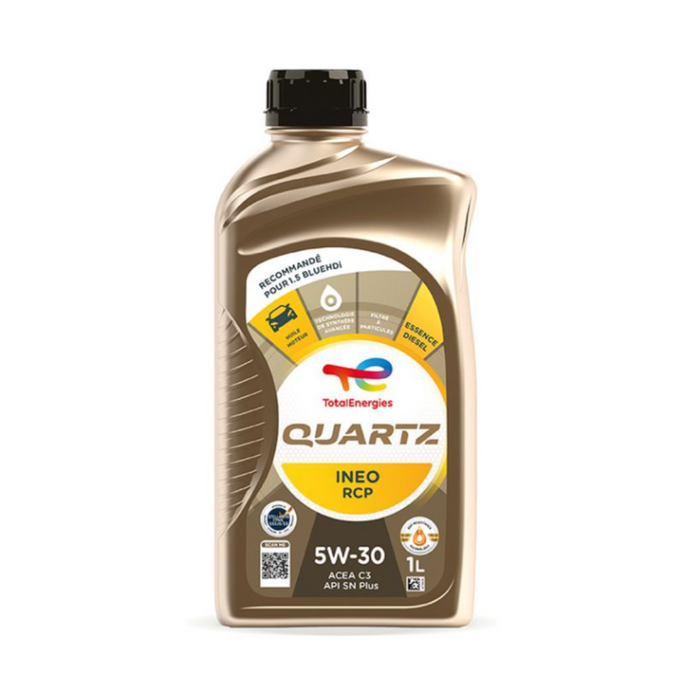
TOTAL QUARTZ INEO RCP 5W-30 – THE OFFICIAL RECALL OIL
Synthetic engine oil with FPW9.55535/03 specification, mandatory for 1.5 BlueHDi DV5R engines affected by the Stellantis recall. Specific anti-wear additives protect the internal timing chain. Available in stock with 24-48h shipping.
🛒 Buy now on Autoricambi TritellaIn-depth article dedicated to the lubricant and the recall: 1.5 BLUEHDI DV5R RECALL: THE NEW QUARTZ INEO RCP 5W30.
📋 3. OTHER ACTIVE RECALLS (SOFTWARE, ADBLUE, DPF)
Beyond the chain recall, Stellantis has initiated other smaller campaigns for the 1.5 BlueHDi over the years:
ECU software update for DPF regeneration
- What it solves: improves DPF regeneration management, reducing the risk of premature clogging
- Affected vehicles: Peugeot 308, 3008, Citroën C4, Opel Grandland X, DS7
- Intervention duration: approximately 1 hour at a dealership
- Cost: free
AdBlue and SCR sensor check
- What it solves: malfunctioning AdBlue level sensors and injector that trigger engine warning light and starting lock
- Solution: software update or replacement of specific components
- Affected vehicles: mainly Peugeot 208, 308, 3008 and 5008 from the first years of production
High-pressure fuel pipe integrity check
- What it solves: possible micro-leaks from the high-pressure pipe in certain specific batches
- Solution: visual inspection and replacement if necessary
ℹ️ All Stellantis recalls are free of charge, even outside the commercial warranty. Simply enter the VIN on the official brand website to check if your car is affected.
Read also: WHAT IS THE BEST ADBLUE ON THE MARKET?
🚗 4. AFFECTED YEARS, MODELS, AND ENGINE CODES
The chain recall primarily covers engines produced between October 2017 and January 2023, with engine codes DV5RC and DV5RD in various power outputs (75, 100, 110, 120, 130 hp).
Affected engine codes
- YHR (DV5RUCd) · YHS (DV5RCE) · YHT (DV5RCF)
- YHV (DV5RUC) · YHW (DV5RE) · YHX (DV5RC)
- YHY (DV5RD) · YHZ (DV5RC) — the most common 130 hp variant
Affected models by brand
| Brand | Affected models | Period |
|---|---|---|
| Peugeot | 208, 2008, 308, 3008, 5008, 508, Rifter, Partner, Expert, Traveller | Oct. 2017 – Jan. 2023 |
| Citroën | C3, C3 Aircross, C4, C4 Cactus, C5 Aircross, Berlingo, SpaceTourer | 2018 – Jan. 2023 |
| DS Automobiles | DS3, DS4, DS7 Crossback | 2018 – Jan. 2023 |
| Opel | Corsa F, Mokka, Crossland, Astra K, Combo, Grandland X | 2019 – Jan. 2023 |
| Fiat / Jeep | Scudo, Ulysse | 2022 – Jan. 2023 |
| Toyota | Proace City | 2020 – Jan. 2023 |
Models produced after January 2023 already have the updated 8 mm chain and correct oil from the factory, and are not affected by the recall. However, it is always good practice to check with the VIN.
🔍 5. HOW TO CHECK IF YOUR CAR IS AFFECTED
- Retrieve your Vehicle Identification Number (VIN): you can find it on your registration document under item E, on the engine block, or on the driver's side of the windshield.
- Access the official brand website (Peugeot, Citroën, Opel, DS, Fiat, Jeep, Toyota).
- Look for the "Recalls" or "VIN Check" section.
- Enter the complete VIN (17 characters).
- If your vehicle is affected, book a free service at an authorized dealership.
💡 Operational tip: even if the website says "no active recalls," you can ask the dealership to perform the app-based diagnosis on the engine noise. It costs nothing and allows you to know the actual state of the chain. If the noise is outside parameters, you might be included in an upcoming campaign.
⚠️ 6. OTHER FREQUENT PROBLEMS (BESIDES RECALLS)
Beyond official recalls, we regularly see other problems with this engine in workshops that are important to be aware of for a complete diagnosis.
🛠️ 6.1 Excessive engine oil consumption
One of the most reported problems concerns abnormal oil consumption, which can manifest as early as between 30,000 and 80,000 km. If neglected, this phenomenon can lead to very serious and costly damage.
- Degradation of the oil-immersed belt: as it wears, the belt releases micro-particles that end up in the engine oil, contaminating it and worsening lubrication.
- Increased top-ups: many motorists have noticed the need to add as much as 1 liter of oil every 3,000-4,000 km, much more than normal.
- Risk of damage to turbo and bearings: degraded or insufficient oil accelerates the wear of the turbocharger, main bearings, and crankshaft.
- Engine and oil pressure warning lights: in the worst cases, the ECU signals insufficient oil pressure, forcing the engine into limp home mode.
👉 Workshop advice: replace oil and filter every 15,000 km or 12 months, using exclusively FPW9.55535/03 lubricant if the car is affected by the recall, otherwise ACEA C2/C3 5W-30 oils conforming to PSA specifications (B71 2312 or B71 2290). Avoiding overly long intervals is the only way to protect the turbo and the oil-immersed belt.
🛠️ 6.2 Clogging of the particulate filter (DPF/FAP)
The particulate filter is one of the most delicate components of the engine. Designed to retain fine particles generated by diesel combustion, it requires regular regeneration cycles to burn off accumulated residues. However, this process does not always occur correctly, especially under intensive urban driving conditions.
- Difficult regeneration in the city: on short journeys, the engine does not reach the temperatures required to initiate automatic regeneration.
- Engine warning light: one of the first signs of clogging is the appearance of the yellow "anti-pollution system fault" warning light.
- Increased consumption and loss of power: a clogged DPF increases backpressure in the exhaust.
When regeneration fails to complete:
- Chemical DPF cleaning: performed in a workshop with specific products and machinery, average cost €200-400
- Filter replacement: if the DPF is saturated or damaged, the cost can exceed €900-1,500
Dedicated in-depth articles: 1.5 BLUEHDI DPF CLOGGING: CAUSES, SYMPTOMS AND SOLUTIONS and BEST FAP CLEANING ADDITIVE.
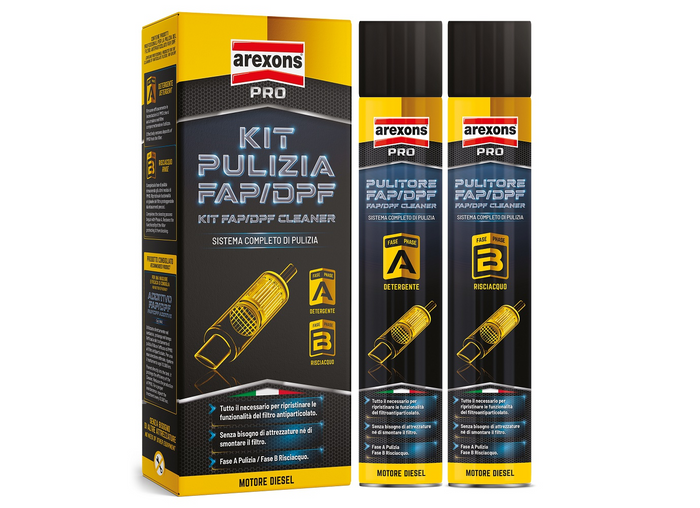
AREXONS 3705 – DPF/FAP CLEANING KIT
Complete solution for maintenance of diesel particulate filters. Cleans and regenerates the FAP/DPF without disassembly, reducing consumption and emissions.
🛒 Buy now on Autoricambi Tritella🛠️ 6.3 EGR valve (high and low pressure)
What it is and how it works on the 1.5 BlueHDi – The DV5 PSA/Stellantis uses a low-pressure EGR system with a dedicated cooler (along with a high-pressure circuit in some versions). It recirculates a portion of exhaust gases back into the intake to reduce NOx, but the accumulation of soot/oil over time compromises its efficiency.
Why it gets dirty (typical causes)
- Urban use and short trips: incomplete DPF regenerations → residual soot returning to the intake
- Poor fuel/combustion quality: dirty injectors, exhausted air filter or inaccurate MAF increase particulate matter
- Oil mist in the intake: oil vapor leaks (breather) promote tarry deposits on the valve and manifolds
- EGR cooler (LP-EGR cooler): condensation+soot → sludge that restricts flow
Symptoms not to ignore
- Loss of power, hesitation at low revs, slow turbo response
- Dark smoke on acceleration, exhaust gas smell in the cabin (possible micro-leaks)
- Irregular idling and increased fuel consumption
- MIL warning light with typical errors: P0400-P0409, P042E/P042F (stuck EGR), P0490 (range/performance), sometimes P0299 (underboost) due to air correlation
Correct diagnosis (practical steps in the workshop)
- OBD and live parameters: compare EGR Command % with MAF air flow and Manifold pressure. If the ECU commands opening but the flow does not change → EGR stuck/obstructed
- Actuator test: using diagnostics, enable EGR opening/closing; verify changes in idle/MAF
- Endoscopic inspection: check for deposits on the throttle body, intake manifold, EGR ducts
- LP-EGR cooler check: evaluate pressure drop/obstructions and hose integrity
- Correlation with DPF: too frequent regenerations (P2459) indicate excessive soot → probable upstream cause (EGR/combustion)
Solutions: from quick fix to repair
- Professional cleaning of valve, ducts and throttle body: effective if the obstruction is moderate. Typical: €120-250
- Decarbonization of manifolds (off-car) and EGR cooler washing: for heavy accumulations. Typical: €250-450
- EGR valve replacement (and gaskets): when it is electrically/mechanically stuck. Part €180-400 + 1.5-3 hours labor
- ECU software update: optimizes EGR/DPF regeneration strategies in versions affected by TSB/campaigns
- Resolution of upstream causes: injector cleaning, new air filter/MAF, check for oil vapor leaks
Preventive maintenance (to prolong its life)
- Driving style: 1-2 times a week 20-30 km at constant load (extra-urban) to promote self-cleaning
- Service every 15,000 km/12 months with quality C2/C3 oils and efficient air/fuel filter
- Targeted diesel additives (periodic) to improve combustion and reduce deposits
- Periodic check of EGR/MAF parameters in diagnostics and preventive inspection of the throttle body
When to intervene immediately? If significant power loss, MIL light on with P0401/P042E, abnormal smoke or close DPF regenerations appear: continue driving only to go to a workshop. Delaying can damage the turbo and DPF.
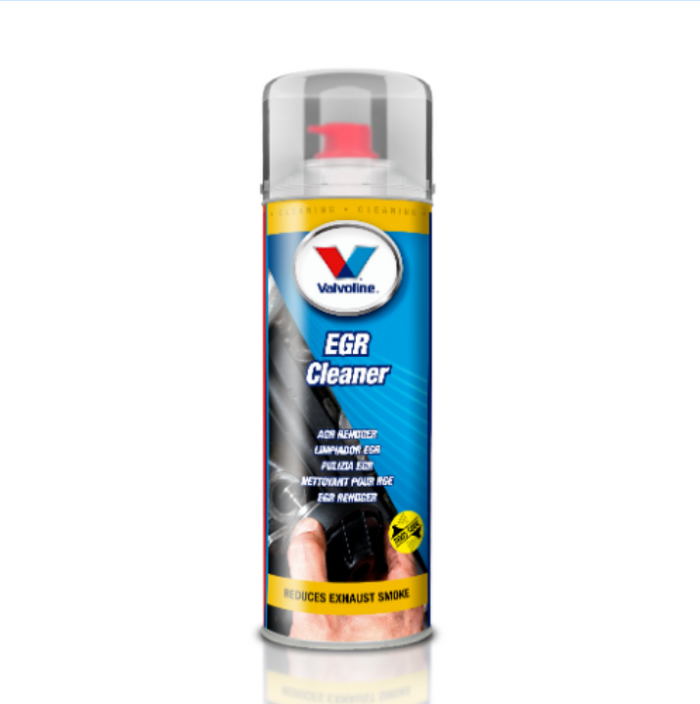
VALVOLINE 887071 – EGR VALVE CLEANER 500ML
Professional spray for EGR valve cleaning. Restores optimal power and performance, reduces emissions and improves diesel engine efficiency.
🛒 Buy now on Autoricambi Tritella🛠️ 6.4 Faulty injectors
The 1.5 BlueHDi injectors represent another critical point reported by numerous motorists and workshops. Although they are designed to ensure precise fuel injection and maximize engine efficiency, in several cases premature failures have been found, often already around 60,000-90,000 km.
- Noise during start-up: a frequent symptom is a metallic knocking or an irregular noise when cold, indicating sub-optimal fuel spray
- Difficult starts: the car may require more attempts to start, especially in cold temperatures
- Hesitation on acceleration: incorrect diesel fuel atomization causes loss of power and jerking while driving
- Smoke from the exhaust: dark exhaust gases and a pungent odor may indicate that one or more injectors are not working correctly
The main causes include:
- Poor quality or contaminated diesel fuel, which accelerates nozzle wear
- Carbon deposits due to incomplete DPF regenerations
- Manufacturing defects in some series of Bosch and Continental injectors installed on this engine
In case of malfunction, injector replacement can be costly: the average cost is between €300 and €450 per injector, to which labor and software recalibration of the control unit must be added. In worse scenarios (complete replacement of the set of 4 injectors), the cost can exceed €1,500-€1,800.
👉 Expert advice: to prevent these problems, it is essential to always use quality diesel fuel, possibly with specific additives for diesel injectors, and to respect the recommended maintenance intervals.
🛠️ 6.5 Aluminum high-pressure fuel pump: wear and metal filings
A lesser-known but increasingly reported problem on some 1.5 BlueHDi engines concerns the aluminum high-pressure (HP) pump. In the event of internal wear, the pump can release microscopic metal particles (filings) that spread throughout the fuel system (tank, lines, rail, injectors), causing chain failures and performance drops.
- Difficult starting, sudden shutdowns or irregular idling
- Loss of power on acceleration, jerking, "recovery" mode
- Engine warning light on with fuel system related errors
Commonly associated OBD-II codes: P0087 (low rail pressure), P0093 (fuel leak detected), P0191 (rail pressure sensor: range/performance).
Why it happens
- Wear of the internal surfaces of the aluminum alloy HP pump
- Contaminated fuel (water/impurities) or poor quality fuel that reduces lubrication
- Late maintenance of the fuel filter or unpurged decanter
- Micro-tolerances and thermal stress during cold starts/heavy use
Recommended professional diagnosis
- Rail pressure check (actual vs. target values) while driving and on the bench
- Fuel filter inspection: presence of metal filings or metallic particles
- Injector return test and check for leaks/flow
- Fuel sampling and magnet check for ferrous residues
- Endoscopy/cleaning of the fuel tank and checking of high-pressure lines
Repair & indicative costs
If the presence of metal filings is confirmed, the solution requires extensive intervention to avoid recurrence:
- Replacement of HP pump and often injectors (new or reconditioned)
- Cleaning or replacement of rail, high/low pressure lines and returns
- Tank cleaning (or replacement in severe cases) and fuel supply circuit
- New fuel filter and thorough bleeding
💶 Total average cost: €4,500-€5,500 (variable depending on model, spare parts and labor).
Prevention (practical tips)
- Refuel only with quality diesel fuel (reliable stations)
- Replace the fuel filter at more conservative intervals (e.g., 20-30,000 km or 12-24 months) and bleed the decanter where applicable
- In urban use/frequent start&stop, consider specific additives for cleaning and lubricating the injection circuit
- Monitor abnormal pump noises and starting difficulties: early intervention reduces costs
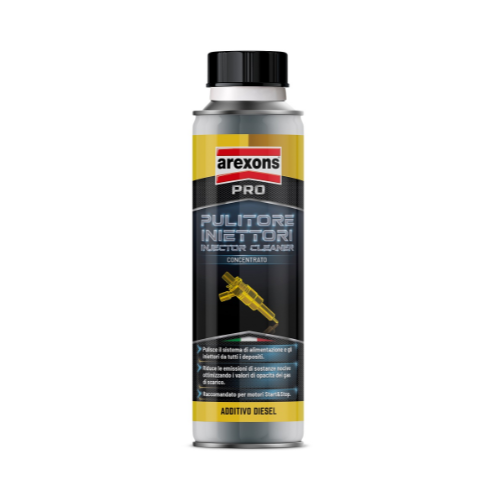
AREXONS 9844 – DIESEL INJECTOR CLEANER 325ML
Professional additive for diesel injector cleaning. Improves combustion, reduces smoke and emissions, and restores engine performance.
🛒 Buy now on Autoricambi Tritella🚨 7. CRITICAL SYMPTOMS NOT TO IGNORE
If you drive a 1.5 BlueHDi, these are the signs that require immediate diagnosis. Do not ignore them: on this engine, the difference between preventive intervention and post-failure repair can be thousands of euros.
- Metallic noise at idle when the engine is cold → possible chain wear (recall)
- Engine warning light on with codes P0011, P0012, P0016, P0017, P0018 → crankshaft/camshaft correlation
- AdBlue light on with countdown of remaining km → SCR system
- Abnormal exhaust smoke (black, blue or white) → injectors, EGR or diluted oil
- Abnormal oil consumption (over 1L every 5,000 km) → oil-bathed belt degradation
- Loss of performance or recovery mode → clogged DPF, turbo, HP pump
- Difficult cold starting → injectors, glow plugs, rail pressure
🧭 8. PREVENTIVE MAINTENANCE POST-RECALL
After performing the recall (or even if your car is not involved), these are the behaviors that protect the engine over time:
- Always use FPW9.55535/03 oil (Total Quartz INEO RCP 5W-30) if involved in the recall, otherwise PSA B71 2312/2290 oils with ACEA C2/C3 specification
- Change oil every 15,000 km even if the manual indicates 25-30,000 km (for mixed Italian use). Reduce to 10,000 km for predominantly urban use
- Regularly check the AdBlue level and top up before it drops below 20%
- Perform at least one extra-urban trip per week of 20-30 minutes at a constant speed above 70 km/h to promote DPF regeneration
- Perform periodic diagnostics with OBD-II tools to read error memory even without the warning light on
- Refuel only with quality diesel fuel from reliable stations
- If in doubt, keep invoices and documentation of every maintenance intervention: it is necessary for the extended Stellantis warranty
To learn more about the complete maintenance and issues of this engine: RECOMMENDED ADDITIVES FOR BLUEHDI AND MODERN DIESELS and 1.5 BLUEHDI GEARBOX SHUDDER: CAUSES AND SOLUTIONS.
❓ FREQUENTLY ASKED QUESTIONS
Are recalls mandatory?
No, but they are strongly recommended. Skipping them can increase the risk of serious failures and, above all, it voids the extended warranty coverage that Stellantis has extended precisely for these defects.
How much does a recall cost?
Zero: official Stellantis recalls are always free of charge, even out of commercial warranty, even if the car was bought used from another owner.
How long does the chain recall intervention take?
It depends on the diagnosis result. Only software update + oil change: 1-2 hours. Chain replacement with the 8 mm version: 4-6 hours of work. In both cases, the intervention is covered by Stellantis.
How do I know if my BlueHDi has the 7mm or 8mm chain?
Engines produced before January 2023 almost certainly have the original 7mm chain. Those produced after already have the 8mm from the factory. Final certainty comes from checking the VIN on the Stellantis website or from a diagnosis with the official app at the dealership.
Can I continue to drive if I hear a metallic noise at idle?
Get an immediate diagnosis. A cold metallic noise is the first symptom of a stretched chain. Continuing to drive risks turning a €1,500 intervention (preventive chain replacement) into a €5,000 repair (broken chain + bent valves + cylinder head).
Is the 1.5 BlueHDi engine reliable after the recall?
Yes. With an updated 8mm chain, FPW9.55535/03 oil, and regular maintenance, the 1.5 BlueHDi becomes a reliable engine that can easily exceed 250,000-300,000 km. The known problems are all predictable and manageable with correct maintenance.
How can I prevent DPF clogging?
Alternate urban journeys with extra-urban trips of at least 20-30 minutes at a constant speed above 70 km/h, use quality diesel fuel and, if use is predominantly urban, consider specific DPF additives.
What happens if I don't get the recall done?
Immediately, nothing; the car continues to function. But in the event of a future failure related to the recall defect, Stellantis may refuse extended warranty coverage. And most importantly: if the chain breaks while driving, the damage to the engine is catastrophic.
🏁 CONCLUSION
The 1.5 BlueHDi PSA/Stellantis engine is efficient and widespread, but not without problems. The recall of the 7mm→8mm timing chain is the most important in recent years and requires immediate attention from owners of cars produced between October 2017 and January 2023.
Three key takeaways:
- Immediately check the VIN on your brand's website to see if you are affected by the recall
- Perform the free diagnostic check even if you think your car is not involved
- Always use FPW9.55535/03 oil (Total Quartz INEO RCP 5W-30) after the recall; never use generic oils
👉 For original spare parts, oil with FPW9.55535/03 specification, and technical advice, trust Autoricambi Tritella. Contact us via WhatsApp or request an online quote with your chassis number: we will identify the exact engine version and provide you with 100% compatible spare part codes.
🔗 USEFUL LINKS
- 1.5 BLUEHDI ENGINE: PROBLEMS, CHAIN RECALL, AND CORRECT MAINTENANCE (2026 GUIDE) — the cluster's pillar guide
- 1.5 BLUEHDI DV5R RECALL: THE NEW QUARTZ INEO RCP 5W30 — official oil in-depth analysis
- 1.6 HDI ENGINE: DEFECTS AND COMPARISON WITH 1.5 BLUEHDI — comparison with its predecessor
- MAIN PROBLEMS OF THE 1.2 PURETECH ENGINE — the twin petrol engine with a wet timing belt


3 comments
Andrea
Da quando il 1.5 bluehdi ha la cinghia a bagno d olio?
Roberto
Articolo davvero prezioso 🙌. Ho una Peugeot 3008 1.5 BlueHDi del 2019 e non sapevo dei richiami sulla cinghia umida. Dopo aver letto la guida ho controllato subito con il VIN e ho scoperto che la mia auto rientra in una campagna gratuita. Ottimi anche i consigli sui sintomi da non ignorare: la trasparenza con cui vengono spiegati i problemi dà molta fiducia. Grazie Gianni, contenuti così chiari aiutano davvero gli automobilisti a tutelarsi.
tommyjhondoe_74@yahoo.com
C’è un altro problema che forse non è segnalato, la pompa del diesel in alluminio si danneggia e i granelli del metallo si diffondono nel sistema di alimentazione. costo della riparazione circa 5000 Euro. Ci sono più casi trovati in rete