

1.5 BLUEHDI ENGINE: MOST COMMON PROBLEMS, CHAIN RECALL, OIL AND SOLUTIONS (2026 GUIDE)
Updated on May 5, 2026 · Technical guide based on over 15 years of experience and real-world cases from Tritella partner workshops in Giulianova and Roseto degli Abruzzi · Authorized TotalEnergies, Castrol and Valvoline distributors for Abruzzo, Marche and Lazio
Quick Answer
The 1.5 BlueHDi (DV5R) is the most widespread Stellantis diesel engine (Peugeot, Citroën, DS, Opel, Fiat, Toyota), produced since 2017. The 5 most common problems are: 7mm timing chain under recall (replacement €1,200-€2,000), DPF/FAP clogging (€800-€2,500), AdBlue/SCR malfunctions (€400-€1,200), clogged EGR and manifolds (€150-€900), gearbox judder. Mandatory oil: Total Quartz INEO RCP 5W-30 spec. FPW9.55535/03. Extended Stellantis warranty up to 10 years / 240,000 km (June 2025) with compliant maintenance.
2026 updated technical guide based on real workshop cases, official Stellantis recalls and OEM specifications: symptoms, causes, solutions, costs and correct maintenance of the 1.5 BlueHDi PSA (DV5R) engine.
The 1.5 BlueHDi is the most widespread diesel engine in the Stellantis group and one of the most discussed engines in recent years. In Peugeot, Citroën, DS, Opel, Fiat and Toyota models, it has won over millions of motorists for its low consumption and balanced performance, but it has some recurring defects that are best known before buying the car or after the first 50,000 km.
In this guide you will find: the 5 most common problems with real symptoms and costs, the truth about the Stellantis timing chain recall (the switch from 7mm to 8mm), which oil to really use, the OBD error codes to know and an operational checklist for those buying a used car.
✅ 1. WHAT IS THE 1.5 BLUEHDi AND WHICH CARS USE IT?
The 1.5 BlueHDi is a 4-cylinder 16-valve diesel engine with 1,499 cc, designed by PSA (now Stellantis) to replace the old 1.6 HDi. First produced in 2017, it is still in production today. The technical designation of the family is DV5R, with variants based on power, year and after-treatment.
Main technical characteristics
- Displacement: 1,499 cc
- Power outputs: 75, 100, 110, 120, 130 hp
- Injection: Common Rail direct
- Turbo: variable geometry
- Block and cylinder head: aluminum
- After-treatment: EGR + SCR with AdBlue + DPF/FAP
- Regulation: Euro 6d
- Timing: wet belt + internal chain between camshafts (see section 2)
Models that use the 1.5 BlueHDi
| Brand | Main models | Years |
|---|---|---|
| Peugeot | 208, 2008, 308, 3008, 5008, 508, Rifter, Partner, Expert, Traveller | 2017 → |
| Citroën | C3, C3 Aircross, C4, C4 Cactus, C5 Aircross, Berlingo, C-Elysée, SpaceTourer | 2018 → |
| DS Automobiles | DS3, DS4, DS7 Crossback | 2018 → |
| Opel | Corsa F, Mokka, Crossland, Astra K, Combo, Grandland X | 2019 → |
| Fiat / Jeep | Scudo, Ulysse (PSA rebrand post-merger) | 2022 → |
| Toyota | Proace City (Berlingo rebadge) | 2020 → |
How to identify the exact version: engine codes
Not all 1.5 BlueHDi engines are the same. To order correct spare parts, you need the engine code stamped on the block, not the commercial designation on the vehicle registration document. Here are the most common codes:
- YHR (DV5RUCd) · YHS (DV5RCE) · YHT (DV5RCF)
- YHV (DV5RUC) · YHW (DV5RE) · YHX (DV5RC)
- YHY (DV5RD) · YHZ (DV5RC) — the most common variant in 130 hp
💡 Operational advice: before ordering engine parts, check the code stamped on the block (near the oil filter) and cross-reference it with the vehicle identification number (VIN). Via WhatsApp or the quote form, we identify the exact version from the VIN and provide you with 100% compatible spare part codes.
⚙️ 2. CHAIN + BELT: HOW DOES THE TIMING SYSTEM REALLY WORK?
Here we clarify one of the most confusing points of this engine, which is described contradictorily online. The technical truth is that the 1.5 BlueHDi has two timing systems that work together:
Wet belt (external)
The actual timing belt is made of reinforced rubber, immersed in engine oil. It drives the crankshaft, the water pump and transmits motion to the cylinder head chain unit. This is the same principle as the "wet belt" used on 1.2 PureTech petrol engines.
The typical timing kit is identified by codes Dayco KTB1208, Gates KP1TH15632XS, SKF VKMA 03400 or equivalents. Recommended replacement intervals: 120,000-180,000 km or 6 years depending on use; anticipate if short or urban journeys.
Internal chain between camshafts
Inside the cylinder head, the two camshafts (intake and exhaust) are connected to each other by a roller metal chain. This chain is the subject of the Stellantis recall.
In the original version, the chain was 7 mm wide. It proved to be undersized for the stresses of this engine and tends to wear and stretch even at low mileage. The updated version is 8 mm and solves the problem.
Why this belt + chain combination
It is an engineering choice to reduce friction (wet belt = less vibration and noise) and at the same time have the precision of the chain at the most critical point (camshaft synchronization). In theory, it is a refined system. In practice, both the wet belt and the chain have shown documented problems, and the customer who does not know how the system works risks paying for two separate interventions.
💡 From our workshop experience: we often see customers who, after a "timing" failure, cannot say what was actually replaced. Sometimes it is the external belt (kit with water pump), sometimes it is the internal chain (Stellantis recall), sometimes both. Always ask for a detailed invoice with the code of the fitted kit and keep the receipt for the oil used.
For a technical parallel with the petrol twin of this engine (same wet belt system), also see: 1.2 PURETECH ENGINE: MOST COMMON PROBLEMS and 1.2 PURETECH WET BELT: PROBLEMS AND SOLUTIONS.
🔔 3. STELLANTIS 7MM→8MM CHAIN RECALL
This is the most significant technical problem of the 1.5 BlueHDi and the reason why Stellantis has launched an official recall campaign.
What happened in brief
The original 7mm timing chain wears prematurely on many vehicles. Symptoms include metallic noises at cold idle, gradual power loss, crankshaft/camshaft correlation error codes (P0011/P0012/P0016/P0017/P0018). In the worst cases, the chain skips teeth or breaks, causing serious damage to valves and cylinder head.
The problem mainly affects engines produced between October 2017 and January 2023, with engine codes DV5RC and DV5RD in various power outputs (75, 100, 110, 120, 130 hp). In total, dozens of models from Peugeot, Citroën, DS, Opel, Fiat, Jeep and Toyota are involved.
The Stellantis solution in four steps
- Diagnosis via specific app that analyzes engine noise to detect chain wear
- Engine control unit software update (for all affected vehicles)
- If diagnosis is negative: oil replacement with the new lubricant FPW9.55535/03 (commercially: Total Quartz INEO RCP 5W-30), formulated with specific anti-wear additives
- If diagnosis is positive: replacement of the chain with the updated 8mm version
What to do if your vehicle is affected
- Check with a Stellantis dealer if your VIN is included in the campaign
- Perform the free diagnosis (done with the official app)
- Even if the diagnosis is negative, always use FPW9.55535/03 oil from then on: it is mandatory to maintain Stellantis extended warranty coverage
- Adhere to maintenance intervals without delays
We have covered the campaign in detail, the models involved, the required oil and the reimbursement procedure in the dedicated insights: 1.5 BLUEHDI PSA ENGINE RECALLS and 1.5 BLUEHDI DV5R RECALL: 10-YEAR WARRANTY AND REIMBURSEMENT.

TOTAL QUARTZ INEO RCP 5W-30 – THE OFFICIAL STELLANTIS OIL
Synthetic engine oil with FPW9.55535/03 specification, mandatory for 1.5 BlueHDi DV5R involved in the recall. Specific anti-wear additives that slow down chain degradation and protect the after-treatment system. Also compatible with 1.2 PureTech with wet belt.
🛒 Buy now on Autoricambi Tritella⚠️ 4. WHAT ARE THE 5 MOST COMMON PROBLEMS OF THE 1.5 BLUEHDi?
Beyond the chain recall, there are other recurring defects that we regularly see in the workshop. In order of frequency:
4.1 Premature timing chain wear
The 7mm chain problem discussed in the previous section. Symptoms: metallic noise at cold idle, gradual power loss, phase error codes (P0011/P0012/P0016/P0017/P0018).
- Cost of preventive replacement: €1,200-€2,000
- Cost of repair after breakage: €3,000-€5,500 (bent valves + cylinder head)
4.2 DPF / FAP clogging
The particulate filter clogs with predominantly urban use, when regenerations cannot be completed. Symptoms: engine warning light, emergency mode, smoke on acceleration, increased fuel consumption.
- Prevention: once a month, an extra-urban journey of at least 20 minutes above 70 km/h
- Cost of DPF replacement: €800-€1,500 aftermarket, €1,800-€2,500 original
Dedicated in-depth analysis: 1.5 BLUEHDI DPF CLOGGING: CAUSES, SYMPTOMS AND SOLUTIONS.
4.3 AdBlue system (SCR) problems
Widely reported, especially on Peugeot 208, 308, 3008 and 5008. Typical defects: leaking AdBlue tank, pump or injector crystallization, crazy level sensor, SCR control unit locking up. If the system locks up, the car will not start again until repaired.
- Prevention: only certified brand AdBlue (BASF, Yara, Total, GreenChem), never an empty tank, specific anti-freeze additives in winter
- Repair cost: €400-€1,200 depending on the component
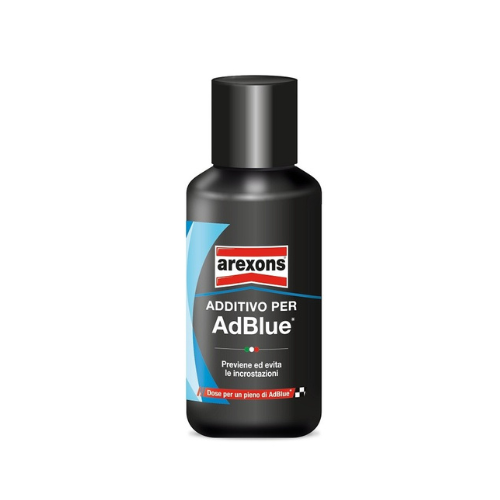
AREXONS 9655 – ADBLUE ADDITIVE
Keeps the SCR system efficient and clean, prevents crystal formation that blocks the injector and pump, ensures optimal emission reduction on Euro 6 diesels with AdBlue.
🛒 Buy now on Autoricambi TritellaAdBlue Insights: ADBLUE PROBLEMS PEUGEOT 208, 308, 3008, 5008 · ADBLUE 2026: WHAT IT IS, HOW IT WORKS, AND BEST BRANDS.
4.4 Clogged EGR valve and manifolds
Common to all modern diesels, exacerbated on the BlueHDi due to the low-pressure EGR circuit. With urban use, the EGR, valve, and intake manifold get dirty. Symptoms: loss of power, increased fuel consumption, engine warning light, black smoke when cold.
- Prevention: EGR cleaning every 50,000-80,000 km
- Cleaning cost: €150-350
- EGR replacement cost: €400-900
4.5 Gearbox shudder / vibrations while driving
Reported on 1.5 BlueHDi engines paired with BE4 and AL4 manual transmissions, especially in fifth gear between 1,400 and 1,800 rpm. This is not a serious fault but a harmonic phenomenon between engine, gearbox, and mounts. Further reading: 1.5 BLUEHDI GEARBOX SHUDDER: CAUSES AND SOLUTIONS.
Special mentions: other minor problems
Less frequent but reported:
- Aluminum high-pressure pump: in some cases releases metallic microparticles into the circuit, requiring complete injection replacement
- Injectors getting dirty, especially with low-quality diesel
- Turbine with excessive play after 150,000 km if maintenance is neglected
- Abnormal oil consumption which, as in PureTech engines, can be a symptom of degradation of the wet timing belt
🛢️ 5. WHAT OIL TO USE AND AT WHAT INTERVALS?
For the 1.5 BlueHDi, engine oil is not a minor detail: it's part of the timing system. Using the wrong oil or delaying changes means accelerating the wear of both the wet timing belt and the chain.
Mandatory specification after recall
After the recall, Stellantis made FPW9.55535/03 specification mandatory for all 1.5 BlueHDi engines involved in the campaign. The reference lubricant is Total Quartz INEO RCP 5W-30, developed in collaboration with Stellantis.
- Viscosity: 5W-30 (caution: not 0W-30, even if PSA approved, it could void the extended warranty)
- PSA specification: B71 2312 (Euro 6d) or B71 2290 for previous versions
- ACEA specification: C2
- Specific anti-wear additives to preserve the chain
Realistic replacement intervals
The official Stellantis plan indicates 25,000-30,000 km or 2 years. In actual Italian conditions, we recommend shorter intervals:
| Type of use | Recommended interval |
|---|---|
| Mainly urban / short trips | 10,000 km or 1 year |
| Mixed use | 15,000 km or 1 year |
| Mainly motorway use | 20,000 km or 1 year |
Anticipating costs an extra €80-120 per year. The return is the health of the timing system: replacing it costs €500-2,000 depending on the component, repairing it after a failure costs €3,000-5,500.
Further engine oil insights: WHAT IS THE BEST ENGINE OIL? 2026 GUIDE TO THE BEST BRANDS · 0W20 VS 5W30 OIL: DIFFERENCES AND WHICH TO CHOOSE · RECOMMENDED ADDITIVES FOR BLUEHDI.
📟 6. WHAT OBD ERROR CODES APPEAR MOST OFTEN ON THE 1.5 BLUEHDI?
If the engine light comes on, an OBD reader is the first step. Here are the codes we see most often on this engine, with their meaning and initial diagnostic indications.
| Code | Meaning | Most likely causes |
|---|---|---|
| P0011 / P0012 | Camshaft VVT system performance | Elongated chain (recall) |
| P0016 / P0017 / P0018 | Crankshaft / camshaft correlation | Timing out of phase (belt or chain) |
| P0420 | Catalyst efficiency below threshold | Lambda sensor or catalyst |
| P244A / P244B | DPF differential pressure | Clogged DPF or pressure sensor |
| P20E8 | Reducer (AdBlue) pressure low | AdBlue pump or injector |
| P2002 / P2459 | DPF efficiency / excessive regenerations | DPF at end of life or diluted oil |
| P0401 / P0402 | EGR flow insufficient / excessive | Clogged or stuck EGR |
If codes P0011/P0012 or P0016/P0017/P0018 appear on a 1.5 BlueHDi from the 2017-2023 period, the first suspicion is a worn chain. Stop the car and perform a thorough diagnosis before continuing to drive: proceeding with an elongated chain risks turning a €1,500 repair into a €5,000 one.
Further insights into specific codes: P2002 DPF EFFICIENCY BELOW THRESHOLD · P2459 EXCESSIVE DPF REGENERATIONS.
💰 7. HOW MUCH DOES IT COST TO REPAIR THE 1.5 BLUEHDI? CONSOLIDATED COST TABLE
Summary table of 2026 costs for major interventions on the 1.5 BlueHDi. Indicative prices in an independent workshop vs. official network.
| Intervention | Independent workshop | Official Stellantis network |
|---|---|---|
| Full service (Total Quartz Ineo oil + filter) | €110-160 | €180-260 |
| Wet timing belt + water pump replacement | €650-950 | €1,100-1,500 |
| Preventive 8mm chain replacement (recall) | €1,200-1,800 (free if recall is active) | Free (recall campaign) |
| Repair after chain breakage (valves + cylinder head) | €2,800-4,500 | €3,800-5,500 |
| DPF/FAP cleaning | €120-280 | €200-380 |
| DPF/FAP replacement | €800-1,500 (aftermarket) | €1,800-2,500 (original) |
| AdBlue/SCR repair (single component) | €400-800 | €700-1,200 |
| Complete AdBlue tank replacement | €350-650 | €550-900 |
| EGR cleaning | €150-280 | €280-450 |
| EGR valve replacement | €400-650 | €650-900 |
| Turbine overhaul | €480-720 | €850-1,200 |
| Complete turbine replacement | €950-1,450 | €1,500-2,200 |
*Indicative prices May 2026, VAT included, labor + parts. Variations possible based on specific model, geographical area, and parts availability.
✅ The real saving is in prevention: €80-120/year for reduced oil intervals can prevent €3,000-5,500 for chain breakage. For a well-maintained 1.5 BlueHDi over 10 years, the difference between "preventive maintenance only" and "reactive maintenance" can be €4,000-7,000.
🏁 8. IS IT A RELIABLE ENGINE? CHECKLIST FOR USED CAR BUYERS
Honest answer: yes, if well-maintained. The 1.5 BlueHDi is a modern, technically refined engine, with real-world fuel consumption of 4.5-5.5 l/100 km. It can easily reach 250,000-300,000 km if the driver adheres to maintenance intervals, uses the correct oil, and monitors symptoms of known issues.
Problems, when they arise, are often the result of relaxed maintenance (generic oil, delayed services, ignoring warning lights and noises) rather than irreparable inherent defects.
Checklist before buying a used car
- Check year of manufacture: versions between October 2017 and January 2023 are those involved in the chain recall
- Check if the recall has been carried out (seller's documents or Stellantis dealer check with VIN)
- Ask for documented full services: when, with what oil, with what parts
- Perform an OBD scan before purchase to read error memory and SCR/DPF/EGR parameters
- Assess AdBlue status: sensor level, injector status, visible crystallization
- Inspect belts and mounts if accessible without disassembly
- If possible, request a laboratory oil test (€30-50) to check for degradation or contamination
For a broader perspective on PSA diesel engines over time, a comparison with its predecessor may be useful: 1.6 HDI ENGINE: DEFECTS, MAINTENANCE, AND COMPARISON WITH THE 1.5 BLUEHDI.
🚫 9. WHAT TYPICAL MISTAKES TO AVOID?
- Using generic 5W-30 oil: even if PSA approved, if it's not FPW9.55535/03 it can void the extended Stellantis coverage and accelerate chain wear
- Only following the official plan (25-30,000 km): in our climate and Italian use, this is too long; anticipate to 10-15,000 km
- Ignoring metallic noises at cold idle: first sign of an elongated chain, don't wait for the engine light
- Never adding AdBlue until the tank is empty: always top up when it drops below 20%, avoid crystallization
- Using "low-cost" diesel of dubious origin: clogs injectors, EGR, and DPF, reduces engine life
- Turning off the engine during a DPF regeneration: let the cycle complete, otherwise you worsen the clogging
- Delaying diagnosis when the engine light comes on: on this engine, every day of delay can mean thousands of euros more in repair costs
📩 REQUEST A QUOTE FOR 1.5 BLUEHDI SPARE PARTS FROM TRITELLA
🔧 Do you have a 1.5 BlueHDi? Tritella supports you with original oil and compatible spare parts
Our warehouse has all compatible spare parts for DV5R: Total Quartz INEO RCP 5W-30 oil (FPW9.55535/03) in 1L/5L/200L formats, updated 8mm chain kit, Dayco/Gates/SKF wet timing belt kit, EGR valves, AdBlue additives, oil/air/fuel filters, NOx/lambda/temperature sensors, injectors, reconditioned turbos. Send us your license plate or VIN: we identify your exact engine code (YHR/YHS/YHT/YHV/YHW/YHX/YHY/YHZ) and provide you with 100% compatible spare part codes.
We are authorized distributors for TotalEnergies, Castrol, and Valvoline for Abruzzo, Marche, and Lazio. In over 15 years, we have assisted dozens of customers with DV5R engines, from independent workshops to private owners with out-of-warranty cars. Response within 24 hours + delivery 24-48h. Practical support also for Stellantis reimbursement requests.
📩 Request a free quote❓ FREQUENTLY ASKED QUESTIONS
Does the 1.5 BlueHDi have a timing belt or chain?
It has both. An external wet belt that drives the crankshaft and water pump, and an internal chain that synchronizes the two camshafts. The Stellantis 2023-2024 recall concerns the chain, while the belt has standard periodic replacement intervals.
Which cars use the 1.5 BlueHDi engine?
The entire compact and mid-range Stellantis group: Peugeot 208, 2008, 308, 3008, 5008, 508, Rifter, Partner / Citroën C3, C3 Aircross, C4, C5 Aircross, Berlingo / DS3, DS4, DS7 / Opel Corsa F, Mokka, Crossland, Astra K, Combo, Grandland X / Fiat Scudo, Ulysse / Toyota Proace City.
How often should the oil be changed on the 1.5 BlueHDi?
The official plan indicates 25,000-30,000 km. In practice, we recommend shorter intervals: 10,000 km for urban use, 15,000 km for mixed use, 20,000 km for motorway use, always with FPW9.55535/03 specification (Total Quartz INEO RCP 5W-30).
How do I know if my car is affected by the timing chain recall?
Provide your Vehicle Identification Number (VIN) to a Stellantis dealer or use the manufacturer's online checker (Peugeot, Citroën, Opel, DS). The campaign primarily covers vehicles with DV5RC or DV5RD engines produced between October 2017 and January 2023.
What happens if the AdBlue runs out?
When the level drops below a safe threshold, the dashboard displays progressive warnings (starting at 2,400 km, then 1,500 km, then mandatory refill). If you ignore all warnings and the tank completely empties, the engine will be prevented from starting until it is refilled with certified AdBlue.
Is the 1.5 BlueHDi more reliable than the 1.6 HDi?
Generally, yes, thanks to a more efficient after-treatment system, lower fuel consumption, and less injector maintenance. However, the 1.6 HDi has a simpler traditional belt-driven timing system, while the 1.5 BlueHDi has the belt + chain system that caused the known problems. It depends on which aspect is more important to you.
Can I use generic 5W-30 oil in the 1.5 BlueHDi?
No, never. Even if it visually appears to be the same oil, only the FPW9.55535/03 specification contains the necessary anti-wear additives to protect the chain. Using generic oil will void the extended Stellantis warranty and accelerate wear on both the belt and the chain.
What are the initial symptoms of a worn timing chain?
The most common signs: metallic noise at idle when the engine is cold that disappears when driving, rhythmic rattling that increases with RPMs, engine light with codes P0011/P0012 or P0016/P0017/P0018, gradual loss of power, increasing fuel consumption. If you recognize any of these symptoms, get a diagnosis immediately.
How much does it cost to replace the timing chain on the 1.5 BlueHDi?
For preventive replacement with an updated 8mm chain kit: €1,200-€2,000 depending on the model and accessibility. In case of breakage with bent valves: €3,000-€5,500. In severe cases, complete cylinder head replacement or a reconditioned engine may be necessary, at higher costs. If your VIN falls within the active recall campaign, the service may be completely free.
Is it a reliable engine in the long term?
Yes, if carefully maintained. Well-maintained 1.5 BlueHDi engines easily exceed 250,000-300,000 km. The main problems are predictable, diagnosable in advance, and solvable if initial symptoms are not ignored.
📌 CONCLUSIONS
The 1.5 BlueHDi is a modern, efficient, and very widespread engine, but like all recent technology, it has some weak points that owners should be aware of. The most important is the timing chain, which is subject to the Stellantis 2023-2024 recall, followed by AdBlue, DPF, and EGR.
The three key takeaways:
- Immediately check if your VIN is involved in the timing chain recall and carry out all planned interventions (extended warranty up to 10 years / 240,000 km from June 2025);
- Always use FPW9.55535/03 oil (Total Quartz INEO RCP 5W-30) and anticipate oil changes compared to the official schedule (10-15,000 km instead of 25-30,000);
- Never ignore noises or engine warning lights: the difference between €1,500 for preventive repair and €5,000 for repair after breakage is one week of mistaken delay.
Do you have doubts about your 1.5 BlueHDi? For any questions about your specific engine configuration, the correct oil choice, or compatible spare parts, our team is available via WhatsApp and online quote: just provide your VIN and year of manufacture to identify the exact engine version and provide you with 100% compatible spare part codes.
👉 Do you own a 1.5 BlueHDi? Request a personalized quote for oil and spare parts
📩 Go to quote form📘 Related insights:
- 1.5 BlueHDi PSA Engine Recalls: Problems, Models, and Solutions
- 1.5 BlueHDi DV5R Recall: 10-Year Warranty and Reimbursement (Quartz Ineo RCP)
- 1.5 BlueHDi DPF/FAP Clogging: Causes, Symptoms, Solutions, and Costs
- 1.5 BlueHDi Gearbox Shudder: Causes and Solutions
- 1.5 BlueHDi: Chain or Belt? How to tell from the Engine Code
- 1.6 HDi Engine: Defects, Maintenance, and Comparison with 1.5 BlueHDi
- Recommended Additives for BlueHDi and Modern Diesels
- What is the best engine oil? 2026 Guide to Top Brands
- 0W20 vs 5W30 Oil: Differences and Which to Choose
- AdBlue 2026: What it is, How it Works, and Recommended Brands


3 comments
gabriele
Sono Gabriele da Urbino un possessore di un 308 Diesel 1500 hdi del 2020 con 70 mila km, Peugeot mettendola nel sotfwer mi ha detto che la mi catena e buona. Io non sono sodisfatto un consiglio?, cambiarla con quella da 8mm a mie spese per evitare rottura motore. Grazie.
Antonio Salvi
Da quello che vedo in officina, il 1.5 BlueHDi è un motore che può dare soddisfazioni, ma va seguito con costanza. Molti automobilisti pensano che basti rispettare i tagliandi “di base”, invece la realtà è che piccoli accorgimenti fanno la differenza: un olio di qualità cambiato a 15.000 km, un controllo periodico della catena e un occhio attento all’AdBlue evitano spese salate. Il punto debole rimane l’uso cittadino: se l’auto fa solo brevi tragitti, il DPF e l’EGR diventano il tallone d’Achille. Interessante vedere come negli ultimi anni si stiano moltiplicando i casi di serbatoi AdBlue difettosi in inverno: molti clienti arrivano disperati perché l’auto non parte. A mio parere, la prevenzione resta l’arma migliore per godersi questo propulsore senza pensieri.
Francesco Lombardi
Finalmente un articolo che spiega in modo semplice ma tecnico tutti i difetti reali di questo motore. Ho una Peugeot 308 1.5 BlueHDi e mi sono ritrovato con i problemi al DPF e all’AdBlue: grazie ai consigli ho capito come prevenire guasti costosi. Molto utili anche i link agli approfondimenti e ai prodotti consigliati. Davvero un punto di riferimento.