

Dirty EGR Valve – 2026 Guide: Symptoms, Causes, Risks, Cleaning, and Costs
Updated December 2025 — Technical guide to the dirty EGR valve : real symptoms, most common causes, risks to the engine and DPF, how to recognize it, when it is advisable to clean it and what the indicative costs are in the workshop.
WHAT HAPPENS IF YOU EXCLUDE THE EGR VALVE?
What does bypassing the EGR valve really mean? Increased emissions, engine risks, legal issues, and consequences for the FAP/DPF. A clear guide to understanding the effects, risks, and appropriate alternatives.
📘 Read the full article✅ What is the EGR valve and why does it get dirty?
The EGR (Exhaust Gas Recirculation) valve recirculates a portion of the exhaust gases back into the intake system to reduce NOx emissions. It is mainly present on Euro 4/5/6 diesel engines and on many latest-generation petrol engines.
Over time, exhaust fumes carry soot, oil mist, and residues that settle on:
- EGR valve body;
- recirculation ducts;
- intake manifold and air butterfly;
- any swirl flaps (variable intake flaps).
When these deposits become excessive, the valve is no longer able to open and close properly: this causes jerking, engine warning lights and a drop in performance .

AREXONS 4114 – DIESEL EGR VALVE CLEANER (200 ML)
Professional Arexons product designed to remove encrustations and carbon residue from the EGR valve of diesel engines. It improves performance, reduces fuel consumption and smoke, and helps maintain the efficiency of the exhaust gas recirculation system.
🛒 Buy now at Autoricambi TritellaEGR VALVE AND MANIFOLD CLEANING – COSTS 2026
A complete guide to cleaning the EGR valve and intake manifolds : costs updated to 2026, processing times, actual workshop procedures, and prevention tips to avoid future fouling.
📘 Read the complete guide🚨 Real symptoms of a dirty EGR valve
Not all power delivery problems or engine warning lights are caused by EGR, but there are some very typical symptoms that we often see in the workshop associated with a dirty or partially blocked valve.
1. Jerking between 1,500 and 2,500 rpm
One of the most common symptoms: in high gears, at low/medium speeds, the car experiences jerking, gaps, or irregularities when accelerating gently. This is the range in which the EGR works most.
2. Loss of power and “weak” engine
If the EGR remains open when it shouldn't , a part of the exhaust gases returns to the intake under incorrect conditions, with:
- feeling of a “clogged” engine;
- delay in pedal response;
- difficulty taking turns uphill or at full load.
3. Black smoke on acceleration
The air/fuel mixture is no longer correct: the engine tends to burn rich and when accelerating you often notice black smoke from the exhaust , especially in diesels without DPF or with a suffering DPF.
4. Increase in consumption
A dirty EGR system alters combustion management and forces the control unit to continually correct the parameters . The result: higher fuel consumption, especially in the city.
5. Engine light on and related error codes
In diagnosis, codes such as:
- P0400 – EGR system malfunction;
- P0401 – Insufficient EGR flow;
- P0402 – EGR Flow Excessive;
- errors related to MAP/MASSA AIR sensors reading inconsistent values due to deposits.
6. More frequent DPF regenerations
Less clean combustion increases the number of particles in play: the DPF/FAP fills up more quickly and the control unit triggers regeneration more frequently. If the EGR problem is ignored, you soon end up with a clogged particulate filter .
Indicative table of symptoms
| Symptom | Probable EGR involvement | Other possible causes |
|---|---|---|
| Jerking 1,500–2,500 rpm | High | Injectors, turbos, coils (petrol) |
| Black smoke on acceleration | Medium–High | Injectors, saturated DPF, flow meter |
| Loss of power | Average | Turbo, EGR cooler, DPF, fuel |
| Frequent DPF regenerations | Average | Urban use, DPF pressure sensors, injectors |

FACOM – DIESEL ENGINE CLEANER ADDITIVE (1 L)
FACOM professional additive for complete decarbonization of diesel engines. Treats injectors, turbochargers, and EGR valves, improves combustion, and promotes DPF regeneration. One-liter bottle, ideal for in-depth maintenance.
🛒 Buy now on Amazon🔧 Main causes of EGR clogging
An EGR valve doesn't get dirty "by accident." Usually, a combination of vehicle use and technical conditions leads to excessive residue accumulation.
1. Mainly used in cities
Short journeys, an engine that never reaches the right temperature, and low engine revs: the perfect mix for the creation of soot and condensation . This is the typical scenario for diesel small cars used only in urban areas .
2. Unsuitable engine oil or too long intervals between changes
An incorrect (or old) lubricant increases:
- the amount of oil that reaches the intake;
- the formation of sticky deposits in the ducts;
- contamination of DPFs and catalytic converters.
For modern diesels, it is essential to use oils with the correct ACEA specification and regular changes, not just based on the “maximum mileage” indicated by the manufacturer.
3. DPF/FAP already in trouble
If the particulate filter is partially clogged , the system works under abnormal conditions: back pressure increases, soot accumulates before the filter and the EGR suffers the consequences.
4. Collateral faults (turbo, injectors, intake)
Poorly atomizing injectors, leaking turbos, or cracked intake manifolds further dirties the EGR line. In these cases, simply cleaning the valve isn't enough: you need to address the root cause.
⚠️ Short- and long-term risks if you continue to circulate
Ignoring a dirty EGR for a long time means moving the problem further down the road, often at much higher costs .
- Recovery mode : the control unit limits power and engine speed to protect the system.
- Clogged DPF : frequent regenerations, then difficulty completing them → forced regenerations in the workshop.
- EGR cooler overheating : in versions with exchanger, encrustations can cause cracks or liquid leaks .
- Increased fuel consumption and engine wear : combustion always “correct” by the control unit = stress on components and wallet.
- Risk of failure during MOT : excessive vagueness or memory errors can lead to ineligibility for the periodic MOT.
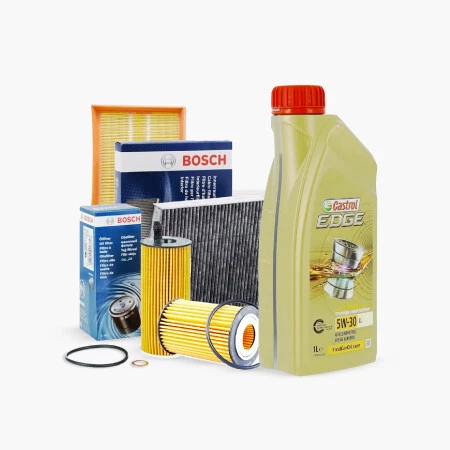
EBAY – CAR PARTS AND ACCESSORIES
Wide selection of auto parts , accessories, rare and aftermarket components for every model. Find deals, hard-to-find products, and great prices from trusted sellers on eBay Motors.
🔧 Go to the offer on eBay🔎 Diagnosis: EGR or something else? How to really figure it out
Many drivers attribute any engine warning light to the EGR. In reality, the priority in the workshop is to determine whether the problem actually stems from there or from other related components.
Do-it-yourself checks (without dismantling anything)
- Note when the symptoms appear : only when cold, under load, on the highway?
- Observe the type of smoke : black on acceleration, white, blue?
- Check if the engine light is solid or flashing (flashing = more serious, stop immediately).
- If you have a small OBD interface, read the error codes and write them down before clearing them.
What does a serious workshop do?
- Complete electronic diagnosis with DTC reading and real-time parameters (EGR flow, manifold pressure, gas temperature).
- EGR Actuator Test : Check the travel and response of the motor/actuator.
- Visual inspection of the EGR area and ducts, where possible, with an endoscope.
- Checking of connected systems : DPF, turbo, air pressure and mass sensors.
Only after this phase does it make sense to talk about cleaning or replacement : any intervention done "by trial and error" risks being a waste of money.
🛠️ EGR Cleaning: Methods, Limitations, and When to Do It
When the valve is dirty but still intact, there are several cleaning strategies available. The goal is to restore the valve's proper mobility and gas flow, avoiding—if possible—immediate replacement.
1. On-car cleaning (without disassembly)
Specific chemicals are used which are introduced:
- in the intake circuit;
- or via dedicated devices connected to the system.
Advantages: quick turnaround times, lower costs, no major dismantling.
Limitations: Less effective with heavy fouling or when collectors are involved.
2. Off-car cleaning (with disassembly)
The EGR is removed from the engine and treated with:
- decarbonizing chemical toilets;
- any ultrasound;
- bench test before reassembly.
It is the most effective solution when:
- the deposits are hard and thick;
- collectors and swirl pipes are also clogged;
- the problem reoccurs after “light” cleaning.
3. When cleaning is no longer enough
In these cases it is best to go straight to the replacement :
- burnt or stuck EGR actuator;
- cracked or deformed valve body;
- EGR cooler damaged or leaking fluid;
- rapid return of symptoms after a well-performed cleaning.
CLOGGED FAP/DPF? HERE'S WHAT TO DO IN 2026
A dirty EGR and limited city driving often lead to a full particulate filter . In this guide, we explain the symptoms, causes, and real-world solutions when the DPF warning light appears.
📘 Read the in-depth article on FAP/DPF💰 Approximate costs for 2026 (and when to stop putting it off)
Costs depend greatly on the make, model, and accessibility of the valve. As a rough guide:
- On-car EGR cleaning : usually €120 to €200 , recommended in less serious cases.
- Off-car cleaning with dismantling : on average between €200 and €350 , often combined with a manifold check.
- EGR replacement : can range from €300 up to over €800–900 , depending on the type (with or without cooler, positioning, labor hours).
If your car displays more of the symptoms listed (jerking, smoke, warning light, high fuel consumption) and the diagnosis confirms the EGR as the cause, putting off cleaning or replacement any longer risks increasing costs (DPF, turbo, etc.).
For a complete and up-to-date overview of price ranges, processing times, and what the service includes, I refer you to the dedicated guide on professional EGR and manifold cleaning .
❓ Frequently asked questions about dirty EGR valve
Can I continue to use the car with a dirty EGR valve?
It depends on the severity. If you only have a few sporadic jolts, you can arrange for a checkup soon. However, if the engine warning light, recovery light, or visible smoke appears, it's best to avoid long trips and have a diagnosis done as soon as possible.
Is a fuel additive enough to clean the EGR?
Additives can help prevent or treat mild cases, but when the valve is heavily encrusted, the only effective solution is professional cleaning (on- or off-car) or, in the worst cases, replacement.
Is it true that you can “turn off” the EGR to avoid any more problems?
Modifying or bypassing the EGR is illegal and can lead to problems with inspections, roadside checks, and insurance. It also increases emissions. The correct course of action is to maintain it and repair it when necessary.
How often should the EGR be checked/cleaned?
There's no fixed value: on cars used a lot on the highway, it can stay clean for several kilometers; on city diesels, it can start to cause problems even between 80,000 and 120,000 km . In case of heavy urban use, it's good practice to have it checked at least when the first symptoms appear.
🏁 Conclusions and practical advice
A dirty EGR valve is not a problem to be underestimated: it starts with a few jerks and a little smoke, but if ignored it can lead to a clogged DPF, recovery, higher consumption and very expensive interventions .
To summarize:
- listen for typical symptoms (jerking, smoking, loss of power, engine warning light);
- do a serious diagnosis before replacing parts at random;
- evaluate cleaning vs. replacement with the workshop based on the actual condition of the component;
- take care of prevention : extra-urban use, correct oil, quality fuel, punctual maintenance.
If you're unsure about symptoms, error codes, or which repair is best for your car, you can contact a trusted repair shop or a specialized parts dealer: having someone who knows OEM specifications, actual costs, and repair shop case studies often makes the difference between a successful repair and wasted money.


