

VOLKSWAGEN GOLF 1.6 TDI (2013–2020): MOST COMMON PROBLEMS, DEFECTS AND RECURRING FAULTS
The Golf 1.6 TDI is one of the most popular diesels ever: real mileage, lots of city driving, lots of highway driving, and (often) maintenance done "whenever it happens." This is precisely why certain faults recur with a frequency that we in the workshop immediately recognize by the symptoms.
Here you'll find a practical guide: what breaks most often on the Golf 1.6 TDI 2013–2020, how to distinguish symptom from cause, what checks to perform before spending money, and what the realistic cost ranges (2025/2026) are for the most common repairs.
📋 WHAT YOU'LL FIND IN THIS GUIDE
- 🧩 First of all: what "1.6 TDI" means (and why it changes)
- 🌫️ EGR and EGR cooler: clogging, errors and leaks
- 🧱 DPF: regenerations, clogging and warning lights
- 🌀 Turbo and supercharging: underboost, pipes and actuator
- 💉 Injection/fuel system: injectors, fuel pressure, starting
- 🧲 Clutch and dual-mass flywheel: vibrations and noises
- ⛓️ Timing belt, water pump and leaks
- 🧴 AdBlue/SCR (where present): warning lights and risk of no start
- 🔍 Diagnosis: quick tests and workshop tests
- 💶 Real Costs (2025/2026): intervention table
- ❓ Frequently asked questions
- 🏁 Conclusions
🧩 FIRST OF ALL: WHAT "1.6 TDI" MEANS (AND WHY IT CHANGES)
"Volkswagen Golf 1.6 TDI" does not refer to a single identical engine. In the 2013–2020 period, you may encounter variants with different EGR/DPF management and, on more recent/specific trim levels, even SCR/AdBlue systems.
The practical rule is simple: before buying spare parts or performing "random" diagnostics, identify the engine code and anti-pollution equipment (EGR + DPF always, SCR/AdBlue not always). In a workshop, this is the step that prevents 90% of incorrect purchases.
Technical definition (quotable): A modern 1.6 TDI diesel works with exhaust gas recirculation (EGR) and a diesel particulate filter (DPF) to reduce emissions; when one of these systems malfunctions, soot increases and the ECU reduces power or illuminates warning lights for protection.
🌫️ EGR AND EGR COOLER: CLOGGING, ERRORS AND LEAKS
TYPICAL SIGNS (HOW IT MANIFESTS)
- Irregular idle, jerking at low load, "empty" response at low RPMs.
- Engine light and/or limp mode (reduced power).
- Dark smoke on acceleration and increased fuel consumption.
- On some versions: coolant level drop without obvious leaks (EGR cooler).
REAL CAUSES (IN ORDER OF FREQUENCY)
- EGR clogging from urban use/short journeys: lots of particulate matter, few "complete" regenerations.
- EGR cooler/heat exchanger with internal leaks: the water circuit "disappears" without drips on the ground.
- EGR actuator or sensors/position out of range (command OK, actual movement not).
- Wiring and connectors near hot areas: intermittent false contacts.
EFFECTS IF YOU IGNORE IT
- Increased soot → DPF clogs faster.
- More frequent regenerations → risk of oil dilution (oil level rises and loses viscosity).
- Limp mode during overtaking/on ramps: it's not just annoying, it can become dangerous.
WHAT TO ACTUALLY DO (WITHOUT USELESS SPENDING)
- Read error codes from the ECU and save "freeze frames" (when and how the fault occurred).
- Check EGR command vs. actual value (if the EGR "doesn't follow," first test, then decide whether to clean or replace).
- If the coolant level drops, check for external leaks and then suspect the EGR cooler (don't jump straight to "cylinder head").
Common mistake: replacing the EGR "because there's a P0401 code" without checking the intake, vacuum lines/actuator, DPF differential pressure. In workshops, it often happens that the real problem is something else and the EGR is just "the victim."

BARDAHL – EGR CLEANER ADDITIVE (400 ML)
Bardahl EGR Cleaner additive specifically for cleaning the EGR valve. Removes carbon deposits and residues, improves combustion and reduces smoke and irregular operation in petrol and diesel engines.
🛒 Buy now on AmazonDIRTY EGR VALVE – 2026 GUIDE
A dirty EGR valve can cause loss of power, illuminated engine light, high fuel consumption, and FAP/DPF problems. Discover real symptoms, main causes, engine risks, how to clean it correctly, and average intervention costs in 2026.
📘 Read the full guide🧱 DPF: REGENERATIONS, CLOGGING AND WARNING LIGHTS
SYMPTOMS AND SIGNALS
- DPF light or engine light, fan remaining active, slightly higher idle.
- Increased fuel consumption, "hot" smell after short drives.
- Limp mode and typical codes related to particulate/soot.
WHY IT HAPPENS (THE CAUSE IS NOT "THE DPF IS BROKEN")
- Urban use and interrupted regenerations (frequent shutdowns during regeneration).
- EGR malfunctioning → produces more soot than normal.
- Turbo leaking oil or dirty intake → increases residue and ash.
- Incorrect oil maintenance (wrong specification or too long intervals): increases deposits and risk of problems.
WHAT NOT TO DO
- Do not "solve" with illegal removals (DPF/EGR/SCR): besides being prohibited, it often creates chains of cascading faults and warning lights.
- Do not perform repeated forced regenerations without understanding why it clogs: it's like resetting an alarm without putting out the fire.
WHAT TO DO (CORRECT APPROACH)
- Check DPF differential pressure and estimated soot mass (just looking at the warning light is not enough).
- Verify if the car enters regeneration and if it completes it (temperature, times, conditions).
- If the DPF is at its limit: first find the cause (EGR/turbo/sensors), then decide between professional cleaning or replacement.

AREXONS 3705 – DIESEL FAP / DPF CLEANING KIT
Professional Arexons kit for the maintenance and cleaning of diesel particulate filters. Helps reduce FAP/DPF clogging, improves regeneration, and restores engine performance. Ideal for preventive and corrective interventions.
🛒 Buy now on Autoricambi Tritella🌀 TURBO AND SUPERCHARGING: UNDERBOOST, PIPES AND ACTUATOR
HOW YOU NOTICE IT
- Car feels "dead" above 2,000 rpm, especially uphill or when fully loaded.
- Limp mode on the highway or during overtaking.
- Abnormal whistling, hissing, oil in the intercooler hose area (to be evaluated carefully).
MOST COMMON CAUSES
- Leaks on hoses/intercooler: small cracks = boost escaping.
- Variable geometry actuator / control that doesn't operate smoothly (electric or vacuum, depending on version).
- Solenoid valves/controls that don't modulate correctly.
- Pressure/MAF sensors out of calibration: the ECU "sees" inconsistent values and cuts power.
PRACTICAL TEST TO AVOID MISTAKES
- Log requested vs. actual turbo pressure (if actual doesn't rise → leak/actuation; if it rises too much → stuck control/actuation).
- Inspect hoses and intercooler carefully (a "filmy" oil residue can be normal; significant drips and seeping are not).
- If you suspect leaks: smoke test (it's one of the quickest and most underestimated tests).
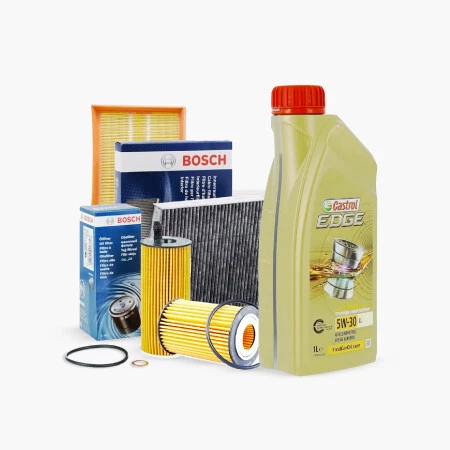
EBAY – CAR PARTS AND ACCESSORIES
Wide selection of car parts, accessories, rare components, and aftermarket items for every model. Find deals, hard-to-find products, and great prices from reliable sellers on eBay Motors.
🔧 Go to the offer on eBay💉 INJECTION/FUEL SYSTEM: INJECTORS, FUEL PRESSURE, STARTING
CLASSIC SYMPTOMS
- Long cranking (especially when hot), irregular idle, vibrations.
- Jerking at constant speed, abnormal smoke.
- Engine light with cylinder errors, injector corrections out of range.
REAL CAUSES WE SEE MOST OFTEN
- Injectors with high corrections (not always "dead," sometimes it's a fuel supply/pressure problem).
- Old fuel filter or contaminated fuel (especially on cars that do few miles).
- Unstable rail pressure (sensor/regulator/pump: must be diagnosed, not "guessed").
HOW TO DIAGNOSE WITHOUT WASTING MONEY
- Check parameters: injector corrections, requested/actual rail pressure, temperatures, and starting RPM.
- Return flow test (where applicable) and low-pressure fuel supply check.
- Only then: evaluate intervention on injector/s.
In the workshop, we often see that an "injector feeling" actually comes from a malfunctioning EGR/DPF that is altering combustion at low RPMs. This is why parameter reading is crucial.

VALVOLINE SYNPOWER XL-III C3 0W-30 – SYNTHETIC ENGINE OIL
High-performance ACEA C3 synthetic engine oil, specific for VOLKSWAGEN GOLF 1.6 TDI (2013–2020) with DPF. Ensures advanced engine protection, deposit reduction, and maximum compatibility with exhaust aftertreatment systems.
🛒 Buy now on Autoricambi Tritella🧲 CLUTCH AND DUAL-MASS FLYWHEEL: VIBRATIONS AND NOISES
SIGNALS
- Vibrations when pulling away, metallic noise at idle that changes when pressing the clutch.
- "Jerk" between 1st and 2nd gear, especially when cold.
- Harder pedal or rapidly changing bite point.
CAUSES
- Worn dual-mass flywheel (classic with high mileage or urban use with many starts).
- Clutch near its limit (or contaminated by leaks, to be checked).
PRACTICAL NOTE
The dual-mass flywheel can "hold on" for a while making noise, but when it worsens, you risk heavy vibrations and difficulty engaging gears. If the noise increases within a few weeks, don't postpone it: the sooner you intervene, the less collateral damage you create.
⛓️ TIMING BELT, WATER PUMP AND LEAKS
On these Golf models, the 1.6 TDI uses a timing belt. The actual interval depends on the engine/year/market and maintenance: the best rule is to follow the specific manual for your vehicle and not "what you read online."
WHAT TO CHECK (AND WHY)
- Belt + tensioners: wear and risk of breakage (serious engine damage).
- Water pump: leaks or noisy bearing (often best to replace with the timing belt).
- Thermostat: if it stays open/closed, it alters temperatures, fuel consumption, and DPF regenerations.
Common mistake: only replacing the belt "to save money" and leaving a worn water pump. If it then leaks after 15,000 km, you pay for labor twice.
🧴 ADBLUE/SCR (WHERE PRESENT): WARNING LIGHTS AND RISK OF NO START
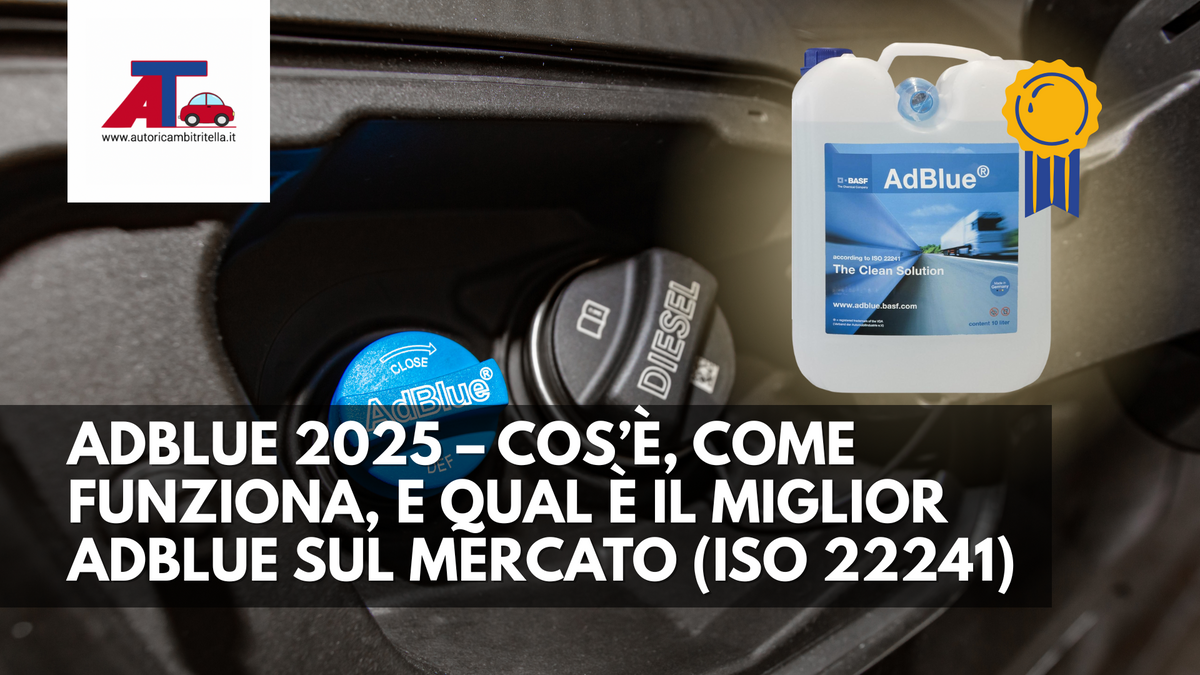
On some newer/trim versions of the 1.6 TDI Golf, the SCR system with AdBlue may be present. When the system detects a serious fault (dosing, NOx sensors, quality, heating), it can activate a countdown leading to a no-start condition.
SYMPTOMS
- AdBlue/anti-pollution messages, engine warning light, "remaining starts" warnings.
- Abnormal AdBlue consumption or no consumption.
CORRECT APPROACH
- Complete diagnosis: errors + parameters (NOx, temperatures, dosing requests).
- Check wiring and connectors (many problems are electrical, not "tank-related").
- Targeted repair: avoid "package" replacements without testing.
🔍 DIAGNOSIS: QUICK TESTS AND WORKSHOP TESTS
QUICK TESTS (BEFORE DISMANTLING)
- Error scan + freeze frame (do not delete immediately).
- Visual inspection of turbo/intercooler hoses, leaks, clamps.
- Oil level check: if it increases for no reason → suspect frequent regenerations/dilution.
- Coolant level check: “mysterious” drops → investigate EGR cooler/seals.
PROFESSIONAL TESTS (THE ONES THAT SAVE YOU MONEY)
- Parameter logging: requested/actual turbo, MAF, EGR command/actual, DPF differential pressure.
- Intake/supercharging smoke test.
- DPF evaluation: soot vs ash, regeneration capacity, enabling conditions.
- Return/supply test (where applicable) and rail pressure stability during start-up.
FREQUENT DIAGNOSTIC ERRORS
- Replacing EGR/DPF “because there’s an error” without checking actual parameters.
- Repeated forced regenerations without addressing the cause of soot.
- Blaming the turbo without first checking for leaks and sensors.
💶 REAL COSTS (2025/2026): INTERVENTION TABLE
Costs vary depending on region, component accessibility, OEM/aftermarket parts, and whether a diagnosis has already been done or needs to be done. Below are realistic "turnkey" ranges to give you an idea of the magnitude.
| Intervention | Cost Range (€) | Notes |
|---|---|---|
| Complete diagnosis + parameter logging | 50–150 | If done well, avoids unnecessary replacements |
| EGR/intake cleaning (where sensible) | 200–450 | Depends on access and level of deposits |
| EGR replacement / related components | 350–900 | Wide range due to variations and labor |
| EGR cooler (if leaking) | 600–1,400 | Often includes draining/refilling fluid |
| Professional DPF cleaning | 250–600 | Valid for "soot"; no miracles for "ash" |
| DPF replacement | 900–2,200+ | Depends on part and sensors/probes |
| Repairing turbo/hose/intercooler leaks | 120–500 | Often resolves "underboost" without changing turbo |
| Turbo replacement (if necessary) | 900–2,000+ | First: test for leaks, actuation, sensors |
| Clutch + dual-mass flywheel | 800–1,700 | Depends on labor and chosen kit |
| Timing belt (belt + tensioners) + water pump | 450–950 | Recommended to do it "complete" |
| AdBlue/SCR (diagnosis + targeted repair) | 150–1,800+ | Huge range: from wiring to components |
❓ FREQUENTLY ASKED QUESTIONS
Can I drive with a dirty or faulty EGR on a Golf 1.6 TDI?
Yes, often the car runs, but you risk recovery at critical moments and, more importantly, increased soot: the DPF clogs faster and regenerations become more frequent. If warning lights and jerking appear, it should be diagnosed promptly.
How often does the DPF clog on a Golf 1.6 TDI?
There is no "fixed mileage": it depends on usage (city vs. highway), EGR status, maintenance quality, and engine conditions. If the car makes short trips, the risk increases because regenerations are interrupted.
If the Golf goes into recovery mode, is it always the turbo's fault?
No. Very often it's a leak in hoses/intercooler, a sensor reading incorrectly, or an EGR/DPF problem that sends values out of range. Before talking about a "worn-out" turbo, requested/actual pressure logs and leak checks are needed.
Is it normal to find oil in the intercooler pipes?
A light film can be normal on many diesel turbos. Finding significant drops, marked leaks, or abnormal oil consumption is not normal: in that case, check for leakage, blow-by, and turbine condition.
How much does it cost to "fix" a Golf 1.6 TDI with a DPF warning light?
It depends on the cause. If it's just soot and the cause is resolved, professional cleaning can range from €250 to €600. If the DPF is at the end of its life (high ash content) or there are faulty sensors/probes, costs increase, and replacement can exceed €900–€2,200.
What is the most important thing to prevent EGR/DPF issues on this Golf?
Two things: correct maintenance (oil with the right specification and sensible intervals) and usage (an occasional longer trip to allow for complete regeneration). If the car only makes short trips, prevention needs to be more "active": parameter checks and targeted interventions when needed.
🏁 CONCLUSIONS
The Volkswagen Golf 1.6 TDI (2013–2020) is reliable if treated like a modern diesel: EGR and DPF are the two main "nodes" because they influence everything else (turbo, consumption, recovery, oil quality).
- If you have jerking/engine light: first diagnosis with parameters, then parts.
- If you have a DPF light: don't "force and hope", but measure the differential and understand the cause.
- If you have underboost/recovery: it's often a leak or actuator, not a turbo to be thrown away.
The key point to remember: on these diesels, "changing a part" without testing is the quickest way to spend twice. If you want to avoid serious damage and cascading costs, a good diagnosis is the cheapest intervention you can buy.
If you need to intervene with spare parts (EGR, sensors, hoses, DPF components) and want to avoid incompatibilities, on autoricambitritella.it you will find spare parts and technical support aimed at the real solution of the fault (not "trial and error" replacement).


