

Home › Vehicle Issues and Breakdowns › Volkswagen Golf 8 › 1.5 TSI Engine
VW GOLF 8 1.5 TSI (2018–2025): JERKING, ACT, TURBO AND GPF – COMPLETE GUIDE
Updated April 2026 – Real owner reports, workshop data, and aftermarket case studies for Golf 7 facelift and Golf 8 with 1.5 TSI engine.
The 1.5 TSI (EA211 EVO family) is the most common petrol engine on the Golf 8 in Italy. It is efficient, turbocharged, with an ACT cylinder deactivation system and a gasoline particulate filter (GPF) on newer versions. However, in practice, several recurring problems have emerged: jerking at low revs, cold start irregularities, fuel consumption not always in line with stated figures, turbo noise, and doubts about ACT reliability.
In this guide, we gather real reports from motorists, workshop data, and aftermarket case studies to help you understand what is physiological, what is a known defect, and what are the concrete solutions.
Also read: VOLKSWAGEN GOLF 8: PROBLEMS, DEFECTS AND BREAKDOWNS – COMPLETE GUIDE
⚙️ 1. THE 1.5 TSI EVO ENGINE IN THE GOLF 8: WHAT YOU NEED TO KNOW
The 1.5 TSI (EA211 EVO family) was introduced to replace the 1.4 TSI with lower fuel consumption thanks to:
- Displacement: 1,498 cm³
- Available power outputs: 116, 130 and 150 HP depending on version and year
- Golf 8 engine codes: DPBA (130 HP), DPCA (150 HP), DFYA (150 HP eTSI), DXDB (150 HP), DXDE (116 HP from 2024)
- Variable geometry turbo on 150 HP versions
- Miller cycle and high thermal efficiency
- ACT (Active Cylinder Technology): deactivates 2 cylinders under light load conditions
- GPF/OPF (gasoline particulate filter) on Euro 6d-Temp and later versions
- 48V mild-hybrid system on eTSI versions (DFYA, DXDB)
For a complete analysis of the kangaroo effect with specific engine diagnostics: VW 1.5 TSI EVO – KANGAROO EFFECT: CAUSES, DIAGNOSIS AND UPDATES
🚧 2. JERKING AND "KANGAROO EFFECT" AT LOW REVS
The most discussed problem with the 1.5 TSI, especially on early models, is the famous "kangaroo effect": jerking when starting, especially when cold, rev oscillations at low speeds during maneuvers and in slow traffic, and a feeling of "stuttering" between 1,500 and 2,000 rpm.
Main causes
- Outdated ECU software — most frequent cause on early 2020–2022 series. Always the first thing to check
- ACT system with continuous 2→4 cylinder transitions under variable load conditions
- Combination of Miller cycle + turbo generating less linear power delivery at low revs
- Worn engine mounts amplifying the sensation of jerking
- Partially dirty injectors on cars used extensively in the city
Real solutions applied in workshops
- Engine control unit (ECU) software update — if you don't know if yours is updated, it's the first thing to do. Check at an official dealer or a workshop with access to the VW portal
- Adaptive reset + recalibration after the update — an often overlooked step that accounts for 50% of the improvement
- Check ACT actuators and injector parameters — in some cases, defects in injectors or cylinder deactivation actuators worsen the phenomenon
- Check engine mounts — if they are too soft or damaged, they amplify jerking and vibrations
- Injection cleaning — on cars used extensively in the city, slightly dirty injectors make the engine rougher at low speeds
⚠️ Specific eTSI jerking after 20–30 km: on eTSI mild-hybrid versions (DFYA, DXDB) there is a specific problem different from the classic kangaroo effect — a distinct jerk that occurs at the first stop after 20–30 km of driving, not at cold start. It is attributed to the interaction between the 48V system, the ACT, and the DSG. ECU + TCU update together is the first intervention.
⛽ 3. REAL FUEL CONSUMPTION AND DELIVERY PROBLEMS
In extra-urban and highway driving, fuel consumption can be excellent with smooth driving. In urban use and short trips, some owners complain of higher than expected fuel consumption.
Frequent causes of high fuel consumption
- Short journeys — the engine never reaches optimal operating temperature
- Frequent GPF regenerations that instantly increase fuel consumption
- "On/off" driving style typical of turbo petrol engines
- Injectors not perfectly clean → less efficient combustion
What to do: check tire pressure and alignment (often underestimated), periodic use of fuel additive to keep injectors and combustion chamber clean, and occasionally an extra-urban drive of 20–30 minutes which also helps the GPF.

BARDAHL – INJECTOR CLEANER ADDITIVE (500 ML)
For Golf 1.5 TSI with predominant urban use, periodic injector cleaning reduces delivery irregularities, improves low-speed response, and helps keep the GPF efficient. Preventive treatment every 15,000–20,000 km.
🛒 Buy on Amazon*Affiliate link: we may receive a small commission, at no additional cost to you.
🌀 4. TURBO PROBLEMS: WHISTLING, POWER DROPS, ERRORS
The 1.5 TSI turbo is generally robust but not without problems, especially on cars with high mileage and a history of oil changed late or with the wrong specification.
Frequent symptoms
- Abnormal whistling during acceleration — may indicate micro-leaks in air hoses or intercooler
- Power drops with engine light or EPC light on — urgent OBD diagnosis
- Code P0299 (turbo pressure below threshold) — most frequent cause: air circuit leak or wastegate actuator
- Turbo shaft play — in more severe cases, due to sub-optimal lubrication with wrong oil or extended service intervals
Prevention
The 1.5 TSI turbo almost always suffers from oil-related problems — wrong specification (5W-30 instead of the correct 0W-20), extended intervals in urban use, oil diluted by frequent GPF regenerations. The most effective prevention is the correct oil changed at the right time.
Complete guide to the Golf 8 turbocharger: GOLF 8 — TURBOCHARGER: SYMPTOMS, CAUSES AND REPAIRS
📉 5. ACT SYSTEM: ANOMALIES AND MANAGEMENT
The ACT (Active Cylinder Technology) system deactivates two cylinders during low load moments to reduce fuel consumption. In practice, owners notice: slight jerks or vibrations when the ACT engages/disengages, a feeling of "double delivery" during the 2→4 cylinder transition, and in rare cases, ECU errors related to ACT actuators.
How to manage it
- Software updates almost always include refinements to the ACT logic — this is the first thing to check
- Sport mode on the DSG — reduces the aggressiveness of ACT deactivation, making transitions less noticeable in urban traffic
- Maintaining optimal lubrication and combustion (correct oil, quality fuel, clean injection) reduces vibrations and irregularities generated by the ACT
🌫️ 6. GPF FILTER AND URBAN USE
Newer Golf 8 1.5 TSI models (Euro 6d) feature the GPF/OPF (gasoline particulate filter). Usually less invasive than the diesel DPF, but with almost exclusive city use it can cause problems.
Symptoms of GPF struggling to regenerate
- Fuel consumption suddenly increasing inexplicably — probably a regeneration in progress
- Fans remaining active for a long time after shutdown
- Engine warning lights with codes related to filter differential pressure
Prevention
Occasionally, take the Golf 8 1.5 TSI for an extra-urban drive of 20–30 minutes at constant revs. Do not turn off the car immediately if you hear the fans active after parking — it might be regenerating. Good quality fuel and periodic additives maintain efficient combustion and slow down accumulation in the GPF.
🛠️ 7. PREVENTATIVE MAINTENANCE AND CORRECT OIL
To minimize problems with jerking, ACT, and turbo on the Golf 8 1.5 TSI, intelligent preventative maintenance is essential.
Engine oil — the specification has changed compared to Golf 7
The Golf 8 1.5 TSI requires 0W-20 VW 508.00/509.00 — not the 5W-30 of the Golf 7. A mechanic still using 5W-30 is not aware of the updated specifications. The 0W-20 viscosity is designed for the manufacturing tolerances of the EA211 EVO and for compatibility with the GPF. Using the wrong specification accelerates wear on the ACT and turbo.

ENGINE OIL 0W-20 VW 508.00/509.00 – GOLF 8 1.5 TSI
The correct specification for the entire Golf 8 1.5 TSI range — 0W-20 with VW 508.00/509.00 approval. Service capacity: 4.3 liters. Normal interval: 15,000 km or 12 months.
🛒 Buy on Amazon*Affiliate link: we may receive a small commission, at no additional cost to you.
Oil change before service if you use the car in the city
With predominant urban use and frequent GPF regenerations, oil can be diluted with combustion residues. For these usage profiles, we recommend changing the oil every 10,000–12,000 km instead of the 15,000 km specified by Longlife. The additional cost is minimal compared to the wear avoided on the turbo and ACT system.
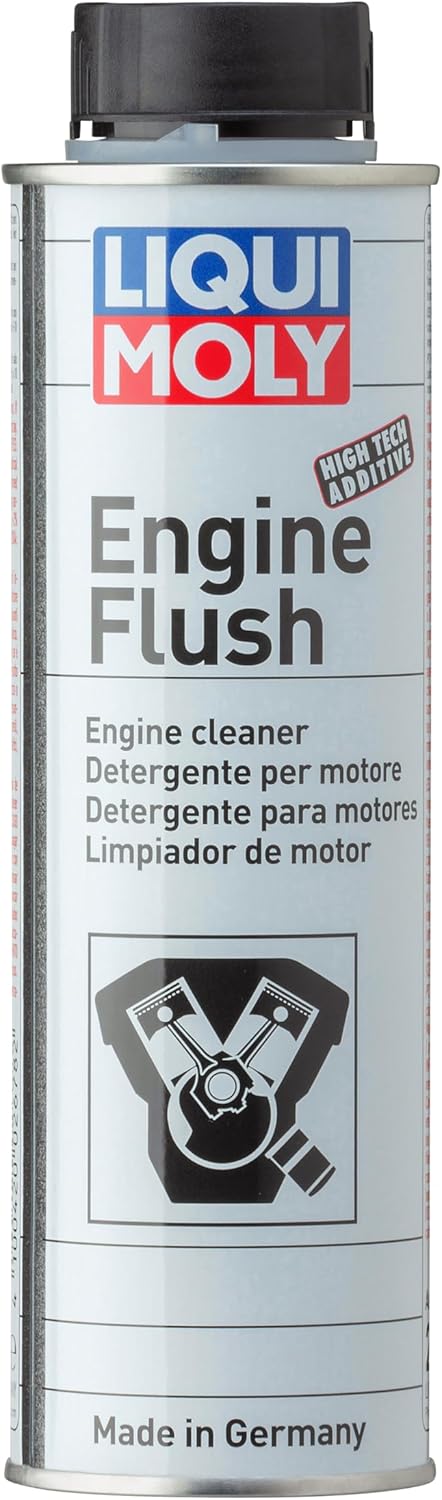
LIQUI MOLY ENGINE FLUSH – ENGINE CLEANER ADDITIVE BEFORE OIL CHANGE (300 ML)
For Golf 8 1.5 TSI with high mileage and a history of not always correct oil, an Engine Flush treatment before the oil change removes sludge and deposits from the lubrication channels of the ACT and turbo. Add to old oil 10 minutes before draining.
🛒 Buy on Amazon*Affiliate link: we may receive a small commission, at no additional cost to you.
💰 8. INDICATIVE COSTS
| Intervention | Indicative cost | Notes |
|---|---|---|
| Full diagnosis + ECU software update | €0 under warranty / €80–200 out of warranty | Always the first intervention — includes adaptive reset |
| Professional injection cleaning | €80–150 | Recommended every 40,000–50,000 km with urban use |
| Engine mount replacement | €300–600 | Only if worn — reduces perceived vibrations from ACT |
| Turbo intervention (hoses, actuators) | €200–500 | Without turbo replacement |
| Engine oil change 0W-20 + filter | €80–140 | With correct VW 508.00/509.00 specification |
| Turbocharger replacement | €1,200–2,000 | Only in the most severe cases — almost always avoidable with correct maintenance |
🧾 9. WHAT TO CHECK ON A USED GOLF 8 1.5 TSI
- ☐ Cold and warm test drive — check for jerking, irregularities, "kangaroo effect" during maneuvers and in 2nd/3rd gear at low revs
- ☐ Oil specification in service records — must be 0W-20 VW 508.00/509.00, not 5W-30
- ☐ Updated software version — ask for confirmation at a workshop with access to the VW portal
- ☐ Turbo noise — evident whistling during acceleration should be investigated before purchase
- ☐ Declared predominant use — if only city driving, GPF and injectors require more attention
- ☐ Specific eTSI jerk (on DFYA/DXDB versions) — test after 20–30 minutes of driving: no jerk at the first stop
❓ FREQUENTLY ASKED QUESTIONS
Are jerking issues always solved with a software update?
No — but in most cases, an update is the first intervention that brings the most significant improvement. If the problem persists after the update and adaptive reset, the following should be explored in order: dirty injectors, engine mounts, ACT actuators. Never skip the first step to go directly to the mechanical component.
Is the Golf 8 1.5 TSI reliable?
Overall, yes — it's a modern engine that requires correct maintenance (0W-20 oil, timely servicing) and often software updates to perform at its best. Jerking issues mainly affect earlier models from 2020–2022 that haven't been updated. Versions from 2022 onwards with factory-updated firmware have significantly improved reliability.
Can I deactivate ACT?
It is not deactivated by official dealerships — they work on updates to make it less intrusive. Some independent workshops may intervene on the parameters. Be mindful of the warranty before making modifications outside the official network. The most effective and safest solution remains the official software update.
What oil should I use on my Golf 8 1.5 TSI?
0W-20 with VW 508.00/509.00 specification — not the 5W-30 used on the Golf 7. Service capacity 4.3 liters. For the complete table with all engine codes: Golf 8 engine oil guide.
📌 CONCLUSION
The VW Golf 8 1.5 TSI is a valid choice if managed correctly. Jerking, ACT irregularities, and GPF issues are almost always preventable or solvable with the correct oil, software updates, and some care in driving style. Those who are aware of these points never face unexpected expenses.
For 0W-20 VW 508.00/509.00 engine oil and all maintenance products for the Golf 8 1.5 TSI, visit the Autoricambi Tritella catalog.


