

FORD KUGA 1.5 ECOBOOST / ECOBLUE 2019–2025 PROBLEMS: FUEL CONSUMPTION, WET BELT, TURBO, DPF AND REAL COSTS
Updated 2026 – Technical analysis by Gianni Tritella on Ford Kuga MK3 1.5 EcoBoost (3-cylinder turbo petrol) and 1.5 EcoBlue (4-cylinder diesel) with wet timing belt
Quick Answer
The Ford Kuga MK3 (2019-2025) with 1.5 EcoBoost (3-cylinder turbo petrol, 88-110-111-137 kW) and 1.5 EcoBlue (4-cylinder diesel 88 kW/120 hp) engines presents three main critical issues: wet timing belt — replacement €1,200-1,500, vs €400-700 for a traditional dry belt; clogged DPF on used diesels in urban driving (€180-350 cleaning, €1,400-2,000 replacement); 3-cylinder EcoBoost vibrations often due to engine mounts (€250-700). The correct engine oil is Ford WSS-M2C952-A1 (0W-20) for recent versions or WSS-M2C948-B (5W-20) for earlier series — using the correct specification is critical to preserve the wet belt. Facebook group "Indignati di Ford" (Outraged Ford Owners) has over 7,200 members. Ford recall in March 2025 only affects PHEV 2.5, NOT the 1.5 engines.
The Ford Kuga 1.5, in both EcoBoost petrol and EcoBlue diesel versions, is one of the most popular SUVs in company fleets and among private individuals looking for a comfortable, safe, and not excessively bulky car. Precisely for this reason, in our spare parts warehouse and in daily interactions with workshops, we see an enormous number of real cases that allow us to draw a concrete picture of the pros and cons of these engines.
In this article, you will not find advertising slogans, but a reasoned technical analysis: what really happens to the 1.5 EcoBoost and EcoBlue, which symptoms should be taken seriously, which interventions are worthwhile, and how to proceed if you are considering a used Kuga 1.5 from 2019 to 2025. Spoiler: the #1 critical issue is the wet timing belt, shared with other Ford engines such as the 1.0 EcoBoost (Fiesta, Focus, EcoSport) and 2.0 EcoBlue (Transit, Focus).

🚙 1. WHICH 1.5 ENGINES DOES THE KUGA MK3 USE?
Between 2019 and 2025, the Ford Kuga MK3 was offered with two completely different 1.5 engines:
1.5 EcoBoost (turbo petrol, 3 cylinders)
- Displacement: 1,499 cc (3 cylinders in-line, direct injection)
- Power outputs: 88 kW (120 hp), 110 kW (150 hp), 111 kW (151 hp), 137 kW (186 hp)
- Intended for: those who drive a lot in the city and on mixed routes
- Transmission: 6-speed manual or 8-speed automatic
- Timing system: wet belt — critical point
1.5 EcoBlue (turbo diesel, 4 cylinders)
- Displacement: 1,499 cc (4 cylinders in-line)
- Power output: 88 kW (120 hp)
- Intended for: those who cover many extra-urban/highway kilometers
- Transmission: 6-speed manual or 8-speed automatic
- Timing system: wet belt — also critical
- Emissions control systems: DPF + AdBlue (Euro 6)
In practice, both engines perform well if used in the right context and with rigorous maintenance. However, when non-ideal use (lots of city driving with diesel, only short trips with turbo petrol) and "budget" maintenance are combined, some recurring critical issues frequently observed in workshops clearly emerge — the main one being the wet timing belt.
⚠️ 2. WET BELT: THE MAIN CRITICAL ISSUE OF THE KUGA 1.5
Both the 1.5 EcoBoost and the 1.5 EcoBlue of the Kuga MK3 use a wet timing belt (also called "wet belt"): a reinforced rubber belt that works immersed in engine oil inside the crankcase, rather than in a dry external housing as with traditional belts.
Why Ford adopted this solution
The idea was to reduce friction, noise, and extend the component's life. On paper, replacement intervals were longer than the typical 90,000-110,000 km of dry belts. In practice, however, documented problems emerged that led Ford to issue recalls on similar models (EcoSport, Focus 1.0 EcoBoost) and to progressively change oil specifications.
What happens when the wet belt degrades
The belt, immersed in oil, under certain driving conditions or with inadequate maintenance, tends to deteriorate prematurely, releasing small rubber fragments into the lubrication circuit. The consequences are two, both serious:
- Fragments obstructing the oil pump pickup: lubrication becomes insufficient or absent, with the risk of engine seizure
- Belt skipping a tooth or breaking: synchronisation between pistons and valves is lost, leading to very severe internal damage (bent valves, damaged pistons, compromised cylinder head)
In both cases, repair is almost always uneconomical and requires the replacement of the entire engine — an expense that can exceed €5,000-8,000.
The phenomenon is well-known (Facebook group "Indignati di Ford")
The problem is widespread enough to have generated an organised social mobilisation: the Facebook group "Indignati di Ford" (Outraged Ford Owners) has surpassed 7,200 members, where owners of Fiesta, Focus, Puma, Mondeo, EcoSport, and Kuga share real cases and mutual support. Ford has responded with case-by-case interventions and, for certain batches, with recall campaigns or warranty extensions. Between 2019 and 2020, Ford replaced the belt with a timing chain on some models — a sign that the manufacturer acknowledges the critical issue.
Wet belt replacement cost
| Belt type | Replacement cost | Notes |
|---|---|---|
| Traditional dry belt | €400-700 | Classic external belts |
| Kuga 1.5 wet belt | €1,200-1,500 | Removal of oil sump + accessories |
| Engine replacement (broken belt) | €5,000-8,000 | Only if breakage → compromised engine |
⚠️ When to replace the wet belt on Kuga 1.5: Ford recommends long theoretical intervals, but our workshop experience suggests checking it from 100,000-120,000 km and proactively replacing it within 140,000-150,000 km, especially if the car has been used in the city with many cold starts or if the service history is not perfectly documented. A broken wet belt costs 8 times more than a preventive replacement.
How to prevent the problem (the most important thing)
The main critical factor that worsens the wet belt is the premature ageing of the engine oil: oil not to Ford specification, excessively long service intervals, fuel contamination (typical in short journeys). The concrete protection is only one: use engine oil to the correct Ford specification and anticipate service intervals compared to the owner's manual.
⛽ 3. WHAT IS THE REAL FUEL CONSUMPTION?
1.5 EcoBoost: why it consumes more than expected in the city
The 1.5 EcoBoost, especially with the 8-speed automatic transmission and predominantly urban driving, shows higher fuel consumption compared to homologated data. Real values collected from users and partner workshops:
| Condition | WLTP | Real (users) |
|---|---|---|
| Intense city driving | ~7.5 L/100 km | 8.5-10.5 L/100 km |
| Extra-urban | ~5.5 L/100 km | 6.0-7.0 L/100 km |
| Highway (130 km/h) | ~6.2 L/100 km | 7.2-8.5 L/100 km |
The engine is lively and pleasant, but like all direct injection turbo petrol engines, it performs best when thoroughly warm and operating under stable conditions. On 4-5 km commutes, it's normal to see high fuel consumption and accumulation of condensation/fuel in the oil; with infrequent servicing, this accelerates wet belt degradation.
1.5 EcoBlue: excellent fuel consumption, but only if used "like a diesel"
The 1.5 EcoBlue 120 hp is efficient when used as a modern diesel deserves:
- Extra-urban/highway: easily 5.0-6.0 L/100 km
- Intense city driving: consumption rises to 6.5-7.5 L/100 km and, more importantly, DPF regenerations increase enormously, with the risk of clogging if the car is always switched off during regeneration
If you drive less than 12-15,000 km/year and almost exclusively in the city, diesel is often the wrong choice, not due to the Kuga's fault, but due to the type of use.
🌀 4. TURBO, INJECTORS AND COMBUSTION: THE MOST FREQUENT PROBLEMS
1.5 EcoBoost: turbo and direct injection
For the 1.5 EcoBoost, the most recurrent issues in workshops are:
- Light jerking and lack of response when cold — often due to dirty injectors or worn spark plugs (€15-30 per spark plug, set of 3 spark plugs €45-90)
- Supercharging pressure control unit errors — turbo no longer working perfectly
- Loss of performance and increased consumption — frequent after many km with non-WSS Ford spec oil or extended service intervals
- Abnormal oil consumption — reported on some units, needs to be monitored by checking oil level every 2,000-3,000 km
Prevention: correct oil and early service intervals compared to the owner's manual, especially for cars used in the city. Underestimating the quality of the lubricant in a modern direct injection turbo petrol engine is the best way to shorten its life — and on the Kuga 1.5, it is also the quickest way to compromise the wet belt.

AREXONS 9820 – DIRECT INJECTION PETROL INJECTOR CLEANER
Formulated to clean direct injection petrol injectors, improve atomisation, and reduce jerking and irregularities at low revs. Useful for 1.5 EcoBoost engines frequently used in the city and on short trips, where carbon deposits on the intake valves are accelerated. Use every 10,000-15,000 km as preventive maintenance.
🛒 Buy now on Autoricambi Tritella1.5 EcoBlue: turbo and diesel injectors
For the 1.5 EcoBlue, sensitive areas mainly concern:
- Whistling turbo or slightly noisy during acceleration — often imperfect lubrication or heavy use
- Dirty or partially clogged injectors — irregular idle and increased smoke (€80-150 for ultrasonic cleaning, €350-450 per injector if replacement is needed)
- Delicate cold start management if the engine is always "switched off and on" for a few kilometers
- Clogged EGR valve after 80,000-100,000 km in urban use, leading to error messages and loss of power
Many of these problems can be prevented with quality diesel fuel, proper servicing, original or equivalent brand fuel filters, and, when use is demanding, the support of a good diesel injector cleaner additive.
BEST DIESEL INJECTOR CLEANER 2026 – COMPLETE GUIDE
The definitive guide to the best Diesel injector cleaners for 2026: real tests, differences between additives, results on engines with dirty injectors, benefits on fuel consumption and acceleration, and which products truly work on the Ford 1.5 EcoBlue.
📘 Read the full guide🔧 5. VIBRATIONS, NOISE, AND ENGINE MOUNTS
Another recurring issue with the Kuga 1.5 is the sensation of vibrations at idle or during light acceleration, especially on the EcoBoost 3-cylinder.
EcoBoost: "Physiological" vs. Abnormal Vibrations
A certain level of vibration, compared to a classic 4-cylinder, is physiological for a 3-cylinder turbo engine. However, when customers start complaining, we often find:
- Engine mounts with hardened rubber or partially failed after 80,000-120,000 km
- CV joints and transmission components that amplify vibrations into the cabin
- Spark plugs and coils not working perfectly, making the idle less smooth
- Injectors with uneven flow between the 3 cylinders, causing imbalances
EcoBlue: Cold and Under Load Vibrations
On the 1.5 EcoBlue, accentuated vibrations can be related to:
- Engine and gearbox mounts fatigued after many kilometers
- Injectors to be checked (correctors out of range in diagnostics: ±2.5 mm³ is normal, beyond that needs investigation)
- Dual-mass flywheel nearing end of life (sharper jolts when revving up, sometimes a typical "refrigerator" noise at idle)
In all these cases, diagnosis should be done carefully: randomly changing mounts or the flywheel without reading parameters in the ECU is the best way to spend a lot and solve little. A serious diagnosis with an appropriate OBD tool (TEXA, Bosch KTS, Ford IDS) costs €40-90 and halves the risk of unnecessary interventions.
📡 6. ELECTRONICS, SYNC AND "GHOST" WARNING LIGHTS
Like all modern Fords, the Kuga 2019-2025 also has a strong electronic component: ADAS (radar, cameras, Lane Assist), SYNC 3 and SYNC 4 infotainment, and sensors of all types. A significant portion of the reported problems concerns this area.
Frequent Problems
- Intermittent engine warning lights — often from temperature sensors, EGR, DPF, or differential pressure
- ADAS warnings (radar, parking sensors, Lane Assist) — dirt, minor impacts, or recalibrations after washes
- SYNC freezes and slowdowns with black screen or random reboots — often due to old firmware or a weak 12V battery
- eCall malfunction — emergency call system mandatory by law; must always be resolved quickly
- Telematics module bulletin — reported on some batches
What to Do Before Panicking
- Always perform a full diagnostic scan with an OBD scanner (TEXA, Bosch, Topdon, Autel), saving stored error codes
- Check for available software updates on the official Ford network (crucial for FHEV/PHEV and ADAS versions)
- Check the 12V service battery status: a weak battery is one of the main causes of "ghost" errors on modern Kugas (resting voltage ≥ 12.4V)
- Verify the cleanliness of radar/camera sensors after automatic car washes
🌫️ 7. DPF AND URBAN USE ON 1.5 ECOBLUE
On the 1.5 EcoBlue Kuga, the DPF (Diesel Particulate Filter) is the most delicate point when the car is used as a "city car" rather than for long-distance driving.
Typical Symptoms of a Stressed DPF
- Slightly higher engine speeds than usual and active engine fans after shutdown (regeneration in progress)
- DPF warning lights or messages like "Particulate filter clogged"
- Increased fuel consumption, car feeling "dead" at low revs, sometimes limp mode
- Abnormal regeneration frequency (more than 1 every 200-300 km is a sign of a problem)
In the workshop, we often see Kugas with only urban use, missed services or services done with unsuitable oils, and DPFs already at their limits. In these cases, it ranges from simple forced regenerations/professional cleanings (€180-350) to, in the worst cases, a complete filter replacement (€1,400-2,000 with original spare parts).
DIESEL PARTICULATE FILTER (FAP) PROBLEMS – 2025 GUIDE
The Diesel Particulate Filter (FAP/DPF) is one of the most common causes of engine warning lights, loss of power, and high fuel consumption on the 1.5 EcoBlue. Causes of clogging, symptoms to recognize, and truly effective solutions in 2026.
📘 Read the full guide🛠️ 8. WHICH ENGINE OIL TO USE ON KUGA 1.5?
The correct engine oil is the single most important factor in preserving the wet belt and the overall health of the Kuga 1.5 EcoBoost/EcoBlue. Ford has updated specifications multiple times between 2019 and 2025 — using the wrong oil can accelerate wet belt degradation and void the warranty.
Ford Kuga 1.5 Oil Specifications (verified)
| Kuga Version | Ford Specification | Viscosity Grade | Quantity |
|---|---|---|---|
| 1.5 EcoBoost 88 kW (120 hp) and early 110 kW | WSS-M2C948-B | 5W-20 | 5.0-5.5 L |
| 1.5 EcoBoost 110/111/137 kW recent (2024+) | WSS-M2C952-A1 | 0W-20 | 5.0-5.5 L |
| 1.5 EcoBlue 120 hp diesel | WSS-M2C952-A1 + Dexos D + MB 229.71 | 0W-20 | ~5.5 L |
⚠️ Important: always verify the exact specification in the owner's manual or on the sticker in the engine bay. For early series 88 kW Kugas, do not use 0W-20: the specification is 5W-20 WSS-M2C948-B. For recent versions approved for 0W-20, do not use higher viscosity grades "just in case": they worsen fuel consumption and may not comply with Ford approvals.
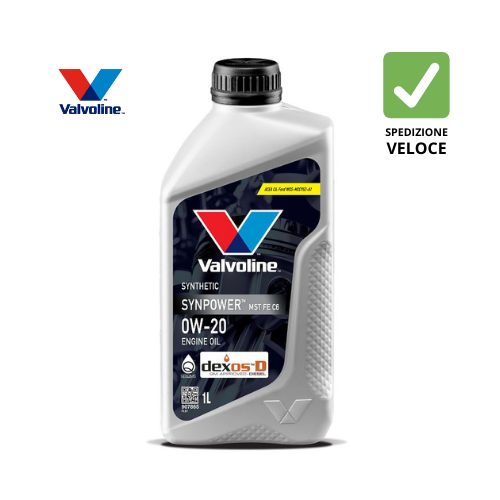
VALVOLINE 907865 SYNPOWER MST FE C6 0W-20 – SYNTHETIC ENGINE OIL FOR FORD
Fully synthetic ACEA C6 engine oil with explicit Ford WSS-M2C952-A1 approval: the correct specification for recent Kuga MK3 1.5 EcoBoost 110/111/137 kW (and for the 1.5 EcoBlue 120 hp diesel). DPF/GPF compatible, reduces LSPI (low-speed pre-ignition), optimizes fuel consumption by 2-3%, and protects the wet belt from premature degradation. Also approved by Jaguar STJLR.03.5006, MB 229.71, Opel.
🛒 Buy now on Autoricambi Tritella💡 If you have an early series 88 kW Kuga 1.5 EcoBoost with specification WSS-M2C948-B, the correct Valvoline product is Valvoline 907850 SynPower FE 5W-20 (also available in the Tritella catalog).
Recommended Service Intervals
- From Ford manual: 30,000 km or 24 months
- Mixed/urban use: oil change every 15-20,000 km or 12 months
- Heavy duty use (high-speed highway, towing, hot climate): 15,000 km fixed
- Intense urban use (<10 km per trip): 10-12,000 km to protect the wet belt
On wet belt engines, bringing forward the service interval compared to the manual is the single most cost-effective investment: €70-120 for an early service vs €1,200-1,500 for wet belt replacement or €5,000+ for engine replacement.
💰 9. AVERAGE INTERVENTION COST TABLE FOR FORD KUGA 1.5 (2026)
The following values are indicative estimates collected from partner workshops and real cases (May 2026). They may vary based on location, type of spare parts (original Ford / premium aftermarket), and the complexity of the individual intervention.
| Problem | Typical Intervention | Cost | Time |
|---|---|---|---|
| Preventive wet belt replacement | Wet belt + tensioner + accessories | €1,200-1,500 | 1-1.5 days |
| Full service + correct spec oil | Ford WSS oil + original filters | €140-220 | 1-2 hours |
| High fuel consumption 1.5 EcoBoost | Service + spark plugs + injector cleaning | €300-650 | 1/2 day |
| Noisy turbo / early wear | Diagnosis, play check, eventual replacement/overhaul | €900-1,600 | 1-2 days |
| Engine mounts (vibrations) | Replacement of 1-3 engine/gearbox mounts | €250-700 | 2-5 hours |
| Clogged DPF 1.5 EcoBlue – cleaning | Forced regeneration or professional cleaning | €180-350 | 2-4 hours |
| Clogged DPF 1.5 EcoBlue – replacement | Full filter replacement + recoding | €1,400-2,000 | 1 day |
| Diesel injectors (ultrasonic cleaning) | Cleaning 4 injectors + installation | €280-450 | 1 day |
| Electronics/ADAS (sensors, radar, SYNC) | Diagnosis, software update, replacement | €150-900 | 1-8 hours |
| 12V battery replacement | Reinforced EFB Start&Stop | €140-220 | 30-60 min |
| Engine replacement (broken wet belt) | Complete engine (reconditioned or new) | €5,000-8,000 | 3-5 days |
*Times and costs are purely indicative for May 2026, always to be confirmed with a quote for the individual vehicle after in-depth diagnosis.
💬 Have a high workshop quote for your Kuga 1.5?
Send us your VIN + engine code + workshop quote. We'll help you understand if prices are in line with the 2026 market and find compatible Kuga MK3 1.5 spare parts (Ford WSS-M2C952-A1 engine oils, wet belt kits, DPF filters, additives) at the correct prices — often saving 20-30% compared to the dealership.
📩 Request a free quote🧾 10. CHECKLIST FOR BUYING A USED FORD KUGA 1.5 (2019–2025)
If you are considering a used Kuga 1.5 EcoBoost or EcoBlue, these are the checks I always recommend before signing:
- Documented service history: preferably with invoices and correct WSS Ford spec oils/filters. Be wary of "verbal" service claims — on these engines, lubricant quality is critical for the wet belt
- Previous use type: an EcoBlue that has done a lot of well-maintained highway driving is worth much more than a "city center" diesel with a tired DPF
- Verify if wet belt has already been replaced: if the previous owner has already had the wet belt changed (with invoice), the car is worth €1,500-2,000 more — it's an expense already incurred
- Cold and warm road test: listen for vibrations, turbo, gear shifts, and check for any power delivery gaps or metallic noises from the engine
- OBD ECU diagnostics: always have stored error codes read from the engine, gearbox, DPF, ADAS, and SYNC infotainment
- DPF and AdBlue check (EcoBlue): ask if there have been any interventions on the DPF/NOx sensors and check regeneration frequency
- Oil level check: engine cold, dipstick perfectly within range. Very diluted oil or level above MAX = suspected fuel contamination (sign of wet belt under stress)
- 12V battery check: resting voltage ≥ 12.4V, crucial for modern Kugas to avoid "ghost" errors soon after purchase
- Verify VIN on Ford website: check for open recalls via the VIN on the official Ford Italy portal
🔗 RELATED INSIGHTS
The complete Ford Kuga MK3 CORE: all problems for petrol, diesel, hybrid, and PHEV with DTCs and technical diagnosis
→ Read the Kuga MK3 CORE guide
Complete guide to Ford WSS specifications for each Kuga MK3 engine (1.5/2.0 EcoBoost, 1.5/2.0 EcoBlue, 2.5 FHEV/PHEV)
→ Read the Kuga MK3 oil guide
Real tests on the best diesel injector additives applicable to the 1.5 EcoBlue Ford
→ Read the products guide
❓ FREQUENTLY ASKED QUESTIONS ABOUT FORD KUGA 1.5 ECOBOOST / ECOBLUE
Is the Ford Kuga 1.5 a reliable car?
Yes, if it is used correctly and maintained diligently. The main critical issue is the wet timing belt (on both EcoBoost and EcoBlue): with the correct engine oil to Ford WSS-M2C948-B or WSS-M2C952-A1 specifications and early oil changes (15,000 km in urban use), the engine can run for 200,000+ km without problems. With wrong oil or infrequent oil changes, the risk of wet belt failure before 100,000 km exists and is documented ("Indignati di Ford" group >7,200 members).
Which engine oil should be used in the Kuga 1.5 EcoBoost?
It depends on power and year: for 1.5 EcoBoost 88 kW (120 hp) and early 110 kW, 5W-20 oil with Ford WSS-M2C948-B specification is needed (e.g., Valvoline SynPower FE 5W-20 code 907850). For 1.5 EcoBoost 110/111/137 kW recent models (from 2024), 0W-20 with WSS-M2C952-A1 specification is needed (e.g., Valvoline SynPower MST FE C6 0W-20 code 907865). Always check your owner's manual or the sticker in the engine compartment. Quantity ~5.0-5.5 L with filter.
Does the Kuga 1.5 wet timing belt really break?
Yes, it is a real and documented risk. Cases collected by the Facebook group "Indignati di Ford" (over 7,200 members), and Ford has issued recalls on similar models (1.0 EcoBoost on Fiesta, Focus, EcoSport). The failure is almost always catastrophic: fragments block the oil pump, causing engine seizure, or piston/valve synchronisation is lost. Repair = engine replacement (€5,000-8,000). Prevention is: correct Ford specification oil + early oil changes + preventive wet belt replacement within 140,000-150,000 km.
Is it better to choose a Kuga 1.5 EcoBoost or EcoBlue?
EcoBoost if you drive less than 15,000 km/year with a lot of city driving and short/medium mixed routes (but beware of excessively short trips <5 km that dilute the oil). EcoBlue if you drive over 20,000 km/year primarily on extra-urban/motorway roads and can allow the DPF to work effectively. Both engines have a wet belt, so the real mechanical choice is between the 3-cylinder turbo petrol and the 4-cylinder diesel — look at your usage profile, not just the technical specifications. For mileages under 12,000 km/year, diesel is almost always disadvantageous.
How do I know if my 1.5 EcoBlue's DPF is having problems?
Typical symptoms: DPF warning lights, frequent regenerations (more than 1 every 200-300 km is abnormal), fans often active after stopping, increased fuel consumption, and the car feeling more "choked" at low revs. Sometimes recovery mode (limp mode). In these cases, perform a complete diagnostic scan with an OBD scanner and consider a professional cleaning (€180-350) before the blockage becomes critical and replacement is needed (€1,400-2,000). Never ignore ongoing regenerations: switching off the car during a regeneration accelerates blockage.
How often should the oil be changed on the Kuga 1.5?
Ford theoretically recommends 30,000 km or 24 months as per the owner's manual. Our experience with EcoBoost and EcoBlue suggests much shorter intervals to protect the wet belt: 15-20,000 km or 12 months for normal mixed/urban use; fixed 15,000 km for heavy use (high-speed motorway, towing, hot climate); 10-12,000 km for intense urban use with short trips. €70-120 more for an oil change every 2-3 years versus €1,200-1,500 for wet belt replacement or €5,000+ for an engine: the calculation always pays off.
Does the Ford Kuga March 2025 recall affect my 1.5?
No. The Ford Kuga March 2025 recall (for risk of high-voltage battery cell short circuit, temporary charging ban) concerns exclusively the Plug-in Hybrid 2.5 PHEV versions of the Kuga MF Restyling (2024+). The 1.5 EcoBoost and 1.5 EcoBlue engines are NOT involved in this recall. To check for open recalls on your specific VIN, visit the official Ford Italy portal with your chassis number.
What is the value of a used Kuga 1.5 2020-2022 in 2026?
Indicative valuations for May 2026: a Kuga 1.5 EcoBoost 150 hp from 2020-2021 with 80-110,000 km and regular servicing is between €17,000-22,000 depending on trim and condition. A Kuga 1.5 EcoBlue 120 hp from the same year is between €18,000-23,000 (diesels still hold value on Kuga). Bonus +€1,500-2,000 if the wet belt has already been replaced with an invoice. Malus €2,000-3,000 for models without documented service history.
📌 CONCLUSIONS
The Ford Kuga 1.5 (EcoBoost or EcoBlue, 2019-2025) is a good SUV if used and maintained correctly. The #1 critical issue is the wet timing belt: with the correct Ford specification engine oil (WSS-M2C948-B for 88 kW, WSS-M2C952-A1 for recent versions) and early oil changes at 15-20,000 km, the risk of breakage is drastically reduced.
For 1.5 EcoBlue diesel engines, the DPF is the delicate point for those who drive only in the city — it's better to opt for petrol if the usage profile is predominantly urban. For both, the SYNC electronics and ADAS sensors require attention and an efficient 12V battery.
For compatible Kuga MK3 1.5 spare parts (Ford WSS engine oils, wet belt kits, DPF filters, cleaning additives, EFB batteries), visit the Autoricambi Tritella catalog or request a free quote.


