

FIAT 500 1.0 HYBRID (2020–2024): MOST COMMON PROBLEMS, DEFECTS, AND RECURRING FAILURES
Updated 2026 · Technical guide for Fiat 500 312 1.0 FireFly Mild Hybrid (engine K0FA1, 70hp/65kW) produced from 2020 to 2024
Quick Answer
The Fiat 500 1.0 Hybrid (2020-2024) with the FireFly K0FA1 three-cylinder naturally aspirated 70hp/65kW engine and 12V Mild Hybrid system with BSG (Belt Starter Generator) presents the most frequent problems as: limited performance uphill or when fully loaded (€0 — it's a design issue), idle vibrations typical of 3-cylinders (€200-350 engine mounts), water ingress into the cabin (€80-250), dedicated 12V mild hybrid battery discharging prematurely (€180-250), BSG belt squealing when cold (€150-280). Required engine oil: 0W-20 ACEA C5 with Fiat 9.55535-DM1 approval. Oil change every 15,000 km or 12 months.
The Fiat 500 1.0 Hybrid with the FireFly Mild Hybrid engine is one of the most popular city cars in recent years: over 250,000 units registered in Italy between 2020 and 2024. We often see it in the workshop for checks and diagnostics, especially after the first 40-70,000 km, and most of the problems reported by owners fall into recurring patterns rather than serious defects.
This 2026 guide collects real problems that have emerged from direct workshop experience and feedback from specialized technicians who work on this model daily. The goal is clear: to distinguish between design limitations and actual failures, and to prevent owners from spending large sums on problems that can be solved with simple interventions.
🔧 1. HOW DOES THE FIREFLY MILD HYBRID ENGINE WORK?
The Fiat 500 1.0 Hybrid engine is the FireFly N3 BSG 999 cm³ (engine code K0FA1), a naturally aspirated three-cylinder gasoline direct injection (GDI) combined with a 12V Mild Hybrid system with BSG (Belt Starter Generator). It delivers 70 hp (52 kW) at 6,000 rpm and 92 Nm at 3,500 rpm, exclusively paired with the 6-speed manual C510 gearbox.
What does 12V Mild Hybrid mean?
The Fiat 500's Mild Hybrid system is NOT a true hybrid. The electric motor (the BSG alternator-starter) does not move the car, but supports the internal combustion engine in a limited way:
- Faster and quieter starting (replaces the traditional starter motor)
- Braking energy recovery (regenerative, up to 3.6 kW peak)
- Coast and Sailing function (internal combustion engine off above 30 km/h in neutral)
- Smoother Start&Stop thanks to the reinforced belt instead of the gear
- Small boost in acceleration (maximum 3.6 kW = 5 additional hp for a few seconds)
⚠️ Key point: the 12V Mild Hybrid system does not significantly increase power (maximum 5 hp momentary boost). Those who buy it expecting to drive a Toyota or Honda type hybrid are always disappointed. The 500 Hybrid is essentially a traditional gasoline city car with an assistance system that reduces consumption during urban stop-and-go phases.
Main components of the Mild Hybrid system
- FireFly K0FA1 internal combustion engine: 3 cylinders, 999 cc, naturally aspirated, 200 bar GDI direct injection, 6 injector holes
- BSG (Belt Starter Generator): integrated alternator-starter, mounted on the crankshaft via a reinforced poly-V belt
- Dedicated 12V battery: reinforced 60-70 Ah AGM or EFB, sized for repeated Mild Hybrid cycles
- DC/DC converter: manages voltages between battery, BSG and electrical system
- C510 6-speed manual gearbox (the only one available in the Hybrid version)
📅 2. WHAT VERSIONS AND DIFFERENCES BETWEEN 2020, 2021, 2024?
The Fiat 500 1.0 Hybrid has undergone several technical evolutions during its 2020-2024 production. Knowing them helps to understand specific problems and solutions for each model year.
| Version | Years | Technical features |
|---|---|---|
| Launch 312 Hybrid | Jan 2020 | First Fiat Mild Hybrid. K0FA1 70hp. Cult, Pop, Lounge, Star, Rockstar trims |
| MY 2021 | 2021-2022 | ECU software update + BSG mapping revision for consumption |
| MY 2023 | 2023 | Latest commercial series, renewed Dolcevita, Hey Google trims |
| End of internal combustion production | 2024 | Stop production of 1.0 Hybrid 312. Reintroduction announced 2025-2026 for market needs |
💡 Important note: the Fiat 500 Hybrid 312 shares its platform and engine with the contemporary Panda Hybrid. Many problems and solutions described in this guide also apply to the Panda 1.0 Hybrid (same K0FA1, same BSG, same electronics).
⚡ 3. WHY DOES THE FIAT 500 HYBRID SEEM "SLOW"?
This is the most reported problem by owners. The Fiat 500 1.0 Hybrid often feels sluggish, especially:
- At low revs (below 2,000 rpm)
- Uphill (even with slopes of 5-7%)
- When fully loaded (4 people + luggage)
- With air conditioning active
- When overtaking at motorway speeds (110-130 km/h)
Real technical causes (not faults)
In most cases we see in the workshop, the problem is not a fault but a combination of precise design limitations:
- Reduced torque at low revs — the naturally aspirated FireFly delivers 92 Nm but only reaches it at 3,500 rpm. Below 2,000 rpm, the available torque is only 65-70 Nm
- Long C510 gearbox ratios — the 6-speed manual gearbox is optimized for consumption (1st = 3.909, 6th = 0.659) and penalizes acceleration
- Minimal electric support — the BSG provides a maximum of 3.6 kW (5 hp) for a few seconds
- Increased vehicle weight — the Hybrid weighs 980 kg (vs 940 kg of the pre-Hybrid 1.2 petrol) due to the battery, BSG, and additional wiring
- High aggregate electrical consumption — with A/C, heated seats, Uconnect 7" infotainment, the internal combustion engine continuously charges the 12V battery
When it is an actual fault
Performance can actually degrade below the normal threshold in case of:
- Dirty injectors (frequent on GDI engines already at 50,000-70,000 km)
- Clogged air filter beyond 30,000 km
- Worn spark plugs beyond 60,000 km (original interval 40,000 km)
- Contaminated lambda sensor
- Carbonized EGR
- Degraded 12V battery that limits Mild Hybrid functions
⛽ 4. WHAT ARE THE REAL CONSUMPTION FIGURES?
Despite the "Hybrid" label, real consumption surprises many users. The difference between WLTP homologation data and real consumption is often 20-30%.
| Driving condition | Declared WLTP consumption | Real consumption (workshop) |
|---|---|---|
| Urban | 5.4 L/100 km | 6.5-7.5 L/100 km |
| Extra-urban | 3.9 L/100 km | 4.5-5.2 L/100 km |
| Combined | 4.4 L/100 km | 5.5-6.3 L/100 km |
| Motorway 130 km/h | — (not in cycle) | 6.8-7.5 L/100 km |
Why is real consumption higher?
- In the city, the Mild Hybrid benefit is limited to stop-and-go phases (maximum 0.5-1 L/100 km real saving compared to a pure 1.2 petrol)
- Outside the city, the Mild Hybrid system is almost inactive (regeneration only works under significant deceleration)
- Driving style affects 30-40% of final consumption: the 500 Hybrid prefers gentle starts and gear changes below 2,500 rpm
- Air conditioning increases consumption by 15-20% in the city
💡 Common mistake: thinking the car "adapts by itself". In reality, it requires a specific driving style: gear changes below 2,500 rpm (even earlier uphill), firm decelerations to activate regeneration, avoid aggressive 1st gear starts.
📳 5. ARE IDLE VIBRATIONS NORMAL?
Being a naturally aspirated three-cylinder, the FireFly generates more pronounced physiological vibrations compared to a four-cylinder. However, when vibrations become noticeable or increase over time, they should be evaluated.
"Physiological" vibrations (normal)
- Slight vibrations at the steering wheel and gear shift at cold idle (first 30-60 seconds)
- More pronounced vibrations during Start&Stop shutdown and restart
- Typical frequency: 800-900 rpm at cold idle, drops to 750 rpm when warm
- Greater perception with active air conditioning (extra load on the engine)
Abnormal vibrations (should be checked)
- Vibrations that increase over time or are felt at the steering wheel even at constant speed
- Vibrations with irregular idle (oscillation between 600-1,000 rpm)
- Vibrations accompanied by an illuminated engine light
- Vibrations that decrease in neutral but increase when in gear (suspect engine mounts)
Most frequent causes of abnormal vibrations
- Degraded engine mounts — the classic hydraulic "cushion" typically breaks between 80,000-120,000 km. Replacement cost €200-350
- Dirty GDI injectors — carbon deposits on the 6 holes reduce atomization
- Worn spark plugs — on FireFly, the interval is 40,000 km
- Defective ignition coils — rare but present phenomenon
- Vibrating BSG tensioner — the reinforced poly-V belt is subject to tensioning
⚠️ Ignoring abnormal vibrations can lead to premature wear of engine mounts, gearbox, and half-shafts. Constant vibrations reduce the life of all components connected to the powertrain.
🔋 6. HOW LONG DOES THE 12V MILD HYBRID BATTERY LAST?
The 12V battery of the Fiat 500 Hybrid is NOT a normal starter battery. It is a reinforced AGM or EFB battery of 60-70 Ah, sized to handle hundreds of daily Start&Stop and Mild Hybrid regeneration cycles.
Characteristics of the Fiat 500 Mild Hybrid battery
- Type: AGM (Absorbent Glass Mat) or EFB (Enhanced Flooded Battery)
- Capacity: 60-70 Ah
- Cold cranking amps (CCA): 600-720 A
- Technology: high-resistance deep cycle
- Real average lifespan: 4-5 years (vs 6-7 years for a standard battery)
Symptoms of a degraded 12V battery
- Start&Stop automatically deactivated by the control unit
- Yellow battery warning light or "Service required" message on the dashboard
- Slower starts when cold
- Mild Hybrid functions disabled (no Sailing, no acceleration boost)
- Intermittent electronic warning lights (especially ABS, ESP, airbag)
- Restart of the Uconnect infotainment while driving
Typical workshop error
50% of batteries replaced on Fiat 500 Hybrid are incorrect: traditional 12V batteries (standard lead-acid) are installed instead of reinforced AGM/EFB. Result: the new battery degrades in 6-12 months and the symptoms return. Only specific AGM or EFB batteries for Mild Hybrid are compatible.
💡 Workshop tip: when the 12V battery of the 500 Hybrid shows the first signs of decline (Start&Stop deactivated for more than 1-2 consecutive weeks), it has reached its end. Replacing it immediately with a correct AGM/EFB battery prevents secondary damage to the BSG and DC/DC converter.
⚙️ 7. BSG (BELT STARTER GENERATOR) PROBLEMS
The BSG is the heart of the Mild Hybrid system. It is an integrated alternator-starter that replaces both the traditional starter motor and alternator. It connects to the crankshaft via a reinforced poly-V belt.
Most frequent BSG problems
- BSG belt squealing when cold — the most common problem. The reinforced poly-V belt produces a metallic squeal in the first 30-60 seconds when the engine is cold, especially in winter and after a long stop. Cause: tensioning or rubber degradation. Cost of BSG belt replacement: €150-280
- Rough starting — when the BSG loses efficiency, starting becomes longer and less smooth. A small "jolt" is felt on ignition
- Sailing function failure — the system automatically disables coasting mode (engine off above 30 km/h in neutral) if the BSG does not respond correctly
- Start&Stop error light — the "Start&Stop system unavailable" message is often related to BSG issues
- Error code P0AA1, P1AB0 or P0AFA in the control unit — Stellantis codes related to the 12V hybrid system
Complete BSG replacement
Complete BSG replacement is an expensive but rare intervention: €800-1,400 including parts (€500-900) and labor (€300-500). It is generally only necessary after 150,000-200,000 km, except in cases of early failure.
⚠️ Important: after replacing the BSG or the dedicated 12V battery, coding of the new component via OBD with a Stellantis-compatible scanner (Witech, Autel MS906, Launch X431) is mandatory. Without coding, the Mild Hybrid system will remain deactivated.
💧 8. WATER INTRUSION IN THE PASSENGER COMPARTMENT
This is not a mechanical problem but a very common one on the Fiat 500 Hybrid, especially after heavy rain, automatic car washes, or summer storms. It may seem like a minor nuisance but it risks causing secondary electrical problems (ECU control units, sensors, wiring under the mat).
Most critical points for water intrusion
- Sunroof seal (cabriolet versions) — rubber aging after 4-5 years
- Hood drain channels clogged with leaves or dirt — most common cause in autumn
- Front door seals — compress after 60,000+ open/close cycles
- Windshield sealing — rare but present on damaged vehicles or those with improperly performed glass repairs
- Rubber plugs under the mats (passenger side) — can loosen over time
Typical symptoms
- Passenger or driver side mat wet after rain
- Musty smell in the passenger compartment after dampness
- Persistently fogged windows (even in summer)
- Intermittent electronic warning lights (sign that water has reached the wiring)
- Rust under the mats (serious sign)
Repair cost
Cleaning drain channels: €20-40. Replacing door seals: €80-150. Re-sealing cabriolet roof: €150-250. Windshield sealing: €100-180.
🛢️ 9. WHICH ENGINE OIL FOR THE FIREFLY HYBRID?
One of the most frequent questions from Fiat 500 Hybrid owners concerns the correct engine oil. The original Fiat specification is precise and must be respected, especially to avoid voiding the warranty or causing abnormal consumption on the GDI engine.
Fiat 500 1.0 Hybrid engine oil specification
- SAE Viscosity: 0W-20
- ACEA Specification: C5 (or higher backward-compatible, such as C6)
- API Specification: SP / SN PLUS
- Fiat Approval: 9.55535-DM1 (Selenia Eco2 as original equipment)
- Quantity per change: 3.0-3.3 liters (with filter)
- Change interval: 15,000 km or 12 months (10,000 km recommended for intense urban use)
Why is it important to respect the specification?
The FireFly K0FA1 engine has very tight tolerances between rings and cylinders (to reduce friction and consumption). Oil with the wrong viscosity (5W-30 instead of 0W-20) causes:
- Abnormal oil consumption (often an additional 0.5-1 liter every 10,000 km)
- Greater mechanical resistance when cold → 5-8% higher consumption
- Possible damage to the variable oil pump and the MultiAir system present on turbo versions (not on the naturally aspirated 70hp)
- Warranty invalidation in case of documented engine failure with non-specified oil
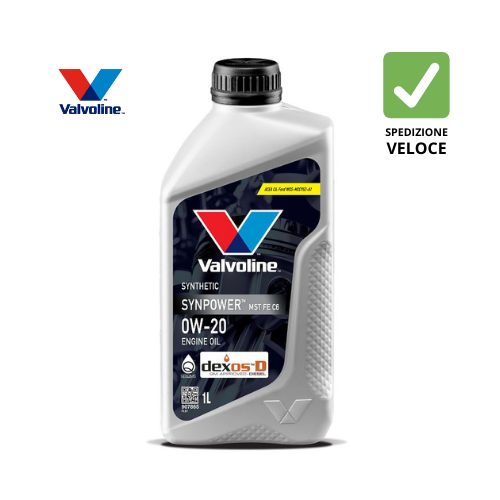
VALVOLINE 907865 SYNPOWER MST FE C6 0W-20 – SYNTHETIC ENGINE OIL
Synthetic engine oil ACEA C6 backward compatible C5, with Fiat 9.55535-DM1 approval (the specification required by the Fiat 500 1.0 Hybrid). Compatible with DPF/GPF emission control systems. Reduces friction, optimizes consumption by 2-3%, protects the FireFly K0FA1 engine during critical repeated Start&Stop startup phases. 3 liters sufficient for complete oil change + filter.
🛒 Buy now on Autoricambi Tritella🛠️ 10. RECOMMENDED PREVENTIVE MAINTENANCE
The Fiat 500 1.0 Hybrid is a reliable car if properly maintained. The FireFly engine is mechanically simple but the Mild Hybrid system requires specific attention. Here is the recommended preventive maintenance plan at the workshop:
| Intervention | Frequency | Notes |
|---|---|---|
| Engine oil + filter change | 15,000 km / 12 months | 0W-20 ACEA C5/C6 9.55535-DM1 oil |
| Air filter | 30,000 km | Critical for GDI engines |
| Cabin filter | 15,000 km / annually | Also activated carbon |
| Spark plugs | 40,000 km | NGK PLZKAR6A-11 or equivalent |
| GDI injector cleaning | Every 10,000 km | Specific direct injection additive |
| BSG belt and tensioner | 90,000-120,000 km | Only reinforced Mild Hybrid multi-rib belt |
| 12V AGM/EFB battery | 4-5 years | Only reinforced Mild Hybrid AGM/EFB |
| C510 gearbox oil | 60,000 km | 75W GL-4, capacity 1.8 L |
⚠️ Special attention to GDI injectors
The FireFly K0FA1 is a gasoline direct injection (GDI) engine with 200 bar, 6-hole injectors. Direct injections are notoriously prone to carbon deposits on the intake valves (because gasoline no longer washes the upper part of the chamber). Even at 50,000-70,000 km, it is normal to find deposits that reduce performance.
Preventive cleaning with a specific GDI additive every 10,000 km is the single most effective operation to keep the engine performing well over time. It costs €15-20 per treatment and prevents more expensive interventions.

AREXONS 9820 – GDI DIRECT INJECTION GASOLINE INJECTOR CLEANER (325 ML)
Specific additive for direct injection gasoline (GDI) engines like the FireFly K0FA1 of the Fiat 500 Hybrid. Removes deposits on the 6 injector holes, restores correct atomization, reduces idling vibrations and improves engine response. To be used every 10,000 km to prevent typical GDI problems. Compatible with all emission control systems (GPF/catalyst).
💰 Price: €13-17 · Dose: 325 ml up to 60 L
🔍 11. DIAGNOSIS: WHAT TO CHECK BEFORE SPENDING
On the Fiat 500 Hybrid, the worst error in the workshop is replacing components without a complete diagnosis. Most "hybrid system" symptoms turn out to be something else. Correct procedure:
Step 1: Complete OBD Diagnosis
- Read error codes in all control units: engine ECU, hybrid system ECU, BCM, ABS
- Check Stellantis Mild Hybrid codes (P0AA1, P0AFA, P1AB0, U0073)
- Read real-time parameters: 12V battery voltage, BSG status, engine temperature
- Cost of professional diagnosis: €40-70
Step 2: Test dedicated 12V battery
- Capacitive test (not just resting voltage)
- CCA load test
- Check electrolyte density (on EFB)
- Check State of Health (SOH) — below 70% it should be replaced
Step 3: Check BSG and belt
- Visual inspection of reinforced multi-rib belt (cracks, fraying, shine)
- Check correct tension of the automatic belt tensioner
- BSG functional test via OBD: start tests, energy recovery, boost
Step 4: Check engine mounts
- Visual inspection of the front hydraulic mount (the most stressed)
- "Vibration in neutral vs. gear" test
- Check fastenings and bolts
💡 Experience data: approximately 7 out of 10 cases of "hybrid system problems" in the Fiat 500 Hybrid are resolved without intervening on the Mild Hybrid. These are actually: degraded 12V battery (40% of cases), dirty injectors (15%), engine mounts (10%), obsolete ECU software (5%).
💰 12. HOW MUCH DO INTERVENTIONS COST IN 2026?
| Intervention | Cost | Notes |
|---|---|---|
| Complete OBD diagnosis | €40-70 | Code reading + Mild Hybrid parameters |
| Engine oil + filter change | €60-90 | Valvoline 0W-20 oil + filter |
| GDI injector cleaning (additive) | €15-20 | To be done every 10,000 km |
| GDI injector bench cleaning | €180-280 | Necessary over 100,000 km |
| NGK spark plug replacement | €60-100 | Set of 3 spark plugs + labor |
| 12V AGM/EFB Mild Hybrid battery replacement | €180-280 | Only specific AGM/EFB + OBD coding |
| BSG belt + tensioner replacement | €150-280 | Only reinforced Mild Hybrid multi-rib belt |
| Engine mount replacement (set) | €200-350 | 2 mounts + labor |
| Drain channel cleaning + door seals | €80-150 | Resolves 80% of infiltrations |
| Complete BSG replacement | €800-1,400 | Rare — usually over 150,000 km |
| Engine ECU software update | €50-90 | Resolves many vibration/jerking problems |
*Indicative prices May 2026, including VAT, workshop labor included. Variable depending on area, parts supplier, and need for OBD coding.
💬 Do you have a high workshop quote for your Fiat 500 Hybrid?
Send us the quote you received. We'll help you understand if the prices are in line with the 2026 market and find the right spare parts for your Fiat 500 1.0 Hybrid (0W-20 9.55535-DM1 oil, AGM/EFB Mild Hybrid battery, BSG belt, engine mounts) at correct prices — often saving 20-30% compared to the dealership.
📩 Request free quote🔗 RELATED INSIGHTS
Detailed insight into FireFly engine performance: why it seems "slow", when it's normal and when it's not
→ Read more
How much it really consumes, real city/extra-urban data and driving errors to avoid
→ Read more
Vibrations, irregular idle and noise from the FireFly: what to check and how to intervene
→ Read more
Water in the passenger compartment: causes, critical points and how to intervene
→ Read more
Technical comparison between Arexons, STP and Liqui Moly for GDI direct injection engines
→ Read more
❓ FREQUENTLY ASKED QUESTIONS
Is the Fiat 500 1.0 Hybrid really reliable?
Yes, overall it is a reliable car for urban use. The most common problems are not serious breakdowns but design limitations (modest performance, 3-cylinder vibrations) or specific Mild Hybrid components (12V battery that lasts 4-5 years vs 6-7 for a standard one, squeaky BSG belt). The FireFly K0FA1 internal combustion engine easily exceeds 200,000 km with regular maintenance.
Does the Mild Hybrid system break down often?
No, the Mild Hybrid system is generally reliable. In 70% of the cases we see in the workshop, the "hybrid system problem" turns out to be something else: degraded 12V battery (40% of cases), dirty GDI injectors (15%), worn engine mounts (10%). The BSG itself rarely breaks down before 150,000-200,000 km.
Are the vibrations of the Fiat 500 Hybrid normal?
Within certain limits, yes, it's a three-cylinder engine. They are physiological: slight vibrations at cold idle (800-900 rpm), greater perception with active A/C, more pronounced vibrations during Start&Stop phases. They need to be checked when: they increase over time, the idle oscillates between 600-1,000 rpm, they are accompanied by an engine light. Typical abnormal causes: engine mounts (€200-350) or dirty GDI injectors.
Which engine oil should I use in my 500 Hybrid?
Synthetic oil 0W-20 ACEA C5 with Fiat 9.55535-DM1 approval (primary specification, original equipment). ACEA C6 backward-compatible oils that maintain the same DM1 approval, such as Valvoline SynPower MST FE C6 0W-20, are also compatible. Never use 5W-30 or higher viscosities: they cause abnormal oil consumption and loss of efficiency. Quantity: 3.0-3.3 L with filter. Change every 15,000 km or 12 months.
Is it worth buying a used Fiat 500 Hybrid?
Yes, but with a complete preventive diagnosis. Check: state of the dedicated 12V battery (if it's over 4 years old, consider replacing it €180-280), leaks (check passenger side floor mats), BSG belt (cold noises), error codes in all control units. A good deal below 60,000 km and with respected service intervals. Above 100,000 km, more attention is needed.
How much does the Fiat 500 Hybrid really consume in the city?
The actual urban consumption is 6.5-7.5 L/100 km, compared to the declared WLTP 5.4 L/100 km (+20-25%). The Mild Hybrid benefit is limited to stop-and-go phases: in the city, you save about 0.5-1 L/100 km compared to a pure gasoline 500 1.2. Driving style affects 30-40%: shift gears below 2,500 rpm and decelerate decisively to activate regeneration.
Can I deactivate the Start&Stop on the Fiat 500 Hybrid?
Yes, there is a dedicated button next to the gear lever. Deactivating Start&Stop occasionally (e.g., in long summer traffic jams with A/C) does no harm. However, deactivating it always compromises the advantages of the Mild Hybrid system (energy recovery, smoothness, reduced consumption) and slightly shortens the life of the 12V battery because it operates in a non-optimal regime.
What to do if the "Mild Hybrid Service" light comes on?
It's a yellow warning, not red, so it's not an emergency but needs to be diagnosed within a few days. Most common causes in order of frequency: flat/degraded 12V battery (50% of cases), outdated ECU software to be updated (15%), oxidized BSG connector (10%), actual BSG failure (5%). Professional OBD diagnosis (€40-70) identifies the precise error code and guides the correct intervention.
📌 CONCLUSIONS
The Fiat 500 1.0 Hybrid (2020-2024) is a valid city car if you know its limitations, advantages, and real problems. It's not a true hybrid but an assisted gasoline car: those who start from this correct premise will be satisfied, while those who expect consumption like a Toyota Yaris Hybrid or performance like a sports car will be disappointed.
The truly recurring problems — 3-cylinder vibrations, 12V battery lasting 4-5 years, leaks, squeaky BSG belt — are all manageable with regular preventive maintenance and correct diagnosis. The final advice is simple: diagnosis first, spare parts after. In many cases, a correct oil change to DM1 specification + GDI injector cleaning + ECU software update solves symptoms that appeared serious.
For specific Fiat 500 Hybrid spare parts (0W-20 9.55535-DM1 oil, Mild Hybrid AGM/EFB battery, BSG belt, engine mounts, NGK spark plugs, GDI additives) or technical support, visit the Autoricambi Tritella catalog or request a free quote.


