

Home › Vehicle Problems › P0299 – Low Turbo Pressure
2026 Technical Guide to Error Code P0299 – Low Turbo Pressure : How to Recognize Underboost on the Road, What Are the Most Common Causes, How the ECU Works, What Tests to Perform (Log Boost, Smoke Test, Wastegate Check), and What Repairs Actually Work in the Workshop.
P0299 – LOW TURBO PRESSURE: SYMPTOMS, CAUSES, AND PROFESSIONAL SOLUTIONS (2026 GUIDE)
The P0299 error code indicates an underboost condition: the actual boost pressure is lower than the target value calculated by the control unit. In practice, the car "won't push," enters recovery mode , and the engine warning light comes on. In this guide, I'll organize, with a workshop approach, real symptoms, typical causes, step-by-step diagnoses, fundamental tests , and concrete solutions to resolve P0299 without randomly swapping parts.

THINKCAR THINKSCAN MAX 2 – COMPLETE MULTI-BRAND OBD2 DIAGNOSIS
Advanced diagnostic tool ideal for analyzing P0299 : reads DTCs, records Boost Target / Boost Actual , monitors MAP/MAF sensors and allows you to perform actuator tests on turbine, wastegate, EGR and DPF.
🛒 Buy now on Amazon📋 WHAT YOU'LL FIND IN THIS GUIDE
- ✅ Introduction: What P0299 Really Means
- ℹ️ What is P0299 (underboost according to the ECU)
- ⚠️ Symptoms on the road: what underboost looks like
- 🔧 Most common causes on petrol and diesel engines
- 🔎 Step-by-step diagnosis (workshop method)
- 🧪 Essential practical tests (log, smoke test, wastegate)
- 🛠️ Resolution interventions from the simplest to the most complex
- 💰 Indicative costs in 2026
- 🛡 Prevention & best practices to avoid the return of DTC
- 🔗 P0299-related errors to watch for
- ❓ FAQ – Frequently asked questions about code P0299
- 📌 Conclusions: A concrete strategy for those with P0299
- 🛒 Spare parts and technical support for cars with underboost
Last updated: 09/12/2025 • 2026 guide based on workshop diagnoses, OBD logs and real case studies
✅ INTRODUCTION: WHAT P0299 REALLY MEAN
P0299 is not a “broken turbo” by definition. It is a consistency code : the control unit continuously compares the target pressure (Boost Target) with the measured pressure (Boost Actual). When the Actual remains too low for a certain period of time under load conditions where the turbo should be pushing, the ECU:
- stores DTC P0299 – Underboost ;
- turns on the engine light and often the service light ;
- activates recovery mode (limp mode) by reducing torque to protect the engine and turbo.
The key to fixing P0299 is not to swap components at random, but to understand why the actual pressure is not reaching the target : air leak, slow actuator/wastegate, stuck variable geometry, “plugged” exhaust, sensors that read poorly or a truly worn turbine.
EBAY – CAR PARTS AND ACCESSORIES
Wide selection of auto parts , accessories, rare and aftermarket components for every model. Find deals, hard-to-find products, and great prices from trusted sellers on eBay Motors.
🔧 Go to the offer on eBayℹ️ WHAT IS P0299 (UNDERBOOST ACCORDING TO THE ECU)
Technical definition : DTC P0299 → “Turbo/Supercharger Underboost Condition” . Translated: the boost pressure measured by the sensor (usually the MAP on the manifold or downstream of the intercooler) is consistently lower than the pressure required by the engine map in a given condition.
Possible macro causes:
- The turbo actually generates less pressure (mechanical or control problem);
- The pressure is there, but it is dispersed along the path (air leaks);
- The pressure is there, but the sensor reads incorrectly (defective sensor or incorrect plausibility);
- “Blocked” exhaust side (DPF/blocked catalytic converter) which alters the work of the turbine.
Understanding which of these scenarios you are in is the goal of the structured diagnosis we will look at later.
⚠️ SYMPTOMS ON THE ROAD: HOW UNDERBOOST PRESENTS ITSELF
In the workshop we always see the same alarm bells when P0299 is present:
1️⃣ DROP IN THRUST AND TORQUE
- car that “no longer goes like before”, especially between 2,000 and 3,500 rpm ;
- very slow recovery in 3rd/4th gear, difficult overtaking;
- when going uphill you need to downshift more often and you have to floor the throttle to get the same response.
2️⃣ ENGINE WARNING LIGHT AND RECOVERY MODE
- engine light on constantly and sometimes the message “check engine” or similar;
- car that does not exceed certain revs or speeds (torque cut);
- possible shutdown and restart which sometimes temporarily disables recovery, but does not solve the problem.
3️⃣ NOISES AND VENTS
- louder whistle than usual when accelerating;
- “blowing air” type vent noises when the turbo kicks in;
- Metallic noises or “howling” can also indicate a worn turbine .
4️⃣ ABNORMAL CONSUMPTION AND SMOKING
- increased fuel consumption because the engine works outside the map and you tend to push the pedal harder ;
- possible black smoke when accelerating (mixture too rich due to lack of air);
- in the presence of a worn turbo, blue smoke due to oil passing through.
DEFECTIVE TURBO – 2026 GUIDE: SYMPTOMS, CAUSES, RISKS, AND COSTS
If, in addition to the P0299, you experience metallic whistling, oil consumption, and exhaust smoke, it's time to investigate the condition of your turbocharger. In this linked guide, we analyze in detail the symptoms of a faulty turbo and the costs of repair.
📘 Read the in-depth article on turbo🔧 MOST COMMON CAUSES ON PETROL AND DIESEL ENGINES
-
Air leaks in intake/pressurization :
- sleeves cracked or “burst” under pressure;
- damaged or cracked intercooler;
- loose clamps, fittings not fully seated, throttle body not perfectly sealed.
-
Wastegate / Variable geometry control problems :
- wastegate stuck partially open → the turbo cannot charge;
- faulty control solenoid valve or damaged vacuum/pressure pipes;
- Encrusted variable geometry that does not close/open properly.
-
Worn turbocharger :
- excessive shaft play (axial/radial);
- damaged or contaminated pallets;
- insufficient lubrication (wrong oil or partially clogged circuit).
-
Air/pressure sensors out of plausibility :
- MAP/MAF dirty with oil and soot;
- boost pressure sensor reading less than actual;
- oxidized wiring or imperfect grounds.
-
Clogged drain :
- DPF heavily loaded or catalytic converter partially collapsed;
- excessive back pressures that alter the work of the turbine.
🔎 STEP-BY-STEP DIAGNOSIS (WORKSHOP METHOD)
Below you will find a logical path that we often use in the workshop to get to the real cause of the P0299 without changing parts at random.
-
Read DTCs and freeze-frames
Note:- engine speed, gear, speed, load when P0299 trips;
- Boost Target vs Boost Actual, intake air temperature, water temperature;
- any other DTCs present (MAP, MAF, EGR, DPF).
-
Log boost in 3rd/4th gear
With diagnostics connected, perform a progressive acceleration from ~1,500 to ~4,000 rpm:- the Actual must follow the Target with a slight delay but the same profile;
- if the Actual is always below and “squeezes” → possible air leak or inefficient turbo control;
- if the Actual oscillates a lot → unstable actuator or geometry that moves badly.
-
Smoke test on intake/intercooler
Inject smoke into the pressurized air line with the engine off:- check hoses, intercooler, joints, throttle body;
- Micro-cracks can only open under pressure: also inspect after a road test.
-
Check wastegate / actuator / solenoid valve
- check the actuator stroke (limit switch, smooth movement);
- check the control pipes (vacuum/pressure) and the solenoid valve;
- where possible, perform a diagnostic actuator test (manual control).
-
Oil and turbine delivery check
- make sure the oil is of the correct specification and not too old;
- check the turbo feed/return circuit for sludge and restrictions;
- If possible, check the oil pressure when warm (idle and 2,000–3,000 rpm).
-
MAP/MAF: coherence and plausibility
- with the ignition on and engine off (KOEO) the MAP must be approximately equal to atmospheric pressure;
- at idle and with rapid acceleration, the values must react consistently;
- If you suspect dirt, consider cleaning with suitable products or replacing it.
-
Exhaust check (DPF/catalyst)
- in the presence of DPF/EGR problems, measures exhaust backpressure where applicable;
- A heavily loaded DPF can significantly alter the operation of the turbo and generate P0299.
🧪 FUNDAMENTAL PRACTICE TESTS
1) LOG BOOST: TARGET VS ACTUAL
- at a warm minimum the Actual should be stable and in line with atmospheric pressure plus a small margin;
- in progressive acceleration, the graph of the Actual must follow the profile of the Target with limited deviation;
- Actual consistently lower than Target → air leak, open wastegate, geometry not closing;
- Actual “juggling” up/down → unstable turbo control or dirty geometry.
2) WASTEGATE / ACTUATOR
- check the stroke (start/end of movement, any hard spots);
- check that the actuator holds the vacuum/pressure without rapid drops;
- Check the control solenoid valve and lines for cracks, oil, and kinks.
3) SMOKE TEST & AIR LINE SEAL
- introduce smoke at a pressure value compatible with the system;
- carefully observe joints, hoses, intercooler, throttle flange;
- Many leaks are invisible to the naked eye without a smoke test.
4) OIL & TURBINE POWER
- correct oil for specification and viscosity , replaced regularly;
- in the presence of sludge, schedule an oil circuit flush according to good practices;
- poor lubrication = turbo that does not develop pressure and wears out quickly.
🛠️ RESOLVING INTERVENTIONS (FROM SIMPLE TO COMPLEX)
-
Air tightness restoration :
- replacement of cracked hoses, damaged intercooler, defective clamps;
- cleaning throttle body and MAP sensor where necessary;
- adaptive resets and road test with new boost log.
-
Wastegate control / variable geometry :
- restoration of vacuum/pressure pipes and replacement of the control solenoid valve if faulty;
- where possible, dismantle and clean VGT if fouling is the main cause;
- also check the control levers (ovalized seats, abnormal play).
-
Interventions on the turbine :
- if you detect excessive play or oil leakage → new unit or remanufactured by a reputable supplier;
- essential oil circuit flushing , oil and filter replacement and priming before starting;
- Always check the intercooler (often contaminated with oil) and the DPF as well.
-
Sensors / wiring :
- cleaning or replacing MAP/MAF if values are not plausible;
- check wiring, connectors, and grounds to avoid false underboosts.
-
I unload :
- forced DPF regeneration if conditions permit;
- DPF/catalyst replacement assessment if damaged or collapsed.

BARDAHL – TURBO PROTECT 300 ML
A specific additive to protect the turbine assembly by reducing wear, oxidation, and deposits. Useful after repairs or on vehicles subjected to heavy use to improve lubrication during critical phases.
🛒 Buy on Amazon💰 APPROXIMATE COSTS TO RESOLVE P0299 IN 2026
| Intervention | Description | Fork* |
|---|---|---|
| P0299 diagnosis complete | DTC/freeze-frame reading, boost log, smoke test, road test | €60 – €150 |
| Air line restoration | Hoses, intercoolers, clamps, small leaks | €120 – €350 |
| Actuator / wastegate / solenoid valve | Actuator + solenoid valve control + calibration | €180 – €420 |
| New or reconditioned turbine | New/reconditioned unit + oil/filters + oil circuit flush | €700 – €1,400 |
*Indicative prices excluding VAT; prices vary by area, vehicle brand, accessibility, and spare parts quality.
🛡 PREVENTION & BEST PRACTICES (TO AVOID SEEING P0299 AGAIN)
-
Oil and filter meet OEM specifications :
- it respects not only the km, but also the time (max 12 months);
- bring forward the intervals if you do a lot of city or short trips.
-
Correct warm-up and cool-down :
- avoid cold runs in the first few kilometers;
- After driving on the highway or in the mountains, let it idle for 40–60 seconds before turning it off.
-
Periodic air line checks :
- visually inspect hoses, clamps and intercoolers at every service;
- Replace components showing signs of oil, abrasion, or aging immediately.
-
Always efficient air filter :
- a clogged filter forces the turbo to work harder to achieve the same pressure;
- consider slightly more frequent replacements in dusty environments.
-
Keep EGR/DPF healthy :
- prevents a chronically loaded DPF from stressing the turbo;
- plan constant extra-urban journeys to encourage correct regenerations.
SYNPOWER VALVES XL-III C3 5W30
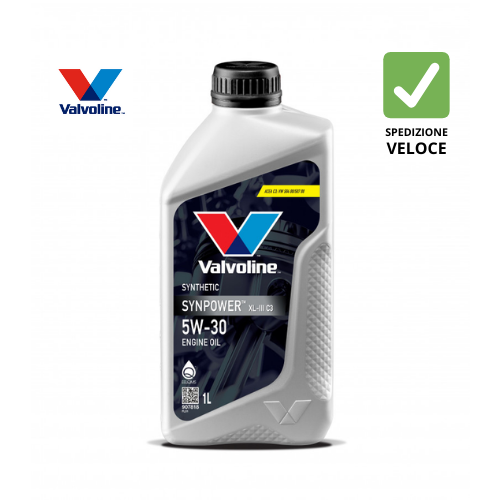
100% synthetic oil specifically designed for turbocharged gasoline and diesel engines with DPF. Helps keep the oil passages that feed the turbine clean , reducing the risk of P0299 due to poor lubrication.
🛒 Buy on Autoricambi Tritella🔗 P0299 RELATED ERRORS TO MONITOR
P0299 rarely appears alone. It's often accompanied by other codes that help narrow the issue:
- P0234 – Turbo overboost: geometry stuck closed or wastegate not opening;
- P0101 / P0106 – MAF/MAP out of range: air/pressure measurement implausible;
- P0401 – Insufficient EGR: encrustations that alter the flow and work of the turbo;
- DPF Codes (High Differential Pressure, Frequent Regenerations): Exhaust Not Breathing;
- P0300 / P030x – Misfire: Irregular combustion causing DPF/catalytic converter failure.
Reading and interpreting all the DTCs present , not just P0299, is essential to avoid focusing on the symptom and forgetting the underlying cause.
❓ FAQ – FREQUENTLY ASKED QUESTIONS ABOUT CODE P0299
Can I drive with P0299 active?
Technically, yes, if the car starts and moves, but it's not recommended : recovery mode reduces torque, making overtaking risky. Furthermore, if the cause is an air leak or a tired turbo, continuing to drive can worsen turbine wear.
How can I tell the difference between an air leak and a worn turbine?
Generally speaking:
• with smoke tests and visual inspection you can quickly find many leaks;
• if the air line is leaky but the log still shows Actual below Target , with metallic whistles and maybe some blue smoke, suspicion shifts to the turbine.
Could P0299 be sensor-dependent?
It can happen. A dirty/faulty MAP sensor or oxidized wiring can cause underboost. Always check for plausibility (KOEO, comparison with barometric pressure, response to load changes) before replacing expensive components like the turbo.
After replacing the turbine, can P0299 return?
Yes, if you haven't addressed the underlying causes: a leaky air line, a heavily loaded DPF, incorrect oil, or a partially clogged oil delivery line. Therefore, after replacing the DPF, you should always:
• wash the oil circuit and replace filters;
• check hoses/intercooler/DPF;
• make a Boost Target/Actual log for confirmation.
📌 CONCLUSIONS: A CONCRETE STRATEGY FOR THOSE WITH P0299
The P0299 low turbo boost code is a warning sign that the turbocharger system isn't working as it should. It doesn't always mean the turbo needs replacing, but it's also not a problem to ignore.
The recommended route is:
- start from a complete diagnosis (DTC, freeze-frame, log boost, smoke test);
- resolve simple causes first (air leaks, sensors, pipes);
- assess the actual condition of the turbine before investing in an expensive replacement;
- reset more realistic maintenance (oil, filters, periodic checks).
Addressing P0299 in an orderly manner allows you to save money , protect your engine, and restore your car to original performance without unnecessary replacements.
🛒 SPARE PARTS AND TECHNICAL SUPPORT FOR CARS WITH UNDERBOOST (P0299)
If you're dealing with P0299 and want to avoid making mistakes when choosing the right spare parts (turbine, sensors, hoses, intercooler, oil, and filters), we can help you find the right products based on your vehicle's chassis number .
👉 Visit the Autoricambi Tritella shop or contact us: we will help you choose new or remanufactured turbochargers , assembly kits, compliant oils and components to restore supercharging in a lasting way.


