

DIRTY FUEL INJECTORS: SYMPTOMS, CAUSES, AND WHEN TO INTERVENE BEFORE SERIOUS DAMAGE
In the workshop, we often see gasoline cars (Euro 4–6) that are "running on three cylinders," sputtering at low speeds, or consuming more fuel than usual: many start by changing spark plugs or coils, but sometimes the cause is simpler and more insidious: dirty fuel injectors, which slowly worsen until the problem becomes evident.
This guide explains in a technical yet clear way what a fuel injector does, why it gets dirty, which symptoms are most reliable, and when to intervene: from cases where targeted cleaning may suffice, to those where replacement is safer to avoid damage to the catalytic converter and engine.
📋 WHAT YOU'LL FIND IN THIS GUIDE
- 🔍 What is a fuel injector and why does it get dirty
- ⚠️ Main symptoms: what you notice while driving
- 🧪 Slight dirt vs compromised injector
- 🔥 Risks of continuing to drive
- 🛠️ When cleaning is enough and when replacement is needed
- ⛽ Fuel, urban use, and prevention
- ❓ Frequently asked questions
- 🏁 Conclusion
🔍 WHAT IS A FUEL INJECTOR AND WHY DOES IT GET DIRTY
A fuel injector is an electromagnetic (or piezoelectric, in some systems) valve that meters and atomizes fuel. In practice, it opens for very short, repeated periods, spraying gasoline in a controlled manner to achieve the correct air-fuel mixture.
Over time, deposits can form that alter the spray pattern:
- resins and varnishes due to fuel evaporation and aging;
- micro-impurities (even with an efficient fuel filter, something can pass through);
- deposits related to urban use, frequent stops, and the engine often running "cold."
The typical result is less fine atomization or an uneven spray: combustion becomes less stable, and the electronics (lambda sensor and fuel trims) try to compensate as long as they can.
⚠️ MAIN SYMPTOMS: WHAT THEY REALLY LOOK LIKE
Symptoms can be intermittent and "mimic" other faults. The most common ones are:
Difficult or irregular starting
Often when cold, or after short stops. The engine starts but "hesitates" for a few seconds.
Sputtering, hesitations, or flat spots at low RPMs
Typical in urban use: restarts, roundabouts, second-third gear with partial throttle.
Unstable idle
RPMs fluctuate or slight vibrations at idle, more noticeable with the air conditioning on.
Increased fuel consumption and gasoline smell from the exhaust
If combustion is dirty or the ECU enriches the mixture too much to compensate, fuel consumption increases, and the exhaust may "smell" of gasoline.
Check engine light and diagnostic errors
Errors related to misfires or an overly lean/rich mixture may be found. Caution: this is not an exclusive "signature" of injectors, but it is an important warning sign.
Common DIY workshop error: changing ignition components by trial and error without first measuring (fuel trims, misfire parameters, cylinder balance).
🧪 SLIGHT DIRT VS COMPROMISED INJECTOR: HOW TO TELL THE DIFFERENCE
Not all cases require replacement. The practical difference lies in how recoverable the injector is and how consistent the diagnosis is.
Slight dirt (often recoverable)
- intermittent symptoms (occasional sputtering, slightly irregular idle);
- fuel trims out of spec but not extreme;
- misfires present but not persistent.
In these cases, targeted cleaning (performed correctly) can restore the spray pattern to an acceptable level.
🧪 In the presence of light deposits, a professional additive can help restore a more correct atomization, without replacing healthy components.

BARDAHL – FUEL INJECTOR CLEANER ADDITIVE (300 ML)
Bardahl additive specifically for cleaning gasoline injectors. Reduces engine noise, facilitates cold starts, and helps decrease excessive fuel consumption. Ideal for maintaining an efficient fuel system and improving smooth operation.
🛒 Buy now on AmazonCompromised injector (often needs replacement)
- repetitive misfire on the same cylinder;
- fuel trims far out of range and quick return of the fault;
- persistent irregular spray, non-uniform flow between injectors;
- problem that does not change after sensible cleaning attempts.
Here, continuing to "try additives" is often just a waste of time: a definitive intervention is better.
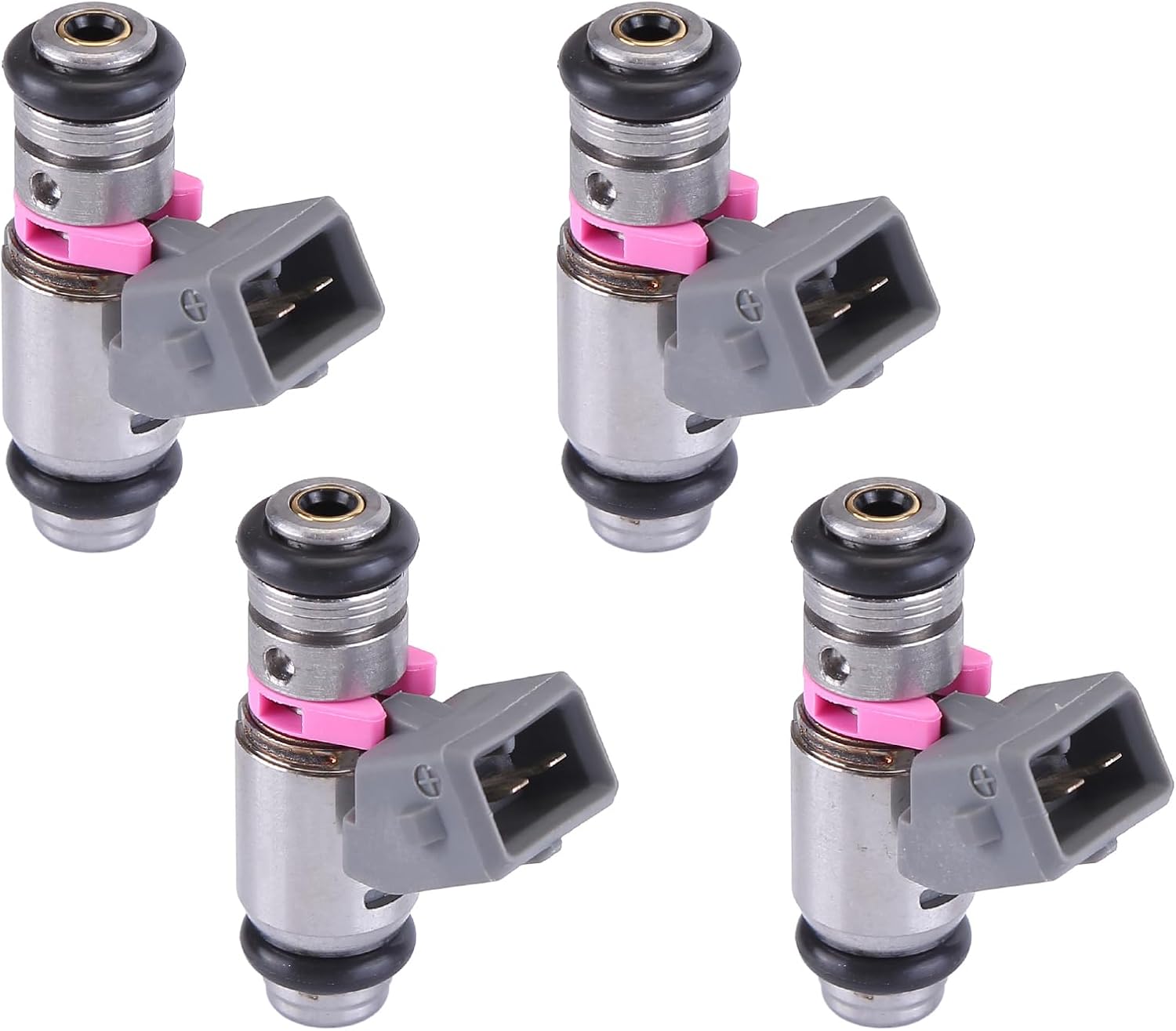
KIT 4 FUEL INJECTORS IWP099 – RENAULT 1.2 16V
Complete set of 4 fuel injectors model IWP099, compatible with Renault 1.2 16V engines. Ideal replacement part to restore correct fuel injection, improve delivery, and reduce fuel consumption and irregular operation.
🛒 Buy now on Amazon🔥 RISKS OF CONTINUING TO DRIVE WITH DIRTY INJECTORS
Driving for a long time with dirty injectors means accepting unstable combustion. The main risks:
- catalytic converter damage: unburnt gasoline can overheat and deteriorate it;
- increased chamber deposits: worsens combustion quality and can cause pre-ignition in some cases;
- stress on coils and spark plugs: continuous misfires are not "free" for the system;
- chain failures: when the ECU can no longer compensate, the problem becomes evident.
In other words: early intervention often prevents a manageable problem from turning into a costly repair.
🛠️ WHEN CLEANING IS ENOUGH AND WHEN REPLACEMENT IS NEEDED
When it makes sense to try cleaning
- symptoms started recently;
- car mostly used in the city and for short journeys (typical scenario for deposits);
- diagnosis without signs of "hard" injector failure (no cylinder consistently out);
- measurable improvements after initial interventions.
When it is more correct to replace (or have professionally tested)
- persistent and repeated misfire on the same cylinder;
- rapid return of the problem after proper cleaning;
- non-uniform flow between injectors or sealing/delivery defect;
- high mileage with significant symptoms and degraded performance.
Technical note: the "right" path is always diagnostic: first, measure and compare parameters (trims, misfires, cylinder balance), then decide on the intervention. Avoid trial-and-error replacements.
⛽ FUEL QUALITY, URBAN USE, AND PREVENTION
Injectors suffer most with:
- intense urban use and short trips;
- long periods of inactivity;
- inconsistent fuel quality or often running on an empty tank (higher risk of sucking in impurities).
"Real" prevention, not miraculous:
- reliable fuel and regular maintenance;
- when possible, bring the engine to operating temperature and drive on extra-urban roads occasionally;
- don't ignore the first signs: if consumption increases and sputtering occurs, diagnose early.
This guide also prepares for future in-depth discussions: injector cleaning, additives, professional cleaning, and ultrasonics (each method has pros and cons, and is not suitable for all cases).
❓ FREQUENTLY ASKED QUESTIONS
Can dirty injectors turn on the check engine light?
Yes. Irregular atomization can cause unstable combustion, misfires, and out-of-range fuel corrections: the ECU may illuminate the check engine light and store error codes.
Can injectors be cleaned without removing them?
In some cases, yes, especially if the dirt is slight. However, if the injector is compromised (non-uniform flow or persistent defect), cleaning may not be enough, and replacement or professional testing should be considered.
Do additives always solve the problem?
No. They can help with light deposits and in prevention, but they do not repair a damaged or heavily clogged injector. If symptoms are significant or persistent, diagnosis and targeted intervention are needed.
Does driving with dirty injectors damage the engine?
It can cause damage over time. Unstable combustion increases the risk of deteriorating the catalytic converter, stressing the ignition, and worsening deposits. Early intervention reduces the likelihood of cascading damage.
How do you distinguish an injector problem from spark plugs or coils?
It starts with data: error code reading, misfires per cylinder, fuel trims, and targeted tests. In many cases, the symptoms are similar: the difference is made by a correct diagnosis, not "trial-and-error" replacement.
When should I really worry and stop the car?
If the car is clearly running on three cylinders, the check engine light is flashing, or you experience severe jolts with loss of power, it is prudent to reduce use and get a diagnosis immediately: continuing can damage the catalytic converter.
🏁 CONCLUSION
Dirty fuel injectors are a common problem in cars used in cities and for short trips: symptoms can be progressive and confused with ignition or sensor issues. The key is not to wait: a timely diagnosis can prevent damage to the catalytic converter and related components.
If you notice difficult starting, sputtering, irregular idle, or increased fuel consumption, the advice is simple: measure before replacing. And if you need the correct replacement part or technical support in choosing, you can find components and advice at the Autoricambi Tritella shop.


