

Home › Vehicle Problems and Faults › BMW N47 Engine › 3 Series E90
BMW 3 SERIES E90 WITH N47 ENGINE: SPECIFIC PROBLEMS, MAINTENANCE, AND REAL COSTS
Updated April 2026 – Technical analysis based on real workshop cases and verified service data.
The BMW 3 Series E90 with the N47 engine is the most common combination of the N47 cluster in Italy. Sedan, touring, coupe, or convertible — the E90 was produced between 2005 and 2013, and tens of thousands are still on the road nationwide. It is a car appreciated for its driving experience, space, and fuel consumption, with a well-documented maintenance profile that requires attention to specific points.
In this guide, we analyze the specific problems of the E90/N47 combination — those of the engine already covered in previous sections, plus the specific critical issues of this body style: automatic transmission, suspension, electronics, and bodywork. This guide includes real costs and a final checklist for those looking to buy a used one.
Also read: BMW N47 ENGINE: COMPLETE GUIDE, PROBLEMS, AND RELIABILITY
📋 1. MODEL SHEET: E90 VERSIONS WITH N47
The E90 designation technically only identifies the sedan, but in common parlance, it is used to refer to the entire family of the fifth generation 3 Series:
| Body Style | Code | Production Years | Notes |
|---|---|---|---|
| Sedan | E90 | 2005–2012 | The most common — 316d, 318d, 320d, 325d |
| Station wagon (Touring) | E91 | 2005–2012 | Same mechanics as the sedan, more cargo capacity |
| Coupe | E92 | 2006–2013 | Less common in diesel — mainly petrol |
| Convertible | E93 | 2007–2013 | Rarely diesel in Italy |
The most common N47 versions in Italy are the 320d E90/E91 (163 and 184 hp) and the 318d (143 hp). The 320d offers the best balance between performance and running costs, and it is also the version with the highest availability of specialized mechanics and spare parts in the Italian market.
LCI (facelift) vs pre-LCI: which to choose
In 2008, BMW introduced a significant facelift of the E90 (called LCI — Life Cycle Impulse). LCI versions are identifiable by redesigned front headlights and updated interiors. Mechanically, LCI models with the N47 almost always feature the second generation of the engine (N47TUD20) — statistically more reliable regarding the chain compared to the first series. If you are choosing between a pre-LCI and an LCI E90 at the same price and mileage, the LCI is preferable.
⛓️ 2. N47 ENGINE PROBLEMS ON THE E90: THE STARTING POINT
The N47 engine problems on the 3 Series E90 are the same as those covered in previous sections — timing chain, EGR, DPF, turbo, oil leaks. Here we will focus on the specific aspects of its combination with this body style.
Accessibility to the chain on the E90
The E90 sedan with a longitudinal N47 engine is one of the most favorable contexts for timing chain intervention — the engine bay is spacious, and the mechanics are relatively accessible compared to the X1 and X3 with all-wheel drive. This translates into slightly lower labor costs compared to other N47 models: an experienced workshop takes 8–10 hours instead of the 10–14 hours required for xDrive versions with AWD.
The E90 versions at higher risk
As a general rule: E90s produced between 2007 and 2010 with the first series N47D20 are the most exposed. The 320d LCI models produced from 2008 onwards with the N47TUD20 have a lower chain risk profile — but still require LL-04 oil and reduced service intervals compared to the official Longlife Service.
For full technical details on the engine: BMW N47: TIMING CHAIN – WHY IT BREAKS, SYMPTOMS, AND REAL COSTS
🔄 3. MANUAL AND AUTOMATIC TRANSMISSION: WHAT YOU NEED TO KNOW
Manual transmission — the most common and most reliable
Most E90 diesel models in Italy are equipped with the 6-speed manual GS6 gearbox. It is a robust and long-lasting transmission — rarely presenting structural problems within 200,000 km with normal maintenance. The points to monitor are:
- Hard or imprecise gear engagement — especially in first and second gear — may indicate worn synchronizers, particularly in cars used extensively in urban areas with many slow maneuvers.
- Transmission oil leaks — from the driveshaft oil seal or side gaskets. Often overlooked until they become significant leaks.
- Dual-mass flywheel — the most at-risk component in the entire transmission. Vibrations when engaging the clutch, especially when starting on an incline or reversing, indicate wear. Replacement (flywheel + clutch together, never just one) costs €700–1,200.
ZF 6HP automatic transmission — features and maintenance
E90s with automatic transmissions almost always use the ZF 6HP — one of the best automatic transmissions of its generation, robust and precise, but it requires an oil change that BMW does not specify in the manual, but which we recommend every 60,000 km in the workshop.
Symptoms of a struggling ZF 6HP include: jolts or hesitation during slow downshifts, the transmission "hunting" for a gear at low speeds, and thermal shock (stiff shifting after long summer stops). In most cases, a transmission oil change resolves or significantly improves these symptoms if the intervention is performed before structural damage occurs.
⚠️ The automatic oil change BMW doesn't mention: the E90 manual with ZF 6HP states the automatic transmission is "sealed for life." In practice, on cars with over 100,000 km, a transmission oil change with ZF LifeGuard 6 oil or equivalent is one of the most cost-effective interventions available: €150–250 that can extend the transmission's life by another 100,000 km.
🛞 4. SUSPENSION AND STEERING: THE E90'S CRITICAL POINTS
The E90's suspension is sporty — precise and engaging, but with components that have a limited lifespan on deteriorated Italian roads. After 100,000 km, the first interventions begin to emerge.
Front — components that fail first
- Front control arm silent blocks — the first to wear out, especially the front silent block of the lower arm. Symptoms: imprecise braking, slight pulling to one side, dull thud over bumps. Replacement: €150–300 per axle.
- Anti-roll bar bushes — typically fail between 80,000 and 120,000 km. Characteristic symptom: a sharp "clunk" over speed bumps at low speeds. Inexpensive intervention: €60–120.
- Tie rod ends — after 120,000 km, they start to develop play. Symptom: vague steering, slight pitching during braking. Replacement: €100–200 per side.
Rear
The E90 features a sophisticated multilink rear axle — precise but with more components than a torsion beam axle. The silent blocks of the rear arms are the most stressed components: on high-mileage cars with sporty use, they can fail even before 150,000 km. Symptom: instability at high speeds, excessive body roll in corners. Intervention: €300–600 per axle.
Shock absorbers
Original BMW shock absorbers on the E90 have a lifespan of approximately 80,000–100,000 km under normal conditions. On Italian roads with frequent potholes, this estimate is reduced. Replacement in pairs (always axle by axle, never just one side) costs €400–700 per axle with quality spare parts.
🖥️ 5. ELECTRONICS AND IDRIVE: FREQUENT PROBLEMS
The E90 is the first BMW generation with integrated iDrive as the central control system. Early versions (2005–2008) experienced system reliability issues that were resolved with software updates in later versions.
Most reported electronic problems on the E90
- iDrive resetting or freezing — frequent on 2005–2007 versions. Often fixable with a software update at the dealership. If it persists, the CCC (Car Communication Computer) module may require replacement (costly intervention: €500–1,200).
- Electric windows not responding or lowering unexpectedly — known problem on models up to 2009. Window regulators are the component to be replaced (€80–150 per door).
- 12V battery draining when the car is stationary — parasitic current draw from electronic modules in standby. Diagnose with a quiescent current test before replacing the battery.
- Airbag warning light on — often due to loose or oxidized connectors under the seats (especially after cabin cleaning). Before considering faulty components, check the connectors.
- Intermittent parking sensors — front or rear sensors giving false positives or stopping working. Almost always individual sensors to be replaced (€30–60 each).
🔍 6. BODYWORK AND INTERIOR: WHAT TO CHECK
Rust spots to monitor
The E90's paint quality was average for its segment at the time. The areas most prone to rust are the edges of the rear wheel arches (especially on sedan versions), the lower edges of the doors, and the mirror mounting points. On cars that have been in coastal areas or used in winter with salt on the roads, these points should be carefully inspected before purchase.
Sunroof (if present)
E90s with panoramic or standard sunroofs have drainage channels that tend to get clogged over time — resulting in water leaks into the cabin, especially in the trunk or pillars. Cleaning the drainage channels every 2 years is routine maintenance that is often neglected.
Interior — typical wear and tear
The leather seats of the E90 show typical wear and tear on the driver's contact areas after 150,000 km — this is not a mechanical problem but affects the car's value. The leather steering wheel peels around the controls on the sides — very common and difficult to repair well. Also check the condition of the headliner if the car has suffered water leaks.
💰 7. REAL RUNNING COSTS: HOW MUCH DOES AN E90 N47 COST TO MAINTAIN
| Intervention | Frequency | Indicative Cost |
|---|---|---|
| Oil change + filter (LL-04) | Every 10,000 km | €90–140 |
| Full service (air, pollen, fuel filters) | Every 20,000–30,000 km | €200–350 |
| Complete chain kit (preventive) | Once — over 120,000 km | €900–1,400 |
| EGR cleaning | Every 60,000–80,000 km | €100–200 |
| Front silent blocks | Every 100,000–130,000 km | €150–300 |
| Dual-mass flywheel + clutch | Every 180,000–220,000 km | €700–1,200 |
| Shock absorbers (axle) | Every 80,000–100,000 km | €400–700 |
| Automatic transmission oil change (if ZF) | Every 60,000 km (recommended) | €150–280 |
| Brake pads + discs (axle) | Every 40,000–60,000 km | €200–400 |
💡 Realistic annual cost: a well-maintained E90 320d N47 with 150,000 km costs on average €1,200–1,800 per year for planned ordinary and extraordinary maintenance — excluding the timing chain kit if not already done. An absolutely manageable cost for a car that is worth €5,000–8,000 on the used market.
✅ 8. USED E90 WITH N47 BUYING CHECKLIST
For the complete checklist on the N47 engine (cold start, OBD, oil, EGR/DPF), refer to the dedicated guide: USED BMW N47: COMPLETE WORKSHOP CHECKLIST. Here we add the specific checks for the E90 bodywork.
- ☐ Rust on rear wheel arch edges — check with a flashlight under the rear wheel arches
- ☐ Lower door edges — lift the seals and check for hidden rust
- ☐ Sunroof drainage channels (if present) — check for moisture in the trunk or rear pillars
- ☐ iDrive functional — navigate all menus, check Bluetooth and connectivity
- ☐ All electric windows — open and close each door, check speed and quietness
- ☐ Automatic transmission (if present) — test slow shifting in the city, check for absence of jolts and hesitation
- ☐ Dual-mass flywheel — starting on an incline, reversing on an incline: vibrations during engagement indicate wear
- ☐ Front silent blocks — hard braking on a straight line: the car must go straight without pulling
- ☐ Shock absorbers — press on each corner of the bodywork: it should bounce only once
- ☐ Airbag warning light — must not be on. If it is, check the connectors under the seats before assuming faulty components
- ☐ LCI or pre-LCI version — identify the exact year of manufacture to evaluate the N47 generation
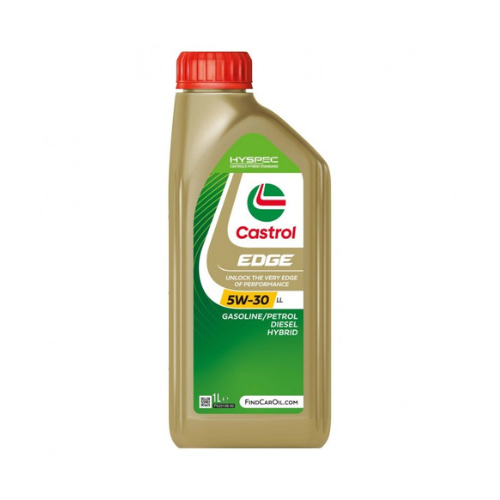
CASTROL EDGE 5W-30 – BMW LL-04 SPECIFICATION FOR E90 N47
The first intervention on any newly purchased E90 N47 is an oil change with BMW Longlife-04 specification. Castrol EDGE 5W-30 is available in the Autoricambi Tritella catalog with fast shipping throughout Italy.
🛒 Buy on Autoricambi Tritella❓ FREQUENTLY ASKED QUESTIONS
Is the 318d or 320d E90 better?
For predominantly urban use, the 318d (143 HP) consumes slightly less and pays less road tax in some regions. For mixed or motorway use, the 320d (163 or 184 HP) is more satisfying and has a higher residual value on the used market. In terms of maintenance, the costs are practically identical — same N47 engine, same critical points.
Does the E91 Touring have the same problems as the E90 sedan?
Yes — the mechanics are identical. The only significant difference is the slightly higher weight of the Touring, which slightly increases brake and rear suspension wear, especially if the car has often been used with a load. Check the condition of the rear silent blocks more carefully on a Touring than on a sedan.
Is the ZF automatic transmission on the E90 reliable?
Yes, the ZF 6HP is one of the most robust automatic transmissions of its generation. Problems encountered in workshops are almost always a consequence of oil not being changed for too long — not structural defects. A preventative oil change every 60,000 km with ZF LifeGuard 6 oil is all that is needed to keep it in good condition.
Is it worth buying an E90 N47 with over 200,000 km?
It can be worthwhile if: the price is adequate for the mileage, the chain replacement is documented, the oil change has always been done with LL-04, there are no active oil leaks, and the OBD reading is clean. A well-maintained E90 N47 at 200,000 km is mechanically more reliable than one at 130,000 km with neglected maintenance. Mileage matters less than history.
Where can I find spare parts and oil for the BMW 3 Series E90 with N47?
On Autoricambi Tritella you can find BMW LL-04 engine oil, additives for EGR and DPF, and spare parts for the maintenance of the BMW 3 Series E90 with N47 engine, with fast shipping throughout Italy.
📌 CONCLUSION
The BMW 3 Series E90 with N47 engine is still one of the smartest purchases on the Italian used market in the €4,000–€9,000 range. Engaging driving, low fuel consumption, adequate space — with a maintenance profile that rewards those who know the critical points and manage them proactively.
The problems are there — chain, EGR, DPF, suspension — but they are all predictable, quantifiable, and manageable. Those who know them in advance buy better, negotiate the price with concrete arguments, and plan maintenance without surprises.
For BMW LL-04 oil, spare parts, and everything needed for the maintenance of your E90 N47, visit the Autoricambi Tritella catalog.


