

Home › Vehicle Problems and Faults › BMW N47 Engine › Cold Noise
BMW N47: COLD START NOISE – IS THE CHAIN FAILING?
Updated April 2026 – Technical analysis based on real workshop cases.
Did you start your BMW this morning and hear a metallic noise from the engine for a few seconds — then it disappeared? Normal operation or a signal not to be ignored? On the BMW N47 engine, this is the most important question an owner can ask. Because that noise, even if it only lasts 3 seconds, almost always means something specific.
In this guide, we'll look at how to recognize the sound of a stretching timing chain, how to distinguish it from other causes of cold start noise on the N47, and — most importantly — what to do in the first 24 hours after hearing it.
Also read: BMW N47 ENGINE: COMPLETE GUIDE, PROBLEMS AND RELIABILITY
🔍 1. WHY THE N47 MAKES NOISE ON COLD START: THE MECHANICS OF THE PROBLEM
To understand the noise, you need to understand what happens in the first few seconds after a cold start on this specific engine.
The N47 timing chain is located on the flywheel side — towards the gearbox, at the rear of the engine. Correct tension is maintained by a hydraulic tensioner that operates on oil pressure. When the engine has been off for hours, the oil has settled in the sump — the tensioner is drained and does not maintain tension on the chain.
At start-up, the oil pump takes a few seconds to bring the oil pressure up to the tensioner. During those seconds — typically 3–8 on an engine in good condition, up to 15–20 on an engine with degraded oil or an already stretched chain — the chain has excessive slack and can hit the guides and slipper pads.
On an N47 in optimal condition, this transition is almost silent. On an N47 with a stretched chain, worn pads, or incorrect oil, that transition produces a characteristic metallic noise — very brief, but identifiable.
💡 The detail few people know: the duration of the noise doesn't just measure the condition of the chain — it also measures the quality and condition of the oil. Degraded oil or oil with incorrect viscosity takes longer to pressurize the tensioner. This is why on cars with the wrong oil, the problem can manifest even with relatively new chains.
👂 2. HOW TO RECOGNIZE THE CHAIN NOISE
The N47 chain noise has precise characteristics that make it identifiable even to an untrained ear, once you know what to look for.
Characteristics of the typical noise
- When it appears: exclusively or predominantly on cold start — after being off for at least 4–6 hours. The longer the stop and the lower the temperature, the more evident it is.
- Duration: from 3–4 seconds (initial phase) up to 15–20 seconds in advanced stages. Then it gradually disappears as the engine warms up and the oil reaches pressure.
- Type of sound: metallic, dry, with a certain "irregularity". It is often described as a "rattle," a "tinkle," a "crackle," or a sound similar to a loose bicycle chain. It is not a continuous rubbing noise — it is a rapid multiple percussion noise.
- Origin: from the rear-lower part of the engine, towards the gearbox. This is the most important detail: if the noise comes from the front of the engine, it's probably not the N47 timing chain.
- Behavior: gradually decreases in the first 10–30 seconds, then disappears. If it persists beyond a minute or never completely disappears, the situation is already advanced.
How to listen correctly
It's not easily heard from inside the cabin. To assess it, you need to open the hood before starting, start the car, and stand still, listening carefully for the first 15–20 seconds. Even better if done after an overnight winter stop — the colder the engine, the more obvious the noise if present.
The area to listen to is the gearbox side of the engine — that is, the opposite side to the accessory belt. On a 3 Series E90 with a longitudinal engine, it's the rear left part of the engine bay when looking from above.
⚖️ 3. CHAIN OR SOMETHING ELSE? HOW TO DISTINGUISH CAUSES
Not all cold noises from a BMW N47 are the chain. There are other causes that produce similar noises, with very different implications. The following table helps to orient yourself.
| Cause | Type of noise | When it appears/disappears | Area | Urgency |
|---|---|---|---|---|
| Stretched timing chain | Dry metallic rattling / tinkling | Cold start, disappears in 5–20 sec | Rear-lower, flywheel side | High |
| Hydraulic lifters | Rhythmic ticking, follows revs | Cold start, disappears in 30–60 sec | Head area, upper | Medium |
| Turbocharger | Whistle, hiss or squeal on acceleration | On acceleration, not just when cold | Turbo area, side | Medium |
| Worn dual-mass flywheel | Dull noise / vibrations when engaging gear | Clutch engagement/disengagement, not on start-up | Transmission area | Low-Medium |
| Oil pump | Continuous dull noise, oil light on | Continuous, not temperature related | Lower, sump area | Very high |
The most reliable criterion for identifying the chain
Three characteristics together almost always identify the N47 chain noise: it appears only when cold, disappears within 20–30 seconds, and comes from the rear side of the engine. If the noise is also present when the engine is warm, or comes from the upper head area, or is rhythmically precisely synchronized with the revs, it is probably another cause.
⚠️ Caution with self-diagnosis: the table above is a general guide, not a diagnostic tool. A specialized BMW mechanic with appropriate equipment can read the phase adaptives in OBD diagnostics — a parameter that measures camshaft misalignment and definitively confirms the chain's condition even in the absence of obvious noises. This is the most reliable test available.
📈 4. THE THREE STAGES OF THE PROBLEM: FROM EARLY WARNING TO EMERGENCY
The N47 chain problem is not a sudden event — it is a progressive process that goes through identifiable stages. Recognizing which stage you are in completely changes the available options.
Stage 1 — Early warning
Very brief metallic noise (3–5 seconds) on start-up after an overnight stop, which disappears immediately. Not present every day — more evident on cold mornings. The engine runs normally while driving, no warning lights, no loss of power.
What it means: chain with initial stretching, tensioner still able to compensate when warm but delayed when cold. Phase adaptive diagnosis may or may not detect misalignment depending on the extent.
What to do: specialist diagnosis within 2–4 weeks. It is not an emergency but should not be postponed for months.
Stage 2 — Alert
Noise present every morning after an overnight stop, lasting 10–20 seconds. Occasionally also appears after afternoon stops of 3–4 hours. While driving, the engine may have slight irregularities or a less precise response at low revs.
What it means: significant stretching. The tensioner is working at the limit of its compensation capacity. Phase adaptives almost certainly show measurable misalignment.
What to do: urgent diagnosis within the week. Plan preventive intervention without waiting for further developments.
Stage 3 — Emergency
Noise present even after short stops or when the engine is partially warm. Persists beyond 30 seconds. Engine warning light on with codes P0016/P0017/P0018/P0019. Possible loss of power, irregular idle, difficulty starting.
What it means: the tensioner can no longer compensate. The engine is actively out of phase. The risk of chain failure is concrete and imminent.
What to do: stop driving the car. Take it to a specialized workshop by towing if necessary. Do not attempt to "drive to the mechanic" for tens of kilometers — a chain that fails while driving can destroy the engine in seconds.
| Stage | Noise duration | Frequency | Engine light | Action |
|---|---|---|---|---|
| 🟡 Early | 3–5 sec | Only cold mornings | No | Diagnosis within 2–4 weeks |
| 🟠 Alert | 10–20 sec | Every morning | Possible | Urgent diagnosis, plan intervention |
| 🔴 Emergency | Over 30 sec or continuous | Always, even when warm | Often yes | Stop driving — immediate workshop visit |
🧪 5. THE 5-MINUTE HOME TEST
You don't need to be a mechanic to do this test. You just need to know what to listen for and how to do it correctly.
Ideal conditions
The test works best after an overnight stop of at least 8 hours, with an outside temperature below 10°C. The colder the engine, the more obvious any noises will be.
Procedure
- Open the hood before starting the engine
- Start the engine without pressing the accelerator
- Move to the left side of the engine bay (gearbox side) and listen to the rear-lower area of the engine for the first 20 seconds
- Note if you hear a metallic noise — even a very brief one — in the first few seconds
- Observe if the noise gradually disappears or remains
- Let the engine idle for 2 minutes and listen if the noise reappears or if there are any other abnormal noises during the warm-up phase
How to interpret what you heard
- No abnormal noise — excellent sign. Repeat the test every 2–3 months on cars with over 100,000 km.
- Very brief metallic noise (2–4 sec) only on the first start-up — early warning sign. Book a specialist diagnosis within the month.
- Noise lasting 10 seconds or more — alert situation. Urgent diagnosis within the week, limit travel in the meantime.
- Continuous noise or noise that doesn't completely disappear — emergency. Do not use the car until diagnosis.
💡 Record the noise with your phone: if you hear anything unusual, make an audio recording during the first few seconds of start-up. This is the most useful tool you can bring to the mechanic — many cold noises disappear in the time it takes to get from home to the workshop, and a recording avoids vague interpretations.
✅ 6. WHAT TO DO NOW BASED ON WHAT YOU'VE HEARD
You heard the noise — next concrete steps
1. Immediately check the oil level and quality. Open the hood and check the level with the dipstick. If it's below the minimum, top up with oil of the correct specification (BMW LL-04, 5W-30) before anything else. A low level immediately worsens the tensioner problem. Also check the color: very dark and thick oil or oil with a diesel smell indicates degraded oil that needs to be replaced as soon as possible.
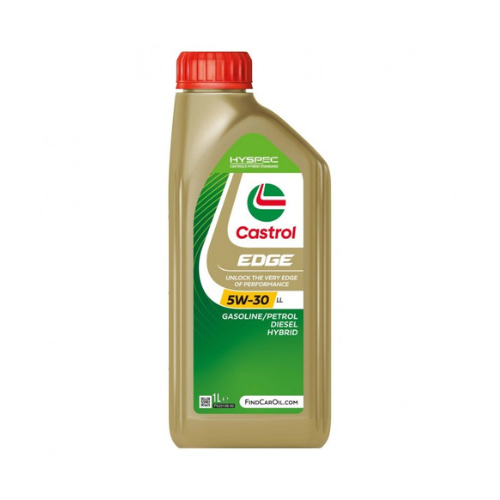
CASTROL EDGE 5W-30 – BMW LONGLIFE-04 SPECIFICATION
If the oil is degraded or the specification is wrong, immediate replacement with Castrol EDGE 5W-30 BMW LL-04 is the first preventive action to take — even before waiting for diagnosis. It reduces stress on the tensioner during critical cold start phases.
🛒 Buy on Autoricambi Tritella2. Book a specialized BMW diagnosis. Not a generic OBD diagnosis — a specific reading of the camshaft phase adaptives. This parameter measures the actual misalignment and gives the mechanic objective data on the chain's condition, independent of subjective noise assessment.
3. Avoid unnecessary cold starts. Until diagnosis, minimize long stops followed by cold starts — these are the moments of greatest stress for an already stretched chain. If possible, use the car for longer journeys instead of many short ones.
4. Don't wait for the noise to get worse before worrying. The worsening can be gradual for weeks and then sudden. An N47 that has been making noise when cold for two months can have the chain fail without further warning. Diagnosis first, intervention second.
You haven't heard anything — what to do anyway
If you have an N47 with more than 120,000 km and have never had the chain condition checked with an adaptive phase reading, it's worth adding it to your next service. The chain may already be measurably stretched without yet producing obvious noises — especially in the early stages of the problem, with mild temperatures. Better to know beforehand.
For all details on costs, intervention, and workshop selection: BMW N47: TIMING CHAIN – WHY IT BREAKS, SYMPTOMS AND REAL COSTS
❓ FREQUENTLY ASKED QUESTIONS
The cold noise only lasts 2 seconds: is it really a problem?
Yes. Even 2 seconds of metallic noise during cold start-up on the N47 is a signal not to be ignored. It indicates that the tensioner takes too long to pressurize — which can depend on a stretched chain, degraded oil, or both. It's not an immediate emergency, but it requires specialist diagnosis within the month.
I only heard the noise once — could it have been a fluke?
Possible but unlikely. N47 chain noise tends to be more noticeable in the worst conditions — very cold mornings, long stops, oil at the limit of its service interval. If you only heard it once under normal conditions, try again under the same conditions in the following days. If it repeats, it's not a fluke.
Can I drive to the mechanic if I hear the noise?
It depends on the stage. If it's a very brief noise in the early stage, yes — you can drive normally while waiting for diagnosis. If the noise lasts more than 20 seconds, persists even when warm, or is accompanied by an engine warning light or loss of power, no — have the car towed. The risk of chain breakage while driving is real, and the damage would be much more expensive than towing.
The noise disappeared on its own: has the problem resolved itself?
No. The cold noise on the N47 chain can decrease or temporarily disappear after an oil change or with warmer outside temperatures — but the underlying cause (stretched chain, worn guides) does not resolve itself. A noise that disappears for a few weeks and then reappears is a sign of problem progression, not recovery.
I just bought this used BMW and it's making this noise: what should I do?
First thing: don't panic, but act immediately. Take the car to a specialized BMW mechanic for adaptive phase readings within the first few days of purchase. If the problem is already advanced, you have more legal protections in the first few weeks after purchase than after several months. Keep all communications with the seller.
📌 CONCLUSION
The cold noise on the BMW N47 is one of the most valuable signals an engine can give its owner — if one knows how to recognize it. A few seconds of attention at morning start-up, under the right conditions, can make the difference between a preventative intervention costing €1,200 and an engine overhaul costing €4,000.
The sequence is simple: listen, assess the stage you are in, check the oil, book a diagnosis. Don't wait for the problem to resolve itself — that's not how it works on the N47.
For engine oil with BMW LL-04 specification and spare parts for your BMW N47, visit the Autoricambi Tritella catalog.


