

Home › Vehicle Issues and Failures › BMW N47 Engine › Engine Oil
BMW N47 ENGINE OIL: WHICH SPECIFICATION TO USE, HOW OFTEN TO CHANGE IT, AND WHY IT'S CRUCIAL FOR THE CHAIN
Updated April 2026 – Technical guide based on official BMW specifications and real workshop cases.
For the BMW N47 engine, oil is not a detail — it's the primary preventative factor against this engine's most expensive failure. The hydraulic timing chain tensioner operates on oil pressure: if the viscosity is wrong or the oil is degraded, the tensioner does not respond correctly in the critical seconds of a cold start. The result: the chain stretches prematurely.
In this guide, we'll look at the mandatory specification for the N47, why a generic 5W-30 isn't enough, how often it should really be changed, and how to tell if the oil currently in the engine is correct.
Also read: BMW N47 ENGINE: COMPLETE GUIDE, PROBLEMS, AND RELIABILITY
📋 1. THE RIGHT SPECIFICATION: BMW LONGLIFE-04 EXPLAINED
Over time, BMW has developed a series of proprietary engine oil specifications — identified by the acronym BMW Longlife followed by a number. They are not interchangeable and are not equivalent to ACEA or API specifications of the same viscosity.
For the N47 engine, the mandatory specification is BMW Longlife-04 (LL-04). It is the only approval that guarantees full compatibility with:
- The hydraulic chain tensioner — which requires oil with specific low-temperature behavior to pressurize quickly upon start-up
- The DPF / diesel particulate filter — the Low SAPS formulation (low content of sulfur, phosphorus, and sulfated ash) protects the filter from clogging with metallic ash
- The Common Rail high-pressure injection system of the N47
What Low SAPS Means
SAPS is an acronym for Sulfated Ash, Phosphorus, Sulphur. Traditional high-performance oils contain additives with these elements to improve anti-wear protection. The problem is that these elements, once burned, produce ash that accumulates in the DPF, reducing its capacity over time.
LL-04 is a Mid SAPS oil — it has a reduced (not zero) content of these elements compared to traditional oils, maintaining the necessary anti-wear protection for the chain and turbo without damaging the DPF. It is a more sophisticated and more expensive formulation than a generic 5W-30, and this difference comes at a cost.
| Specification | Suitable for N47 | Notes |
|---|---|---|
| BMW Longlife-04 (LL-04) | ✅ Yes — mandatory | The correct specification. Mid SAPS, DPF and chain tensioner compatible. |
| BMW Longlife-01 (LL-01) | ❌ No | For gasoline engines — SAPS too high, damages diesel DPF |
| BMW Longlife-01 FE (LL-01 FE) | ❌ No | For Euro 6 gasoline — not compatible with N47 diesel |
| Generic ACEA C3 | ⚠️ Partial | Many LL-04 oils also meet ACEA C3, but not all C3 oils have LL-04. Always check for explicit BMW approval. |
| Generic 5W-30 without BMW LL-04 | ❌ No | Even if it's a premium brand — the same viscosity is not enough without the specific approval. |
⚙️ 2. WHY THE WRONG OIL BREAKS THE CHAIN
It's not an exaggeration — it's mechanics. The connection between oil and the chain on the N47 works like this.
The hydraulic chain tensioner is a piston device that maintains correct tension on the chain through engine oil pressure. When the engine is cold and just started, the oil pump must bring the oil to pressure to the tensioner as quickly as possible. The speed at which this happens depends on the oil's low-temperature viscosity — the parameter described by the first number of the specification (5W).
An oil with sub-optimal cold viscosity for the N47 — thicker, thinner, or simply degraded — takes longer to pressurize the tensioner. In those extra seconds, the chain has excessive play and slaps against the guide rails. Every cold start with the wrong oil is a micro-wear cycle. Over 200 starts a year for 5 years, those cycles add up.
The second mechanism: anti-wear additives and guides
The N47 chain guide rails are made of high-strength plastic material. Their durability also depends on the presence of specific anti-wear additives in the oil film, formulated not to corrode plastics. An oil with inadequate additives — or with the wrong SAPS formulation — can subtly but cumulatively accelerate the degradation of the guides. This is another reason why the LL-04 specification is not replaceable with a generic "quality oil."
🚨 What we see in the workshop: in the vast majority of BMW N47s that arrive with chain issues, finding the wrong oil (non-LL-04 specification, oil degraded beyond 15,000 km, or oil diluted by diesel) is almost the rule. This is not a coincidence — it's a documented causal relationship.
🌡️ 3. VISCOSITY: 5W-30 OR SOMETHING ELSE?
The viscosity prescribed by BMW for the N47 in almost all versions and climate conditions is 5W-30. The meaning of the two numbers is precise:
- 5W (Winter) — describes low-temperature behavior. The lower the number, the thinner the oil is when cold, and the faster it pressurizes the tensioner. A 5W flows better than a 10W in the critical seconds of a winter start.
- 30 — describes viscosity at 100°C. A 30 is less viscous than a 40 when hot, guaranteeing lower internal friction and lower fuel consumption at operating temperature, which is one of the objectives of the BMW Longlife system.
Can I use a 5W-40 if I can't find 5W-30 LL-04?
No. A 5W-40, even with BMW LL-04 approval, is a different viscosity from the one prescribed. When hot, it is more viscous than 5W-30 — this means greater internal friction, slightly higher consumption, and slightly different tensioner behavior from what the engine was calibrated for. It won't cause immediate damage, but it's not the correct choice. On an N47 engine already at risk of chain failure, using the exact specification is the only reasonable choice.
Can I use a 0W-30 LL-04?
Technically, yes — a 0W-30 with BMW LL-04 approval is acceptable and in some cold markets is even recommended. The advantage is an even lower cold viscosity (0W vs 5W) which pressurizes the tensioner even more quickly. In Italy, with average winter temperatures, the difference is marginal. If you have a 0W-30 LL-04 available at an equivalent cost, there is no problem using it.
🛒 4. WHICH PRODUCTS TO USE: WHAT TO LOOK FOR ON THE LABEL
The engine oil market is full of products with generic claims. For the N47, you need to be precise. Here's what to physically look for on the packaging before purchasing.
What must appear on the label
- "BMW Longlife-04" or "BMW LL-04" explicitly written — not "compatible with BMW", not "suitable for BMW". Real approval has a specific wording.
- Viscosity 5W-30 (or 0W-30 as an acceptable alternative)
- ACEA C3 or C2 specification — most LL-04 oils also meet these ACEA standards
If one of the first two items is missing, the product is not suitable for the N47, regardless of brand or price.
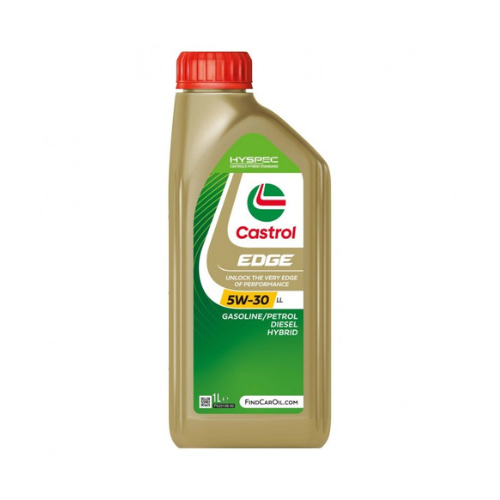
CASTROL EDGE 5W-30 – BMW LONGLIFE-04
Synthetic oil with explicit BMW Longlife-04 approval — the correct specification for the N47 engine. Mid SAPS formulation compatible with DPF, optimal protection for chain and tensioner. Available in the Autoricambi Tritella catalog with fast shipping.
🛒 Buy on Autoricambi TritellaBrands with verified BMW LL-04 approval
In addition to Castrol, Mobil, Shell, Total/Quartz, Liqui-Moly, Motul, and Valvoline also have products with verified BMW LL-04 approval in certain specific lines. The brand itself matters less than the approval — always buy by checking the wording on the label, not just relying on the product name.
🗓️ 5. HOW OFTEN TO REALLY CHANGE IT
This is the section where the recommendation of those working on the N47 most clearly diverges from the official BMW manual.
BMW's Longlife Service System
BMW equips the N47 with the CBS (Condition Based Service) system which dynamically calculates the oil change interval based on driving style, temperature, number of starts, and other parameters. The resulting interval can be up to 30,000 km or 2 years — hence the name "Longlife".
This system was primarily designed for markets with predominantly highway use and temperate to cold climates. In those conditions, with quality oil and regular use, it can work. But in the reality of Italy — widespread urban use, frequent DPF regenerations, hot and humid climate in the South — the Longlife interval is not prudent on an N47 with any significant mileage.
The real recommended interval in the workshop
| Type of use | Recommended interval | Reasoning |
|---|---|---|
| Mainly highway / extra-urban | 12,000 km or 12 months | Few DPF regenerations, less diluted oil, less thermal stress |
| Mixed city/extra-urban use | 10,000 km or 12 months | Standard recommended for most N47 owners in Italy |
| Mainly urban / short trips | 7,000–8,000 km or 6 months | Frequent DPF regenerations dilute the oil with diesel — accelerated degradation |
| Cars with over 200,000 km | 7,000 km or 6 months | Increased tolerances, higher internal consumption, oil quality degrades more rapidly |
💡 The math of saving: an oil change with Castrol EDGE 5W-30 LL-04 costs approximately €80–100 (oil + filter + labor in an independent workshop). Doing it every 10,000 km instead of every 20,000 km means spending about €150–180 more per year. Compared to the cost of a preventative chain kit (€900–€1,400) or a post-breakage repair (€3,500–€5,000), it's a cost-benefit ratio that's hard to ignore.
⚠️ 6. HOW TO TELL IF THE OIL IN THE ENGINE IS ALREADY COMPROMISED
If you've just bought a used BMW N47 or are unsure about the last oil change, these are the checks to make before anything else.
Visual check with the dipstick
- Level: must be between MIN and MAX, ideally halfway. Below minimum is an immediate problem — top up with correct LL-04 oil before driving.
- Color: new oil is light amber or golden. Oil with 5,000–8,000 km is dark brown — normal. Black and thick oil indicates advanced degradation or very high mileage since the last change.
- Consistency: rub a drop between your thumb and forefinger. It should be fluid and slippery. If it's pasty, grainy, or you feel metallic particles, there's a serious problem.
- Odor: a distinct smell of diesel in the oil indicates dilution from incomplete DPF regenerations — the oil should be changed immediately regardless of mileage.
The emulsion test
Open the oil filler cap (the cap on the cylinder head, not the dipstick) and look inside with a flashlight. If you see a white milky or foamy substance attached to the cap or walls, there is water in the oil — a possible sign of a compromised head gasket. This is a different type of problem than the chain, but equally serious.
🌫️ 7. DPF AND DIESEL DILUTION: THE HIDDEN PROBLEM
There's a little-known mechanism that connects the DPF, engine oil, and the N47's timing chain in a cycle of mutual degradation.
Each time the DPF actively regenerates, the engine injects diesel in a post-injection to raise the exhaust gas temperature. A portion of this diesel — a small but not insignificant percentage — passes along the cylinder walls and ends up in the oil in the sump. Diesel in the oil dilutes it: it lowers the effective viscosity, reduces lubricating power, and alters the properties of the oil film.
In a car mainly used in the city, with short trips that do not allow for complete DPF regeneration, regenerations are more frequent and more diesel ends up in the oil. The interval between changes shortens — not for fashion, but for real chemistry.
How to tell if your oil has been diluted by the DPF
- Smell of diesel on the dipstick — the most direct sign
- Oil level increasing instead of decreasing between checks — paradoxical but real: diesel adds volume
- Oil color lighter than usual for the mileage — dilution lightens it
If you notice any of these signs, change the oil regardless of mileage. An "early" oil change costs €80. Waiting and letting diluted oil wear out the timing chain tensioner can cost much more.
To learn more about DPF issues on the N47: BMW N47: EGR AND DPF – PROBLEMS FROM URBAN USE AND HOW TO PREVENT THEM
❓ FREQUENTLY ASKED QUESTIONS
Can I use BMW LL-04 oil even on an N47 with over 250,000 km?
Yes, in fact, it's even more important. In high-mileage engines, internal tolerances have increased, and internal oil consumption may be higher. LL-04 remains the correct specification — just consider reducing the change interval to 7,000 km and checking the level more frequently (every 2,000–3,000 km).
The mechanic put in an oil other than LL-04: what do I do?
Immediately ask what specification he used and check if it has BMW LL-04 approval. If not, have the oil changed as soon as possible with the correct product. Don't make a scene — simply explain that for this specific engine, the LL-04 specification is mandatory for a technical reason related to the hydraulic chain tensioner. A serious mechanic will understand.
Water in the oil on the N47: is it always the head gasket?
Not necessarily. In an N47 used in the city with frequent cold starts and short trips, water vapor produced by combustion can condense in the oil without ever fully evaporating — because the engine never reaches full operating temperature. This produces the characteristic white film under the cap. It's not always a head gasket issue — but it always requires diagnosis to rule it out.
Do I need to reset the service indicator after each oil change?
Yes. The BMW CBS system calculates the next interval from the moment of reset. If you don't reset after the oil change, the system will continue counting from the previous reset — potentially indicating an upcoming service that is already due or very close. The reset is done via the dashboard menu (different procedures depending on model and year) or via a diagnostic tool at the workshop.
How much oil is needed for a complete N47 oil change?
The N47D20 engine requires approximately 5.5–6.5 liters of oil for a complete change with filter replacement — the exact quantity varies slightly depending on the version and model. Always buy 6 liters to ensure you have enough, including the top-up needed after the oil has circulated through the system.
📌 CONCLUSION
On the BMW N47, the choice of oil is not a preference — it's a technical decision with real economic consequences. BMW Longlife-04 approval in 5W-30 viscosity, changed every 10,000 km maximum (less if urban use), is the combination that properly protects the tensioner, chain, and DPF.
Any deviation from this combination — wrong oil, extended interval, neglected level — silently accumulates until the tensioner can no longer compensate. At that point, the cost is no longer an €90 oil change, but a four-figure repair.
Find Castrol EDGE 5W-30 with BMW LL-04 approval in the Autoricambi Tritella catalog, with fast shipping throughout Italy.


