

Home › Vehicle Issues and Failures › BMW N47 Engine
BMW N47 ENGINE: COMPLETE GUIDE — VERSIONS, PROBLEMS, RELIABILITY, AND MAINTENANCE
Updated April 2026 – Technical analysis based on official BMW data, PuMA, and real workshop cases.
The BMW N47 is one of Europe's most common diesel engines. Produced from 2007 to 2017, it can be found under the hood of millions of BMW 1 Series, 2 Series, 3 Series, 5 Series, X1, and X3 models — as well as some Minis. It is a brilliant, efficient engine, with class-leading performance. It also has a well-known and serious problem that anyone who owns or wants to buy one must be aware of.
This guide compiles everything we know about the N47: versions and power outputs, technical architecture, all documented problems, correct maintenance, and real reliability after years of use. For each specific aspect, you will find a link to a dedicated in-depth analysis.
📋 1. VERSIONS AND POWER OUTPUTS: ALL N47 VARIANTS
The N47 family has evolved over time into two generations and numerous power variants. Knowing the exact engine code of your car is important because known criticalities affect different versions in different ways.
First Generation N47 (2007–2011)
| Code | Power | Torque | Turbo | Years |
|---|---|---|---|---|
| N47D20K0 | 116 hp | 260 Nm | Garrett GTB1749VK | 2007–2012 |
| N47D20U0 | 143 hp | 300 Nm | Garrett GTB1749VK | 2007–2013 |
| N47D20O0 | 177–184 hp | 340–350 Nm | MHI TF035HL | 2007–2013 |
| N47D20T0 (Twin Turbo) | 204 hp | 400 Nm | BorgWarner KP35 + K16 | 2007–2013 |
Second Generation N47TU — Technical Update (2011–2017)
| Code | Power | Torque | Notes | Years |
|---|---|---|---|---|
| N47D20K1 | 116 hp | 260 Nm | IHI RHV4-T39 Turbo, -3% fuel consumption | 2011–2015 |
| N47D20U1 | 143 hp | 320 Nm | Euro 5/6, slightly increased torque | 2011–2015 |
| N47D20O1 | 184 hp | 380 Nm | Most common version in Italy | 2010–2017 |
| N47D20T1 (Twin Turbo) | 218 hp | 450 Nm | Replaces N57 204 hp on the 5 Series | 2012–2016 |
⚠️ First vs. second generation: the chain problem affects both generations, but it is more severe and occurs earlier in versions produced until 2011 (first series N47). The TU versions from 2011 onwards received updated guides and tensioners that reduced the risk, but did not completely eliminate the criticality.
🚗 2. BMW MODELS EQUIPPED WITH THE N47
The N47 was fitted to almost the entire range of small and medium-displacement diesel BMWs produced between 2007 and 2017. Below are the most common models on the Italian used car market.
| Model | Series / Body Style | Years | Typical Versions |
|---|---|---|---|
| BMW 3 Series | E90/E91/E92/E93 — F30/F31 | 2007–2016 | 316d, 318d, 320d, 325d, 328d |
| BMW 1 Series | E81/E82/E87/E88 — F20/F21 | 2007–2015 | 116d, 118d, 120d, 123d, 125d |
| BMW X1 | E84 | 2009–2015 | sDrive18d, sDrive20d, xDrive20d, xDrive25d |
| BMW X3 | E83 — F25 | 2007–2014 | xDrive18d, xDrive20d, xDrive23d |
| BMW 5 Series | E60/E61 — F10/F11 | 2007–2014 | 518d, 520d, 525d |
| BMW 2 Series | F22/F23 | 2013–2017 | 218d, 220d, 225d |
| Mini Cooper SD | R56/R57/R58/R59/R60 | 2011–2014 | N47C20U1 143 hp version |
⚙️ 3. TECHNICAL ARCHITECTURE: WHAT'S INSIDE
The N47 is a 2.0-liter (1,995 cc) four-cylinder diesel engine with an aluminum block and cast-iron liners — a compromise between lightness and wear resistance. Compared to its predecessor M47, it brought a series of significant innovations.
Key Features
- Aluminum block with cast-iron liners — lighter than the old M47 but just as durable if well-maintained.
- High-pressure Common Rail injection — up to 2,000 bar in more recent versions, with piezoelectric injectors on 184 hp and above versions.
- Two balance shafts — reduce the vibrations typical of four-cylinder diesels, improving driving comfort.
- Timing chain on the flywheel side — the most debated design choice of the N47. The chain is located on the rear side of the engine, towards the gearbox: it reduces vibrations but makes any timing chain intervention much more complex and expensive.
- Variable geometry turbo in basic versions, twin-turbo in top-of-the-range versions.
- EGR valve and DPF — present on all Euro 5 and Euro 6 versions.
- Dual-mass flywheel — standard on all manual transmission versions.
The Successor: BMW B47
From 2014 onwards, BMW progressively replaced the N47 with the new B47 — the same basic design but with a completely redesigned timing system and reinforced chain, which effectively eliminated the problem of premature chain failure. If you are choosing between a car with an N47 and one with a B47, the difference is significant.
⛓️ 4. THE MAIN PROBLEM: TIMING CHAIN
This is the topic that dominates every discussion about the N47, and for good reason. The timing chain of this engine wears out prematurely compared to expectations — in many units, the problem manifests itself as early as around 100,000 km, sometimes even sooner.
Why It's Different from Other Engines
On a normal engine with a front-mounted chain, premature wear is a serious but manageable problem. On the N47, the chain is located on the flywheel side — to access it, the engine and gearbox must be separated, a job that alone accounts for 4–6 hours of labor. The cost of the intervention is structurally higher than any other chain-driven engine.
BMW's Stance: No Official Recall
BMW has never issued an official recall for the N47 timing chain problem. However, it internally acknowledged the defect through its technical database PuMA (Problem und Maßnahmenmanagement Aftersales), updated several times between 2012 and 2015, which provides instructions to authorized workshops on how to proceed. In practice: BMW does not spontaneously pay, but in many cases, it contributes to the cost if the vehicle has been serviced by the official network and the problem is documented.
The Three PuMA "Cases"
BMW's internal database classified the problem into three progressive phases, linked to the engine's production date. Engines produced until May 2009 (Case 1) are most at risk and require more extensive interventions, which in some cases include crankshaft replacement. Versions from March 2011 onwards (Case 3 / TU) received updated guides and tensioners and statistically show fewer problems — but are not immune.
🚨 Symptom not to ignore: a metallic "rattling" sound in the first few seconds of cold start, between 1,000 and 2,000 rpm, which then disappears. This is the classic sign of a stretched chain with an struggling tensioner. Do not wait for it to become continuous.
Full in-depth analysis → BMW N47: TIMING CHAIN PROBLEMS, SYMPTOMS AND SOLUTIONS
🔧 5. OTHER KNOWN PROBLEMS: EGR, DPF, SWIRL FLAPS, OIL
The timing chain is the main problem, but it's not the only one. Anyone who owns an N47 and primarily uses it in the city should also be aware of these critical issues.
EGR Valve — Deposits from Urban Use
As with almost all modern diesels, the N47's EGR valve accumulates carbon deposits with intense urban use. Symptoms include progressive power loss, gray smoke from the exhaust, and an irregular idle. Periodic cleaning every 60,000–80,000 km is a preventive measure that costs little and prevents replacement, which is decidedly more expensive.
DPF / FAP — Clogging in the City
The particulate filter needs adequate temperatures to regenerate autonomously. Those who only make short urban trips never reach the regeneration temperature and accumulate soot until clogging occurs. The most common error code is P2002 (DPF efficiency below threshold). Before proceeding with replacement — which on an N47 costs €800–€1,500 between parts and labor — it is always worth attempting a professional cleaning or forced regeneration.
Swirl Flaps in the Intake Manifold
The N47 is equipped with swirl flaps in the intake manifold that improve combustion at low RPMs. With use and carbon deposits, these flaps tend to get stuck — with symptoms of power loss, smoke, and irregular engine behavior. Intake manifold cleaning every 80,000–100,000 km is recommended as preventive maintenance.
High Oil Consumption
Some N47s, especially older versions or those with high mileage, start to consume oil abnormally — over 1 liter per 1,000 km. In many cases, this is a sign of advanced internal wear (piston rings, valve guides) that can precede more serious damage. Carbon produced by oil combustion can block a valve, causing immediate engine damage.
High-Pressure Fuel Pump
Some early versions showed problems with the high-pressure fuel pump and auxiliary chain tensioners. Symptoms include difficulty starting, pressure drops in the rail, and irregular operation at low speeds. This is a less common problem than the timing chain but should be kept in mind for high-mileage cars.
| Problem | Typical Manifestation Mileage | Severity | Intervention Cost |
|---|---|---|---|
| Stretched timing chain | 80,000–150,000 km | High | €900–€1,800 (estimate) |
| Chain breakage — engine damage | Unpredictable if neglected | Critical | €3,000–€5,000+ |
| Clogged EGR | 60,000–100,000 km (urban use) | Medium | €120–€500 |
| Clogged DPF | 50,000–80,000 km (urban use) | Medium | €150–€1,500 |
| Stuck swirl flaps | 80,000–120,000 km | Medium | €200–600 |
| Abnormal oil consumption | Over 150,000 km | Medium-High | Variable — to be checked |
🛢️ 6. ENGINE OIL: CORRECT SPECIFICATION AND REAL INTERVALS
On an N47, engine oil is not a minor detail. The hydraulic chain tensioner operates with oil pressure: incorrect viscosity or degraded oil means the tensioner does not compensate correctly, leading to accelerated chain wear.
The BMW Longlife-04 (LL-04) specification
BMW specifies oils with BMW Longlife-04 approval, 5W-30 viscosity, for the N47. This specification is not interchangeable with a generic 5W-30 — the LL-04 formulation is Low SAPS (low ash, sulfur, and phosphorus), which is essential for both DPF compatibility and correct lubrication of the chain tensioner. Using a non-LL-04 approved oil, even from a well-known brand, is one of the most common mistakes we see on N47 BMWs that arrive at the workshop with problems.
Real intervals: don't trust the onboard computer
BMW's Longlife Service system adjusts service intervals based on usage, up to 30,000 km. For an N47 with an already at-risk chain, this interval is too long. The practical recommendation is an oil change every 10,000–12,000 km at most, regardless of the dashboard indicator. Degraded oil loses its viscosity properties that keep the tensioner pressurized — on an already stressed engine, this is a risk not worth taking.
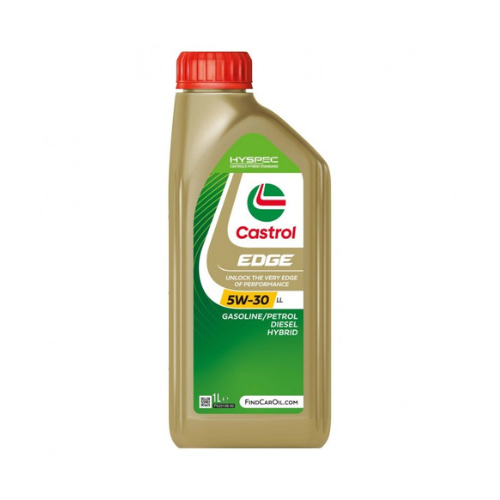
CASTROL EDGE 5W-30 – BMW LONGLIFE-04 OIL
Castrol EDGE 5W-30 synthetic oil with BMW Longlife-04 approval: the correct specification to protect the chain, tensioner, and DPF on N47 engines. Changing it every 10,000 km is the best preventive investment for your BMW diesel.
🛒 Buy on Autoricambi TritellaComplete guide to oil specifications and recommended products for each N47 version: BMW N47 ENGINE OIL: WHICH TO USE, WHEN TO CHANGE IT AND WHY IT'S CRUCIAL FOR THE CHAIN
📊 7. REAL RELIABILITY: IS THE BMW N47 WORTH IT?
This is the question many people ask before buying a used BMW with this engine. The honest answer is: it depends on how it has been maintained, and the generation.
First generation N47 (2007–2011)
This is the most problematic version. The chain risk is real and statistically significant — especially on versions produced before May 2009. On a car from this period without documented chain intervention and with more than 100,000 km, preventive intervention is almost mandatory. Those who buy knowing this and scale the cost from the purchase price get a bargain — the first-generation N47, apart from the chain, is a brilliant and pleasant engine to drive.
Second generation N47TU (2011–2017)
Significantly more reliable. Updated guides and a reinforced tensioner have substantially reduced instances of premature chain failure. It is not free from the problem, but the risk is comparable to other competing diesel engines. On well-maintained versions with regular oil changes every 10,000 km, over 200,000 km can easily be reached without intervention on the timing chain.
Comparison with the successor B47
The B47, which progressively replaced the N47 from 2014, has a completely redesigned timing system that eliminated the premature chain problem. If you are choosing between a car with an N47 and one with a B47 under the same conditions, the B47 is structurally more reliable in terms of timing.
💡 Workshop summary: a well-maintained N47, with LL-04 oil changed every 10,000 km and the chain preventively replaced after 120,000–150,000 km, is a reliable engine for hundreds of thousands of kilometers more. The problem is not the engine itself — it's the maintenance that is often not done correctly.
🔗 8. IN-DEPTH GUIDES BY PROBLEM AND MODEL
For specific problems
| Topic | Dedicated Guide |
|---|---|
| Timing chain — symptoms, causes, and costs | BMW N47: timing chain problems, symptoms, and solutions |
| Cold start noises — recognizing a failing chain | BMW N47 — cold start noises: how to recognize a failing chain |
| Engine oil — LL-04 specification and intervals | BMW N47 engine oil: which to use, when to change it, and why it's crucial |
| Chain replacement costs — official workshop vs independent | BMW N47 chain replacement: real costs and what the kit includes |
| Used car purchase — workshop checklist | Used BMW N47: complete workshop checklist before buying |
By model
| Model | Dedicated Guide |
|---|---|
| BMW 3 Series E90 with N47 | BMW 3 Series E90 with N47 — specific problems of this combination |
| BMW 1 Series E87 with N47 | BMW 1 Series E87/E81 with N47 — critical points and correct maintenance |
| BMW X1 E84 | BMW X1 E84 — problems, defects, and faults |
| BMW X3 F25 diesel | BMW F25 diesel 2011–2012 — timing chain problems |
| BMW 1 Series F20 — maintenance | BMW 1 Series F20 116d maintenance — intervals and interventions |
❓ FREQUENTLY ASKED QUESTIONS
Is the N47 engine reliable?
With correct maintenance, yes, especially in the TU versions from 2011 onwards. The chain problem is real but manageable if preventive action is taken. Pre-2011 versions require more attention, but a well-maintained N47 easily exceeds 200,000 km. The real risk is buying a car with undocumented oil history and high mileage without checking the chain's condition.
How do I know if my BMW has an N47 or a B47?
The quickest way is to check the year of manufacture: the B47 progressively replaced the N47 from 2014. In practice, BMWs produced after 2016 almost certainly have the B47. To be sure, read the engine code from the registration document or the tag under the hood — N47 starts with "N47", B47 starts with "B47". Alternatively, an OBD scanner reading will show the engine type in the vehicle data section.
Can the N47 chain last beyond 200,000 km?
Yes, but it's not the norm. There are well-maintained N47s that exceed 200,000 km without chain intervention — almost always TU versions from 2011 with documented oil history and oil changes every 10,000 km with LL-04 specification. On pre-2011 versions, lasting beyond 150,000 km without noise is less common. In any case, beyond 150,000 km, diagnosis of the chain's condition by a BMW expert mechanic is recommended.
Does BMW contribute to chain replacement costs?
In some cases, yes, but not automatically. BMW acknowledges the problem through its internal PuMA database and, for vehicles serviced by the official network with documented maintenance history, may partially or totally contribute to the cost. This is not guaranteed and depends on the vehicle's age, mileage, and intervention history. It is always worth explicitly asking a BMW dealership before proceeding with an independent workshop.
Can EGR and DPF problems be prevented?
EGR and DPF degradation is significantly slowed down with mixed use: at least one extra-urban journey of 30–40 minutes every 2–3 weeks allows DPF regenerations and reduces deposits on the EGR. Those who use their BMW almost exclusively in the city for short trips accumulate problems on these components much faster. In that case, preventive EGR cleaning every 60,000 km and the periodic addition of a specific DPF additive are investments that pay off.
Where can I find spare parts and oil for BMW N47?
On Autoricambi Tritella you will find engine oil with BMW Longlife-04 specification, additives for high-mileage engines, timing chain kits, and spare parts for EGR and DPF for all N47 versions, with fast delivery throughout Italy.
📌 CONCLUSION
The BMW N47 engine is a capable and pleasant diesel to drive, with a known structural defect and maintenance that leaves no room for improvisation. Those who know it well manage it satisfactorily for years — those who neglect it risk facing a €4,000 bill.
The rules are simple: BMW LL-04 oil every 10,000 km, listening for cold start noises, preventive chain intervention after 120,000–150,000 km on the first series. For everything else, the in-depth guides above cover every specific aspect.
For engine oil with BMW LL-04 specification, additives, and all spare parts for your BMW N47, visit the Autoricambi Tritella catalog.


