

WHAT IS THE BEST GASOLINE INJECTOR CLEANER IN 2026?
Updated 2026 – Technical comparison based on direct workshop experience and analysis of the most used products.
Quick Answer
In 2026, the best gasoline injector cleaner depends on the engine type. For GDI direct injection (1.0 TCe, 1.2 PureTech, 1.5 TSI, EcoBoost), the best choice is Arexons 9820 Concentrato (€11-15, 250ml/tank dose). For indirect injection or maintenance use, STP (€7-10) or Liqui Moly 1712 (€15-20) every 8,000-10,000 km will suffice. A cleaner cannot repair mechanically damaged injectors.
Every week in the workshop, we see gasoline engines arrive that appear healthy but are rough at idle, sluggish during acceleration, or have inexplicably higher fuel consumption than usual. In most cases, the problem is not a serious failure: it's dirty injectors or those partially clogged by resins, lacquers, and carbon deposits.
Cleaning gasoline injectors with additives remains one of the most effective preventive maintenance operations in 2026 — if performed correctly and with the right product for the engine type. This guide explains which cleaner to choose, when to really use it, and when mechanical intervention is needed instead.
📋 WHAT YOU'LL FIND IN THIS GUIDE
- 🔍 What is a gasoline injector cleaner and how does it work
- ⚠️ When a cleaner is really needed (symptoms and DTC codes)
- 🏆 The 2026 winner: Arexons 9820 Concentrato
- 🎯 How to choose the right cleaner for your engine
- 🏅 Top 3 ranking — real comparison
- 📊 Comparative table with prices and dosages
- ⏱️ How often to use it (urban vs. extra-urban use)
- 🛠️ How to use it correctly: mistakes to avoid
- 🚫 When a cleaner is no longer enough
- 🔗 Related insights
- ❓ Frequently asked questions
🔍 WHAT IS A GASOLINE INJECTOR CLEANER AND HOW DOES IT WORK?
A gasoline injector cleaner is an additive to be mixed with fuel before refueling. It contains specific solvents (PEA – Polyetheramine, PIB, Mannich) that progressively dissolve deposits accumulated on injectors, intake valves, and the combustion chamber. In professional products, the concentration of active ingredients reaches 30-40%, compared to 5-10% in basic commercial additives.
Effectiveness varies greatly depending on the engine type:
Indirect injection (PFI – Port Fuel Injection)
Typical of cars up to around 2010 (FIAT 1.4 Fire 8V/16V, Renault 1.6 16V, older 1.0 Suzuki). The injector sprays into the intake manifold: the fuel itself continuously washes the valves, so deposits are softer and easier to remove. A standard cleaner works well.
Direct injection (GDI – Gasoline Direct Injection)
Standard on engines from 2012-2015 onwards: 1.0 TCe Renault-Dacia, 1.2 PureTech Stellantis, 1.5 TSI VAG, 1.0/1.5 EcoBoost Ford, 1.4 MultiAir Fiat. The injector sprays directly into the combustion chamber, and the fuel NO LONGER touches the intake valves, which become aggressively fouled with hard carbon deposits. Concentrated and specific cleaners are needed.
⚠️ Warning: using a generic indirect injection cleaner on a GDI engine is practically useless. This is the first mistake we see in the workshop — the user buys "any" additive for €5 and, of course, it solves nothing.
A good cleaner can improve power delivery by 5-10%, reduce fuel consumption by 3-5%, and stabilize idling. It cannot repair a mechanically damaged or electrically shorted injector.
⚠️ WHEN IS A GASOLINE INJECTOR CLEANER REALLY NEEDED?
The cleaner works in two ways: as preventive maintenance (every 8,000-10,000 km, even without symptoms) and as a curative intervention at the first signs of dirt.
Typical symptoms of dirty injectors
- Rough or unstable idle when cold
- Hesitation during acceleration in the first few meters
- Jerks or stutters at low rpm (1,500-2,500 rpm)
- 5-10% increase in fuel consumption without other causes
- Check engine light on with misfire codes
- Slower than usual hot start
Most common DTC codes
- P0300 – random misfire
- P0301-P0304 – misfire on cylinder 1, 2, 3 or 4
- P0171 – system too lean (bank 1)
- P0172 – system too rich (bank 1)
- P0420 / P0430 – catalyst efficiency below threshold (secondary effect of dirty injectors)
If one or more of these codes appear, a concentrated cleaner used for two consecutive refuels resolves the issue in 60-70% of cases at low cost. If the codes return, then a proper diagnosis is needed (injector balancing test, flow test).
🏆 THE BEST GASOLINE INJECTOR CLEANER 2026
Arexons 9820 Concentrato Direct Injection
In 2026, considering the enormous spread of GDI direct injection engines (now present in almost all modern cars post-2015), Arexons 9820 Concentrato Benzina is the choice we most often recommend in the workshop.
The reason is technical: it is one of the few additives on the Italian market specifically formulated for the typical deposits of GDI engines, with a higher-than-average concentration of active ingredients and targeted dosing (250 ml per full tank, up to 60 liters).
- ✅ Specific for direct injection (GDI/TSI/TCe/EcoBoost/PureTech/MultiAir)
- ✅ Also compatible with older indirect injection systems
- ✅ Compatible with TWC catalyst and lambda sensor
- ✅ Reduces hesitation, jerks, and rough idling
- ✅ Recognized Italian brand, guaranteed spare parts
When to use it: preventive maintenance every 8,000-10,000 km, or curative intervention for two consecutive refuels if symptoms appear.
When it's NOT enough: electrically or mechanically damaged injectors, valves with hardened deposits from over 150,000 km (in which case, bench cleaning with ultrasonics or dismantling is required).

AREXONS 9820 – CONCENTRATED DIRECT INJECTION GASOLINE INJECTOR CLEANER
Concentrated additive for GDI direct injection engines (TCe, TSI, EcoBoost, PureTech, MultiAir). Removes carbon deposits on injectors and intake valves. Dose: 250 ml per tank up to 60 liters. Catalyst compatible. Largely replaces professional cleaning at the first symptoms.
🛒 Buy now on Autoricambi Tritella🎯 HOW TO CHOOSE THE RIGHT CLEANER FOR YOUR ENGINE?
There is no "absolute best" cleaner; there is one that is right for your engine and your usage. This quick guide helps you choose without making a mistake:
Do you have a GDI direct injection car (post-2015)?
Examples: Renault Clio/Captur 1.0 TCe, Peugeot/Citroën/Opel/Fiat 1.2 PureTech, VW/Audi/Skoda/Seat 1.0/1.5 TSI, Ford Fiesta/Focus/Kuga 1.0/1.5 EcoBoost, Fiat 500/Tipo 1.4 MultiAir. You need a concentrated GDI cleaner like Arexons 9820. A generic additive won't solve the problem.
Do you have an indirect injection car (pre-2012, some up to 2015)?
Examples: older FIAT 1.2/1.4 Fire 8V, Renault 1.6 16V, Hyundai/Kia 1.4 MPI, Suzuki 1.0/1.2 K-series. A standard cleaner like STP at €7-10 is perfectly fine. High concentrations are unnecessary.
Do you have a premium car or a high-mileage vehicle (over 120,000 km)?
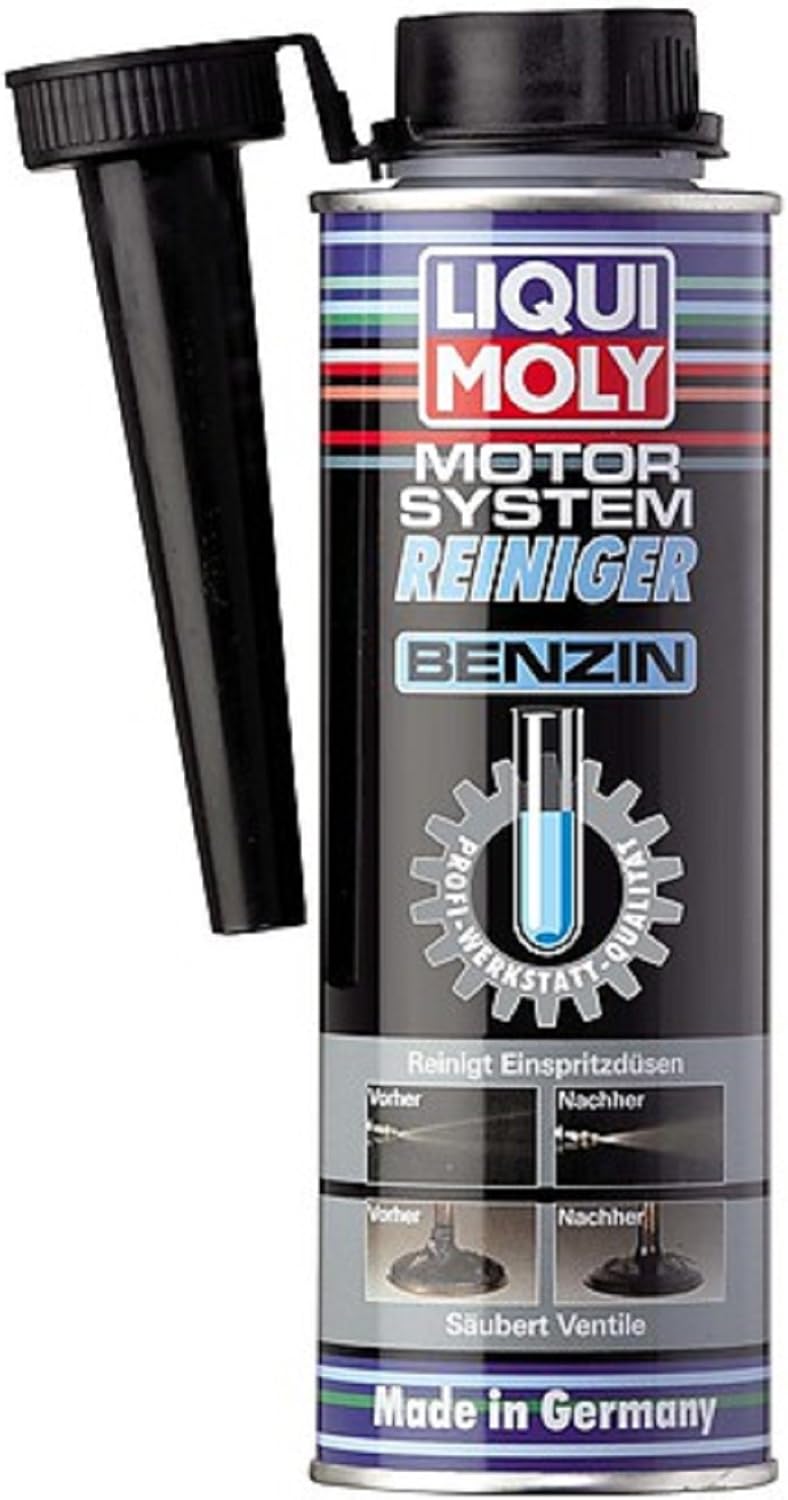
BMW, Mercedes, Audi, or any car over 120,000 km with pronounced symptoms. Go for a German premium product like Liqui Moly 1712. It costs more but has a more stable and less aggressive formulation on aged gaskets.
🏅 TOP 3 GASOLINE INJECTOR CLEANERS 2026 RANKING
Three products, three different usage profiles. All tested on real cases in the workshop. Here's the reasoned ranking:
Arexons 9820 Concentrated Direct Injection (250 ml)
🛒 Buy on Autoricambi Tritella
*Amazon affiliate links: we may receive a small commission, at no additional cost to you. Indicative prices subject to change.
📊 COMPARATIVE TABLE: PRICES, DOSAGES AND COMPATIBILITY
| Product | Engine Type | Format | Dose | Price | Frequency |
|---|---|---|---|---|---|
| Arexons 9820 | Direct GDI | 250 ml | 1 bottle / 60 L | €11-15 | 8,000-10,000 km |
| STP | Indirect / maintenance | 200 ml | 1 bottle / 60 L | €7-10 | 10,000 km |
| Liqui Moly 1712 | Premium / high km | 300 ml | 1 bottle / 70 L | €15-20 | 10,000 km |
*Indicative prices May 2026, VAT included. Variable depending on supplier and format.
⏱️ HOW OFTEN SHOULD YOU USE A GASOLINE INJECTOR CLEANER?
The optimal frequency depends on how you use your car. In the workshop, we apply this practical rule:
- Intense urban use (short trips, many cold starts): every 7,000-8,000 km. The engine never reaches optimal temperature, and deposits form more quickly.
- Mixed use (balanced urban + extra-urban): every 9,000-10,000 km
- Mainly highway use: every 12,000 km or at service.
- Low-usage cars (less than 5,000 km/year): once a year to prevent stagnation.
- Methane or LPG cars: every 5,000-6,000 km. Gasoline is only used at startup and stagnates, depositing more quickly.
💡 Practical tip: use the cleaner just before servicing, so the used engine oil also carries away cleaning residues. If you have a GDI car over 100,000 km, perform two consecutive treatments with one tank of fuel between them.
🛠️ HOW TO USE AN INJECTOR CLEANER CORRECTLY?
The effectiveness of a cleaner greatly depends on how you use it. These are the 5 most frequent mistakes we see:
- Pour it into a nearly full tank → the correct sequence is: go to the gas station with a nearly empty tank, pour the additive into the tank, then fill it up (the turbulence of refueling mixes it)
- Use it with every fill-up → useless and uneconomical. Once deposits are dissolved, the effect wears off
- Use generic products on GDI engines → a waste of money, it solves nothing
- Expect miracles on already damaged injectors → an injector that "squirts" or no longer closes needs replacement, not additives
- Use it cold before a short trip → the cleaner works better if the engine reaches operating temperature. Pour it in before a trip of at least 30-40 km
🚫 WHEN THE CLEANER IS NO LONGER ENOUGH?
There are cases where even the best concentrated additive won't solve the problem. Here are the signs indicating a more serious issue:
- Persistent jerking even after two consecutive treatments
- Difficult hot starts (classic symptom of a dripping injector)
- P0301-P0304 code always on the same cylinder
- Engine light returns within 100-200 km after cleaning
- High fuel consumption that doesn't decrease
- Smell of unburnt fuel from the exhaust
In these cases, professional inspection is needed: injector flow test on a bench with ultrasound (50-100€), electrical balance test, and in some cases, injector replacement (80-150€ per injector + labor). For GDI engines over 150,000 km, walnut blast cleaning of the intake valves may be necessary (300-500€).
💬 Is your car still jerking even after using the cleaner?
If you have already tried the additive and the symptoms persist, contact us: we will help you identify the problem and find the right spare parts (injectors, lambda sensors, spark plugs) at correct prices — often saving 20-30% compared to the dealership.
📩 Request a free quote🔗 RELATED INSIGHTS
The twin guide for diesel engines: comparison of products specific for Common Rail
→ Read more
When the problem on Fiat 1.4 MultiAir is not dirty injectors but the hydraulic module
→ Read more
The most widespread Stellantis GDI: what to know about injectors, belt, and oil
→ Read more
All additives in the catalog: cleaners, antifreeze, specific lubricants
→ Go to Tritella catalog
❓ FREQUENTLY ASKED QUESTIONS ABOUT PETROL INJECTOR CLEANER
Can injector cleaner damage the engine?
No, if used correctly and in the indicated doses. Products like Arexons 9820, STP, and Liqui Moly are compatible with TWC catalysts, lambda sensors, and GPF. The risk of damage only exists with unknown additives, incorrect dosages, or using it with every fill-up. On very old engines (over 200,000 km), an aggressive cleaner can dislodge deposits that clog fuel filters: it's better to have a service done first.
Is it better to use it with a full or empty tank?
The correct sequence is: arrive at the gas station with a nearly empty tank (reserve), pour the additive into the tank, then fill it up. The turbulence of refueling mixes it perfectly. Pouring it into an already full tank reduces effectiveness because the product remains concentrated at the top.
Does the cleaner work on new cars too?
Yes, in fact, it is recommended as a preventative measure from 30,000-40,000 km onwards, especially on modern GDI engines (TCe, TSI, EcoBoost, PureTech) which get dirty much faster than old indirect injection systems. For cars under warranty, just verify that the product complies with the manufacturer's specifications.
Can I use injector cleaner with every petrol fill-up?
No, it's useless and uneconomical. Once deposits are dissolved, the cleaner's effect wears off. The correct frequency is every 8,000-10,000 km (mixed use), 7,000 km in urban use. Only make an exception for two consecutive treatments if you have marked symptoms: after this "curative cycle," return to normal maintenance.
How much does a petrol injector cleaner cost in 2026?
Prices range from 7€ for standard cleaners like STP, to 11-15€ for professional concentrates like Arexons 9820, up to 15-20€ for premium German products like Liqui Moly 1712. Consider that a professional injector cleaning on a bench costs 50-150€: two treatments with concentrated additive at a total of 25€ are often sufficient to avoid the intervention.
Which cleaner is best for 1.0 TCe, 1.2 PureTech, EcoBoost engines?
All these engines have GDI direct injection and get dirty aggressively, especially the intake valves which are no longer washed by fuel. The right product is a specific GDI concentrate like Arexons 9820. A generic cleaner like STP is not effective on these engines.
Does injector cleaner also clean intake valves?
On indirect injection engines, yes, because fuel (and additive) passes through the valves. On GDI engines, no, because fuel is injected directly into the combustion chamber and the intake valves are not washed. To clean valves on a GDI, mechanical walnut blast cleaning (300-500€) or specific intake additives like Bardahl Intake Cleaner are needed.
How many kilometers after treatment do results become visible?
Results are progressively perceived within the first 200-500 km after treatment. More stable idle, quicker acceleration, possible fuel consumption reduction of 3-5%. If after 1,000 km you don't notice any differences and the symptoms were marked, the problem is probably not dirty injectors but something mechanical — go to a workshop for a diagnosis.
🏁 IN SUMMARY: WHICH PETROL INJECTOR CLEANER TO CHOOSE IN 2026?
In 2026, the best choice depends on the type of engine more than the brand itself:
- 🏆 Modern direct injection GDI engine (post-2015) → Arexons 9820 Concentrated
- 🥈 Older indirect injection car (pre-2012) → STP standard, excellent value for money
- 🥉 Premium car or over 120,000 km → Liqui Moly 1712, stable and gentle formula
Injector cleaner is a very useful maintenance tool, but it does not replace a correct diagnosis. If symptoms persist after two treatments, it's time for a visit to a workshop to check injectors, spark plugs, coils, and lambda sensor.
For other engine care products — additives, specific oils, genuine and compatible spare parts — visit the Autoricambi Tritella catalog or request a free quote for your specific car.


