

BMW 1 SERIES F20 116d: MAINTENANCE SCHEDULE, SERVICE INTERVALS, AND EXTRAORDINARY INTERVENTIONS
If you own a BMW 1 Series F20 116d (85 kW, 116 hp, 2015–2019), knowing the maintenance intervals is essential to avoid costly breakdowns and keep your car running efficiently over time. In this guide, I summarize, from the perspective of a workshop and spare parts dealer, the main routine and extraordinary maintenance operations , with recommended intervals and practical advice.
BMW 1 SERIES F20/F21 – COMMON PROBLEMS AND DEFECTS
From N47 and B47 engine problems to electrical system faults, suspension, steering, gearbox and real-world maintenance costs: a comprehensive guide to the most common BMW 1 Series F20/F21 problems and the most common repairs.
📘 Read the complete guide📋 ARTICLE INDEX
🚗 BMW 1 SERIES F20 116d OVERVIEW
The BMW 1 Series F20 116d is a premium compact rear-wheel drive car, highly regarded for its fuel economy and ride comfort. Like all modern diesels with turbocharging, EGR, and particulate filter (FAP/DPF), however, it is very sensitive to maintenance :
- quality oil and changed regularly;
- always efficient filters;
- pay attention to brakes, suspension and power components;
- periodic check of FAP and EGR, especially in city use.
A well-followed maintenance plan is the difference between a 116d that calmly reaches over 200,000 km and a car that starts to give problems already at medium mileage.
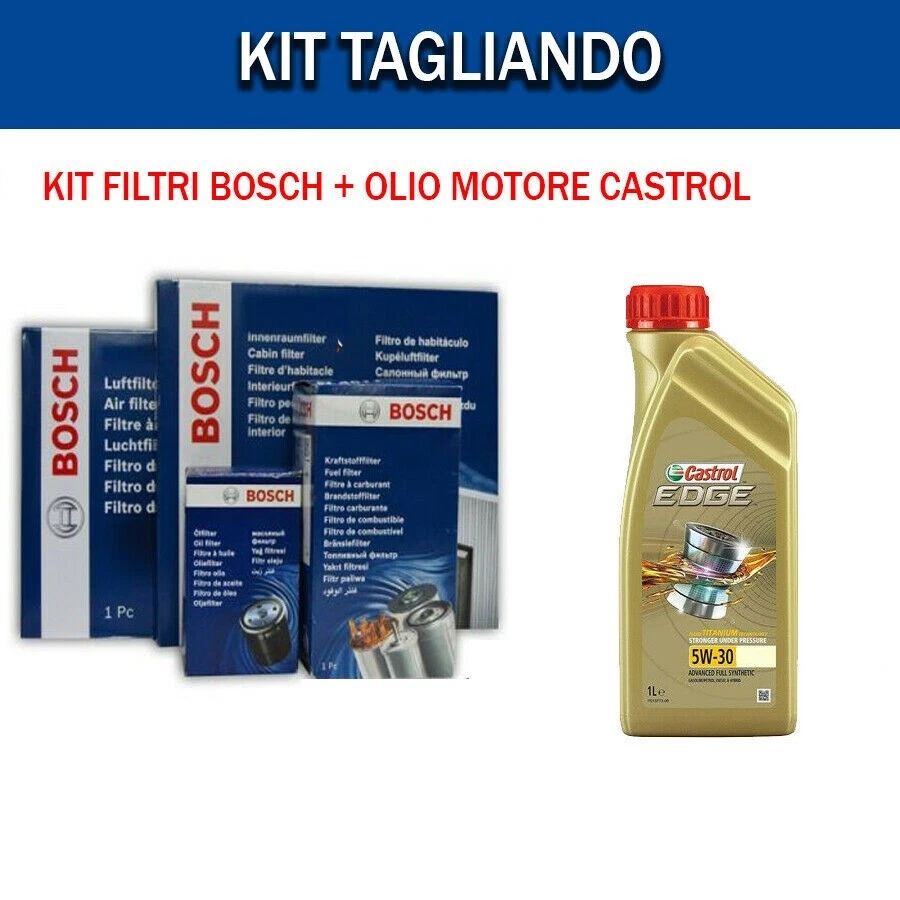
BOSCH SERVICE KIT + CASTROL 0W30 OIL – BMW 1 SERIES F20 (114/116/118/120d)
Complete service kit with Bosch filters and Castrol 0W30 oil specifically for the BMW 1 Series F20 114d, 116d, 118d and 120d engines. Guarantees high protection, efficiency and optimal performance for the latest generation BMW diesel engines.
🛒 Buy now on eBay🔧 ROUTINE MAINTENANCE BMW 1 SERIES F20 116d
Routine maintenance includes all the recurring interventions necessary to keep the engine and systems in full efficiency.
1. Change engine oil
When: every 15,000–20,000 km or once a year (even if you only drive a few km).
Why it's important: Oil lubricates, cools, and protects the engine. On modern turbodiesel engines, excessively long service intervals increase the risk of:
- premature turbo wear;
- internal encrustations;
- increased fuel consumption and smoke.
2. Oil filter
When: always together with the oil , so every 15,000–20,000 km.
Why: A saturated oil filter no longer retains impurities, which end up circulating in the engine, increasing wear on bushings, turbos, and moving parts.
3. Engine air filter
When: every 30,000–40,000 km , earlier if used in very dusty or urban areas.
Practical effect: a clean air filter improves:
- engine breathing;
- low-end torque;
- consumption and emissions.
4. Cabin filter (pollen)
When: Every 15,000–20,000 km or once a year .
Why: It improves indoor air quality and reduces window fogging; important for allergy sufferers and for climate control efficiency.
5. Fuel filter
When: Every 60,000 km or approximately every 4 years.
Why: It protects the pump and injectors from dirt and water in the diesel fuel. On a modern common rail system, a neglected filter can lead to very expensive failures.
6. Brake fluid
When: Every 2 years or approximately 30,000 km .
Why: Brake fluid absorbs moisture over time, lowering its boiling point and increasing the risk of “fading” (spongy pedal, loss of effectiveness under heavy braking).
7. Check brakes (discs and pads)
When: every 30,000–40,000 km or in case of noise, vibrations or longer braking distances.
Practical information:
- replace the pads before they wear out to avoid damaging the discs;
- check the thickness of the discs and the presence of scratches or deformations.
8. Tires
When: Visual and pressure check every 10,000–15,000 km or at every change of season.
What to check:
- uniform tread wear (legal minimum 1.6 mm, recommended to change already around 3 mm);
- correct pressures according to the manual (also depending on the load);
- any cracks, cuts or deformations.
🛠️ EXTRAORDINARY MAINTENANCE BMW 1 SERIES F20 116d
Extraordinary maintenance includes interventions that do not have a fixed deadline but depend on mileage, driving style and wear .
1. Distribution chain
The BMW 1 Series F20 116d has a timing chain and not a belt.
In theory it's "for life", but in practice it's always a good idea:
- listen for any metallic noises when starting or when cold;
- If suspicious noises appear, have the device diagnosed and checked at a specialized BMW workshop .
2. Clutch and flywheel
Typically: between 100,000 and 150,000 km , but it depends a lot on driving style (city, hill starts, towing, etc.).
We often intervene on:
- clutch kit (disc + pressure plate + thrust bearing);
- dual-mass flywheel (change if noisy or with excessive play).
3. Turbocharger
When: over 150,000 km , to be assessed based on smoke, oil consumption and engine thrust.
With regular oil changes and proper use (don't turn off the engine immediately after hard driving), the turbo can last a long time; neglecting maintenance puts this component at risk.
4. Shock absorbers
When: approximately between 100,000 and 120,000 km , sooner if the car often travels on rough roads.
Symptoms: pronounced body roll, pitching under braking, “dancing” rear end, noise on potholes and bumps.
5. Fuel pump
When: Often over 150,000 km , but there is no hard and fast rule.
Symptoms: difficult starting, poor acceleration, abnormal noise from the tank area.
6. EGR cleaning and FAP check
EGR valves: around 100,000 km (sooner if the car is driven a lot in the city) it may be necessary to clean or replace the valve to avoid drops in performance and smoke.
Diesel particulate filter (FAP/DPF): monitor after 150,000 km , especially on cars used primarily in urban areas. In many cases, it is sufficient to:
- forced regeneration in the workshop;
- use of specific additives;
in the most serious cases, replace the filter.
📊 BMW 1 SERIES F20 116d MAINTENANCE INTERVAL SUMMARY TABLE
| Intervention | Recommended interval | Practical notes |
|---|---|---|
| Engine oil + oil filter | 15,000–20,000 km / 12 months | Better to anticipate whether city or heavy use |
| Air filter | 30,000–40,000 km | Check first in dusty areas |
| Cabin filter | 15,000–20,000 km / 12 months | Annual change recommended |
| Fuel filter | 60,000 km / 4 years | Essential for protecting injectors |
| Brake fluid | 2 years / 30,000 km | Important for safe braking |
| Brakes (discs/pads) | Check every 30,000–40,000 km | Replacement based on actual wear |
| Clutch + flywheel | Approximately 100,000–150,000 km | Very variable depending on driving style |
| Shock absorbers | 100,000–120,000 km | Check for any instability or noises |
📌 WHY REGULAR MAINTENANCE IS SO IMPORTANT
Keeping your BMW 1 Series F20 116d in good condition doesn't just mean "getting it serviced every now and then", but:
- reduce the risk of costly breakdowns (turbo, injectors, FAP, clutch);
- keep consumption and emissions under control;
- always have a safe and pleasant car to drive ;
- preserve the value of the car in case of sale.
My advice is to always accompany the official maintenance booklet with a practical consideration of how you use your car: lots of city driving, short trips, hills, towing, or intense mileage require more frequent servicing than those who only drive regularly extra-urban.
❓ Frequently Asked Questions About Maintenance of the BMW 1 Series F20 116d
Can I only follow the intervals indicated by the on-board computer?
The on-board system is useful, but it often tends to "extend" the intervals. From experience, on a modern turbodiesel, I recommend not exceeding 20,000 km/12 months for oil and oil filter changes.
Is it mandatory to use only original BMW parts?
No, but it's essential to use quality spare parts equivalent to the original (OE or OEM) . For critical components (filters, brakes, pumps, shock absorbers), I don't recommend cheap, generic products.
How often should I check the FAP and EGR?
They do not have a fixed expiry date, but after 100,000 km it is good practice to carry out an assessment of the EGR condition and, after 150,000 km , carefully monitor the FAP with diagnosis.
Should the timing chain be replaced at a fixed mileage?
No, the chain doesn't have a programmed interval. However, it should be listened to and checked : if metallic noises or phase errors emerge, you should intervene immediately.
SPARE PARTS AND TECHNICAL SUPPORT FOR YOUR BMW 1 SERIES F20 116d
For specific BMW engine oil, filters, brake kits, shock absorbers, diesel additives, and FAP/EGR products, please visit our shop:


