

0W20 VS 5W30 OIL: REAL DIFFERENCES, WHICH TO CHOOSE, AND BEST PRODUCTS 2026
Updated on May 4, 2026 · Technical guide based on over 15 years of engine oil sales and data collected from partner workshops in Giulianova and Roseto degli Abruzzi · Authorized Valvoline and Castrol distributors
Quick Answer
0W20 and 5W30 differ in cold fluidity (0W flows down to -35°C, 5W down to -30°C) and hot protection (HTHS: 0W20 ≥2.6 mPa·s vs 5W30 ≥2.9-3.5). 0W20 is ideal for modern, hybrid, full-hybrid, and Start&Stop cars (Toyota, Honda, Ford, Volvo, recent Mercedes). 5W30 provides better protection for diesel, turbo, high-mileage, and highway-use engines (VW, Audi, BMW, Stellantis diesel). Average price 4L: €35-65 for both. Always follow the OEM specifications in your owner's manual.
What is the difference between 0W20 and 5W30 oil? In this 2026 guide, you will discover how to correctly read SAE codes, what changes in terms of viscosity, protection, and consumption, and which type is truly best suited for your engine. We will analyze ACEA, API, and OEM specifications from major manufacturers (FIAT/Stellantis, VW, Mercedes, BMW, Toyota, Ford, Renault, Hyundai), with an updated technical comparison as of May 2026 and a selection of recommended products tested in Tritella partner workshops.
✅ WHY IS OIL CHOICE SO IMPORTANT?
Engine oil is the lifeblood of the engine. Every time you turn the key or press the Start button, the oil springs into action: it flows between pistons, shafts, bearings, and valves, creating a very thin but vital film that reduces friction, cools, cleans, and protects mechanical surfaces. Without correct lubrication, a modern engine can begin to suffer damage in a matter of seconds.
Cars of 2026—equipped with turbochargers, Start&Stop systems, 48V mild-hybrids, and anti-pollution devices like DPF and GPF—operate at higher temperatures (up to 150°C in the sump) and tighter tolerances (0.02-0.05 mm between rings and cylinders). This is why manufacturers precisely define viscosity (SAE), ACEA/API specifications, and OEM approvals dedicated to each engine. Adhering to these indications is not just a recommendation, but a necessary condition to ensure reliability, efficiency, and official warranty.
Using the wrong or inferior quality oil means altering the engine's thermal and mechanical balance. Damage is not immediate, but accumulates over 30,000-80,000 km. The most frequent symptoms:
- 🛠️ Premature wear of main bearings, piston rings, hydraulic lifters, and camshaft;
- ⛽ Increase in fuel consumption by 3-7% and performance drop;
- ❄️ Difficulty starting in cold weather if viscosity is excessive;
- 🔥 Engine overheating and formation of sludge that clogs passages and valves;
- 🚗 Malfunctions in turbo, EGR, and DPF due to oils incompatible with Low SAPS systems;
- 📉 Warranty voiding if the oil does not meet the required approvals (VW, Mercedes, Ford, Toyota, Stellantis).
Quality lubricant ensures correct oil pressure (3-6 bar at operating temperature), maintains stable temperature, reduces internal friction by up to 40%, and improves combustion. Choosing the right 0W20 or 5W30—based on engine type and climate of use—means a quieter, more efficient, and longer-lasting engine.
Further reading: What is the best engine oil? 2026 Guide to the best brands
🔍 WHAT DO THE 0W20 AND 5W30 CODES MEAN?
Codes like 0W20 or 5W30 are not just commercial codes, but values defined by the SAE J300 standard (Society of Automotive Engineers), which classifies engine oil viscosity based on temperature. Viscosity measures the "density" of the lubricant and its ability to flow: the lower the number, the more fluid the oil is and the quicker it reaches all parts of the engine after startup.
Each code is composed of two elements:
- The first part (0W or 5W) indicates cold fluidity: the letter W stands for "Winter". 0W ensures pumpability down to -35°C, 5W down to -30°C.
- The second part (20 or 30) represents hot viscosity, i.e., the oil's ability to maintain a stable protective film at 100-150°C.
In summary:
- 0W20 → fluid as water when cold, perfect for quick starts and modern high-efficiency engines; reduces friction and consumption by 3-4%;
- 5W30 → slightly denser when cold, but more "robust" when hot; ideal for engines operating at high RPMs or under heavy loads (diesel, turbo, highway).
This difference is not just a matter of temperature, but of engine design. Engines from 2018 onwards with reduced tolerances (below 0.03 mm) and hybrid systems require more fluid oils like 0W20, while older ones or those with high thermal power need the greater protection of 5W30.
🔬 Key technical parameters
- VI (Viscosity Index): measures how stable the viscosity remains with temperature changes. Typically: 0W20 has VI 220-240, 5W30 has VI 165-185. High value = greater performance consistency.
- HTHS (High-Temp High-Shear): resistance of the lubricant film at high temperature and under load (at 150°C and 10⁶ s⁻¹). 0W20: 2.6-2.9 mPa·s. 5W30: 2.9-3.5 mPa·s. Fundamental parameter for engine protection.
- NOACK: volatility (% evaporation at 250°C for 1h). Low NOACK (below 10%) = lower evaporation and reduced consumption.
- SAPS/ACEA: content of sulfated ash, phosphorus, sulfur. "Low SAPS" oils (ACEA C2/C3/C5/C6) protect DPF and GPF; "Mid SAPS" and "Full SAPS" are for engines without particulate filters.
- API/ILSAC: international quality standards (API SP, ILSAC GF-6); compatibility with American and Asian engines.
💡 Technical curiosity: at 100°C, the viscosity difference between a 0W20 and a 5W30 is minimal (8.5-9 cSt vs 10-12 cSt), but when cold (-10°C), 0W20 can flow up to 50% faster inside the engine, ensuring instant protection immediately after startup. It is in those first 10-30 seconds that 75% of engine wear occurs in winter.
⚙️ WHAT ARE THE TECHNICAL DIFFERENCES BETWEEN 0W20 AND 5W30?
The differences between 0W20 and 5W30 go far beyond just viscosity: they concern the oil's behavior under real-world temperature, pressure, and load conditions. The former is designed for maximum efficiency and fuel economy, the latter for protection and resistance in more severe situations.
| Characteristic | 0W20 | 5W30 |
|---|---|---|
| Cold pumpability ❄️ | Down to -35°C ⭐⭐⭐⭐⭐ | Down to -30°C ⭐⭐⭐⭐ |
| Viscosity at 100°C (KV100) | 8.5-9.3 cSt | 9.3-12.5 cSt |
| HTHS (mPa·s) 🔥 | 2.6-2.9 | 2.9-3.5 (more protective) |
| Hot protection | Thinner film, suitable for high-efficiency engines | Thicker film, ideal for high temperatures |
| Fuel economy ⛽ | -3/-4% consumption (vs traditional oils) | -1/-2% consumption (standard reference) |
| Thermal and oxidative stability 🌡️ | More sensitive to thermal stress | Excellent stability, greater oxidation resistance |
| Heavy duty use (towing, heat) 🚗 | Not recommended | Highly recommended |
| Engine compatibility | Modern gasoline, full hybrid, mild hybrid, S&S | Traditional gasoline and diesel, turbo, high mileage |
| Average price 4L (2026) | €38-65 | €35-58 |
In practical terms, 0W20 prioritizes efficiency and fluidity, reducing internal friction and consumption. 5W30 offers more robust protection when hot, ideal for those who frequently drive on highways, tow loads, or live in areas with very hot summers (Southern Italy, peaks of 40-45°C). Both oils guarantee excellent performance, but only if they meet the ACEA, API, and OEM approvals specified by the manufacturer.
🧩 ADVANTAGES AND DISADVANTAGES AT A GLANCE
✅ 0W20 — Pros
- Excellent cold fluidity, pumpability down to -35°C
- 3-4% reduced consumption and lower CO₂ emissions
- Perfect for hybrid, full hybrid, and city cars
- Immediate protection in the first seconds of startup (75% of engine wear occurs when cold)
❌ 0W20 — Cons
- Less protective at high temperatures (lower HTHS)
- Not suitable for worn engines or those with over 150,000 km
- Not recommended for heavy duty use (towing, continuous highway driving)
✅ 5W30 — Pros
- Greater hot stability and protection under stress (HTHS 2.9-3.5)
- Versatile for gasoline and diesel
- Ideal for long journeys, hot climates, and turbo engines
- Better for engines with over 100,000 km
❌ 5W30 — Cons
- Slightly higher consumption (1-2% more than 0W20)
- Less efficient in short urban trips
- Pumpability at -35°C not guaranteed
🛠️ WHICH OIL IS RIGHT FOR YOUR CAR?
Three guided criteria for correct choice:
-
Engine type:
Gasoline engines from 2018 or hybrids → 0W20
Diesel, turbo, over 100,000 km → 5W30 -
Climate and use:
Cold regions (Northern Italy, mountains) and urban use → 0W20
Hot regions (Southern Italy, summers 40°C+) and highway → 5W30 -
Manufacturer specifications:
Always follow the ACEA/API/OEM approvals stated in your owner's manual (e.g., VW 504.00, MB 229.71, BMW LL-17 FE+, Ford WSS-M2C947-A).
🚗 WHICH OIL FOR WHICH MODEL? TABLE BY BRAND
Quick reference table for major car brands in Italy, with OEM specifications updated as of May 2026. Always check the manual for your specific model.
| Brand / Typical Models | Recommended Oil | OEM Specification |
|---|---|---|
| FIAT/Stellantis — Panda Hybrid, 500 Hybrid, Avenger, Grande Panda | 0W20 | FCA 9.55535-GS1 / PSA B71 2312 |
| Stellantis diesel — Panda Multijet, Tipo, 500X diesel | 5W30 | FCA 9.55535-S1 / PSA B71 2290 |
| VW/Audi/Skoda/Seat — Golf, Polo, A3, Octavia (TSI/TFSI) | 5W30 or 0W20 (post 2020) | VW 504.00/507.00 or VW 508.00/509.00 |
| Mercedes — A-Class W176 M270 gasoline | 0W20 or 5W30 | MB 229.71 (0W20) or MB 229.51/52 (5W30) |
| BMW — 1 Series, 3 Series, X1 (recent) | 0W20 or 5W30 | BMW LL-17 FE+ (0W20) or BMW LL-04 (5W30) |
| Toyota/Lexus — Yaris, C-HR, Corolla Hybrid | 0W20 | Toyota TGMO 0W20 (ILSAC GF-6) |
| Ford — Fiesta, Puma, Focus EcoBoost | 5W30 or 0W20 (mild hybrid) | Ford WSS-M2C913-D (5W30) or WSS-M2C947-A (0W20) |
| Renault/Dacia — Clio, Captur, Sandero, Duster | 5W30 | Renault RN17 / RN0700 / RN0710 |
| Hyundai/Kia — i10, i20, Picanto, Sportage | 5W30 or 5W20 | API SN/ILSAC GF-5 minimum |
| Honda/Mazda — Civic, Jazz, CX-5 | 0W20 | API SP / ILSAC GF-6A |
*Indicative table: always check the owner's manual for your specific model, as some engine types require more restrictive specifications (e.g., AMG, RS, sports engines).
For questions about the correct engine choice, use the official online tool: Valvoline Lubricant Advisor: how to find the right oil for your car.
💰 HOW MUCH DOES 0W20 OR 5W30 OIL COST IN 2026?
2026 price table by price category, based on official May 2026 price lists (4L/5L format).
| Category | Average price 0W20 (4L) | Average price 5W30 (4L) | Brand examples |
|---|---|---|---|
| Premium top-range | 55-75€ | 50-68€ | Mobil 1, Castrol Edge, Pakelo |
| Premium standard | 42-58€ | 38-52€ | Valvoline SynPower, Total Quartz, Selenia |
| Mid-range | 32-42€ | 28-38€ | Eni i-Sint, Bardahl, Liqui Moly base |
| Economical aftermarket | 22-32€ | 20-28€ | Yacco, white label brands |
Full service cost (4L oil + oil filter + labor): 80-180€ in an independent workshop, 150-280€ in official network, depending on car brand and required oil specification.
⚠️ Beware of false savings: using "economical" non-OEM specified oil in a car under warranty can void the coverage. Furthermore, sub-specification oils accelerate timing chain stretch (repair 900-1,500€) and turbine wear (overhaul 480-720€). Saving 15-25€ per service can cost 2,000€+ in repairs over 5-7 years.
🏆 BEST PRODUCTS 2026: RECOMMENDED 0W20 AND 5W30 OILS
🥇 RECOMMENDED 0W20 OIL
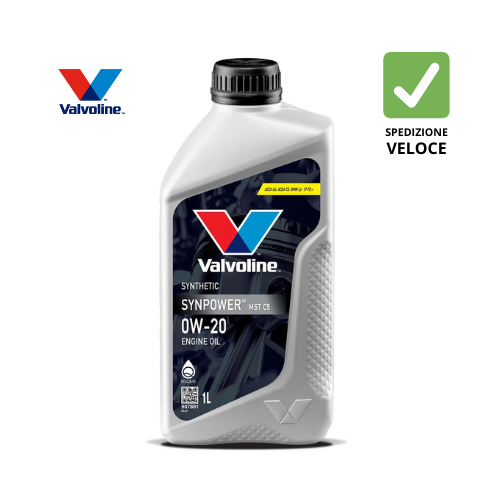
VALVOLINE 907861 — SYNPOWER MST C5 0W20
100% synthetic high-performance engine oil with ACEA C5/C6 specifications. Approvals: BMW LL-17 FE+, MB 229.71, Ford WSS-M2C947-A, FCA 9.55535-GS1. Designed for engines with DPF/GPF from BMW, Mercedes, Ford, Jaguar, and Stellantis group. Guarantees maximum protection, fuel efficiency, and low emissions.
🛒 Buy on Tritella🥇 RECOMMENDED 5W30 OILS

MOBIL 1 ESP 5W30 — LT 6 ENGINE OIL
High-quality 100% synthetic engine oil, designed for Euro 4/5/6 engines with DPF and GPF systems. ACEA C2/C3 specifications, MB 229.51, BMW LL-04, VW 504.00/507.00 approvals. Guarantees superior protection, engine cleanliness, and maximum fuel efficiency.
🛒 Buy now on Amazon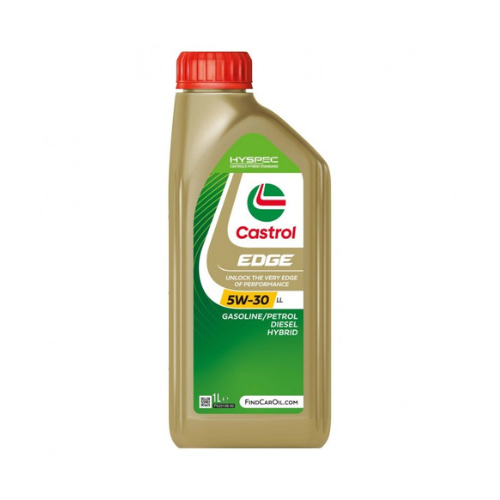
CASTROL EDGE 5W-30 — HIGH-PERFORMANCE SYNTHETIC ENGINE OIL
100% synthetic engine oil with Titanium FST™ technology for superior wear resistance. ACEA C3 specifications, VW 504.00/507.00, MB 229.51, BMW LL-04 approvals. Guarantees excellent performance and maximum engine protection even under high stress (turbo engines, continuous highway driving).
🛒 Buy on Tritella🧰 CHANGE INTERVALS AND BEST PRACTICES
- Change oil every 15,000 km or 12 months (unless a more restrictive OEM indication);
- In intensive urban use (journeys under 10 km), reduce to 10,000-12,000 km;
- Always replace the oil filter at every oil change (replacement cost 8-25€);
- Check the oil level every 1,000-2,000 km, especially on engines over 100,000 km;
- After the change, let the engine run for 2-3 minutes to circulate the new oil;
- On gasoline engines from 2020 with timing chain (M270, EA888, B48, M270, FireFly), NEVER extend the oil change beyond 15,000 km — the chain stretches and damage can reach 950-1,500€ for a complete kit.
Further insights in the ENGINE OIL cluster:
- 📘 When to change car oil: km, time and signals not to ignore
- 📘 What engine oil is and how to choose it correctly
- 📘 Engine oil consumption: causes, solutions, and truly useful additives
- 📘 Synthetic or mineral oil: when it makes sense to use them
- 📘 Sludge in the engine: what it is and how to prevent serious damage
📩 REQUEST AN ENGINE OIL QUOTE FROM TRITELLA
🛢️ Do you have doubts about which oil is right for your car?
Our warehouse stocks all premium engine oil brands: Valvoline, Castrol, Mobil 1, Total Quartz, Selenia, Eni i-Sint, Bardahl, Pakelo, Liqui Moly. All OEM specifications (VW, Mercedes, BMW, Stellantis, Ford, Renault, Toyota) available in stock. Send us your license plate or chassis number and receive a personalized quote with the correct oil specification + oil filter + technical advice.
We are authorized Valvoline and Castrol distributors for Abruzzo, Marche, and Lazio. In over 15 years we have supplied engine oils to hundreds of partner workshops. Response within 24 hours with competitive prices and 24-48h delivery.
📩 Request a free quote❓ FREQUENTLY ASKED QUESTIONS
Can I mix 0W20 and 5W30 oil?
No, except in an emergency. If you need to top up a few milliliters (max 200-300 ml on a 4-5 liter sump) for a trip, it's fine once. But do a complete oil change with the correct viscosity as soon as possible. Never a structural top-up: altering the average viscosity of the sump can change the oil pressure and activate DTC codes like P052E (oil pressure out of range).
Is 0W20 oil more expensive than 5W30?
Generally yes, by 5-15€ per 4L can (3-7%). 0W20 requires purer synthetic bases (PAO or GTL) and specific friction modifier additives. However, the 3-4% fuel consumption saving compensates over time: over 15,000 km/year with 6 L/100 km consumption, 27-36 liters of fuel/year are saved = 50-70€ at 2026 prices (fuel 1.80-1.95€/L).
How often should engine oil be changed?
Every 15,000 km or 12 months (whichever comes first). In intensive urban use (journeys under 10 km, a lot of Start&Stop), reduce to 10,000-12,000 km. On gasoline engines with timing chain (M270 Mercedes, EA888 VW, B48 BMW, FireFly Stellantis) NEVER extend beyond 15,000 km: the chain stretches and the damage reaches 950-1,500€.
Can I use 5W30 instead of 0W20 specified in the manual?
Generally NO. Modern engines designed for 0W20 (Toyota Hybrid, Honda, recent Mercedes, Ford EcoBoost mild hybrid) have reduced internal tolerances (0.02-0.03 mm) and an oil pump calibrated for low viscosity. Using 5W30 can cause: anomalous oil consumption (up to 1L/1,000 km), oil pressure out of range, DTC codes, warranty void. Only exception: extremely hot climates (40°C+ continuous) and on engines over 200,000 km, with specific advice from the mechanic.
Which oil for the Fiat Panda Hybrid?
The Fiat Panda Hybrid (FireFly 1.0 70 CV engine) requires 0W20 ACEA C2 oil with FCA 9.55535-GS1 specification. Examples: Selenia WR Pure Energy 0W20, Total Quartz Ineo Long Life 0W20, Valvoline SynPower MST C5 0W20. Change every 15,000 km, in intensive urban use reduce to 12,000 km. Dedicated insight: 0W20 oil for Fiat 600 Hybrid and similar Stellantis models.
Which oil for the Mercedes A-Class W176?
For Mercedes A-Class W176 with M270 gasoline engine: 0W20 ACEA C5 oil with MB 229.71 (Valvoline SynPower MST C5 0W20 is perfect). For diesel CDI 1.5/1.6 OM607/OM626: 5W30 ACEA C3 with MB 229.51 or 229.52. Never use generic oils below specification: risk of timing chain damage (repair 950-1,500€). Change every 12-15,000 km, never 25,000 km as per manual.
What does ACEA C5 vs C3 on oil mean?
ACEA is the European manufacturers' association. C5 indicates "Mid SAPS" oils with very low HTHS viscosity (≥2.6 mPa·s) for maximum efficiency, compatible with DPF/GPF. C3 are "Mid SAPS" oils more protective (HTHS ≥3.5 mPa·s) for turbo and diesel engines. C2 is between the two (HTHS ≥2.9). C6 is the new 2022 specification even more protective than C5 against LSPI (low-speed pre-ignition) on gasoline turbo engines.
Can I buy engine oil from Autoricambi Tritella?
Yes. We are authorized Valvoline and Castrol distributors for Abruzzo, Marche, and Lazio. We stock all premium brands (Valvoline, Castrol, Mobil 1, Total Quartz, Selenia, Pakelo, Eni, Bardahl, Liqui Moly) in all OEM specifications (VW, MB, BMW, Stellantis, Ford, Renault). Fill out the quote form indicating your license plate or chassis number: we will advise you on the correct oil and provide you with price and availability within 24h.
📌 CONCLUSIONS: THE FINAL VERDICT
In summary, the choice between 0W20 and 5W30 depends on 3 factors: engine type, climate, and manufacturer's OEM specification. There is no "best oil ever", there is the right oil for your specific car.
- ✔️ Choose 0W20 if you have a modern car (from 2018), a hybrid or full hybrid engine, live in a cold area, mainly drive in the city, want to save 3-4% fuel and protect the environment. Ideal for: Toyota Hybrid, Honda, recent Mercedes, recent BMW, Ford EcoBoost mild hybrid, Stellantis Hybrid (Panda Hybrid, Avenger 4xe, Grande Panda).
- ✔️ Choose 5W30 if you have a diesel engine, turbo gasoline engine, over 100,000 km, live in a hot area (Southern Italy, summers 40°C+), drive a lot on highways or tow heavy loads. Ideal for: VW/Audi diesel, BMW 3/5 series, Renault/Dacia, Stellantis diesel, classic turbo engines.
Golden rule: ALWAYS use the oil with the OEM specification required by your model's manual. Saving 15-25€ with sub-specification oil can cost 950-1,500€ for a timing chain kit and/or void the warranty.
In case of doubt, Autoricambi Tritella is always available to advise you on the right oil for your vehicle: request a personalized quote by indicating your license plate or chassis number.
👉 Want to know which oil is right for your car? Request a personalized quote
📩 Go to the quote form📘 Related insights in the ENGINE OIL cluster:


